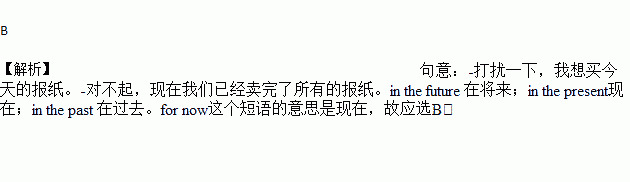
— Excuse me, I'd like to buy today's newspaper.
— Sorry, we've sold out all the newspapers for now.
A. in the future
B. in the present
C. in the past
科目:初中英语 来源:新目标(Go for it)版 七年级下Unit 10 I 题型:单项填空
I can’t go with you because I have _________ to do.
A. many homework B. much homework
C. a lot homework D. a lot of homeworks
查看答案和解析>>
科目:初中英语 来源:四川省广安市岳池县2017届九年级第二次诊断考试英语试卷 题型:单项填空
—Which do you prefer, coffee or cola?
—______, thanks. I’d like a cup of tea.
A. Either B. Both C. Neither D. None
查看答案和解析>>
科目:初中英语 来源:广东省深圳市罗湖区2017届九年级下学期第二次调研(二模)英语试卷 题型:阅读理解
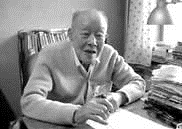
Zhou Youguang, known as the "father of Pinyin" was a Chinese. He was born in Changzhou, Jiangsu Province, on 13 January 1906. At the age of ten, he and his family moved to Suzhou, Jiangsu Province. In 1918, he entered Changzhou High School.
Zhou went to St. John's University in Shanghai in 1923. Then he went to Guanghua University in 1925. Later Zhou spent time in Japan as a foreign exchange student. After World War II, he moved to London, and then New York to work as a banker.
Zhou returned to China in 1949 to help his country build a modern economy(经济学). In 1955, the government invited him to make necessary changes to the Chinese language. It took him about three years to design Pinyin, and it was a success.
Today, with the wide use of computers and mobile phones, we use Pinyin to communicate with the world. The system is a bridge between China and the rest of the world."
Zhou died on 14 January 2017 at his home in Beijing, a day after his birthday. At the time, he was the 17th oldest living man in China.
1.When was Zhou Youguang born?
A. 1906.
B. 1916.
C. 1918.
D. 1923.
2.Which of the following countries had he NOT been to?
A. Japan.
B. Germany.
C. The UK
D. The USA
3.What did the government ask him to do in 1955?
A. To help China build a modern economy.
B. To come back to his motherland, China.
C. To give some money to help the poor people.
D. To make necessary changes to the Chinese language.
4.What was Zhou Youguang well-known for?
A. He was the 17th oldest living person in China.
B. He once studied in many foreign countries.
C. He is called "father of Pinyin" by people.
D. He invented computers and mobile phones.
查看答案和解析>>
科目:初中英语 来源:广东省深圳市罗湖区2017届九年级下学期第二次调研(二模)英语试卷 题型:单项填空
— Why is Judy so busy all these days?
— Because she is _______ new markets.
A. picking up
B. opening up
C. looking up
查看答案和解析>>
科目:初中英语 来源:广东省深圳市罗湖区2017届九年级下学期第二次调研(二模)英语试卷 题型:单项填空
— Maggie, what you said may result in serious problems.
— I see. I was just telling the truth.
A. cause
B. solve
C. become
查看答案和解析>>
科目:初中英语 来源:上海市普陀区2017届九年级4月质量调研(二模)英语试卷 题型:句型转换
1.Karen spent a long time looking at the displays. (改为否定句)
Karen __________ __________ a long time looking at the displays.
2.Jeff needs to walk about 2 kilometres to get to his toy store. (对划线部分提问)
__________ __________ does Jeff need to walk to get to his toy store?
3.The twins had a good time at the new amusement park. (改为反义疑问句)
The twins had a good time at the new amusement park, __________ __________ ?
4.Actually, Stephen can’t play table games as well as he says. (保持句意不变) __________ __________, Stephen can’t play table games as well as he says.
5.They will place the magazines on the shelves along the windows. (改为被动语态)
The magazines will __________ __________ on the shelves along the windows.
6.Are you ready for the coming interview?” my cousin asked me. (改为宾语从句)
My cousin asked me __________ I __________ ready for the coming interview.
7.going , Lisa , the , to , instead of , party , went sightseeing (连词成句)
__________________________________________________________________
查看答案和解析>>
科目:初中英语 来源:上海市普陀区2017届九年级4月质量调研(二模)英语试卷 题型:单项填空
Joan ________opened the box and was surprised to find nothing inside at all.
A. care B. careful C. cares D. carefully
查看答案和解析>>
科目:初中英语 来源:邯郸市2017届中考一模英语试卷 题型:阅读理解
This afternoon, when I was looking for a self-improvement(自我修养) book, I found an aged folder(文件夹).In this folder, there were some of the examination papers I’d taken during my pre-university days. They were on economics(经济学), a subject that I didn’t really like much then.
I laughed at the silly mistakes I made as I looked through the papers. And memories of the past came to my mind. I saw myself sitting at one of the study tables, working hard for some of my life goals. Back then, it was popular for most students to set life goals, because they thought it was most important.
It was during those times that I first started to set goals for myself. I didn’t know much about goal setting then. I didn’t use any goal tracking(跟踪) tools, either. All I knew was that I had to go to university. There was no other way that I could give myself. To go through my lecture(演讲) notes, I didn’t take breaks. For more revision with my classmates, I stayed back late. One time, I missed the school lock-out hours and I had to climb school gates in order to leave. It was perhaps this attitude(态度) that ignited my decision to go through what I had to do to get this far.
Yes, it may have been hard. But the sweet taste of victory experienced at the point of receiving my final results was so wonderful that I would never forget it for the rest of my life.
I closed the folder and dropped it into the dustbin(垃圾箱) in the room. It’s time to get kicking with my next goal. And by writing this, I know I’m getting closer.
1.When the author(作者)looked through the papers in the folder, he ________.
A. looked for a self-improvement book B. laughed at the silly mistakes he made
C. dropped it into the dustbin right away D. sat at the table and set life goals again
2.When the author first started to get goals for himself, he ________.
A. didn’t need to enter university B. didn’t use any goal tracking tools
C. was sure that he would win the victory D. learned a lot from a self-improvement book
3.Why did the author stay back late after school?
A. To be prepared to enter university. B. To learn more about goal setting.
C. To make his teacher pay attention to him. D. To get the chance of climbing school gates.
4.The underlined word “ignited” means ________ in the passage.
A. reduced(减少) B. balanced(平衡) C. questioned D. raised
5.What can we learn about the author from the last paragraph?
A. He regularly(规律地) tidies his room. B. He’s not quite good at goal setting
C. He is ready for the next goal. D. He hated those papers in the folder.
查看答案和解析>>
湖北省互联网违法和不良信息举报平台 | 网上有害信息举报专区 | 电信诈骗举报专区 | 涉历史虚无主义有害信息举报专区 | 涉企侵权举报专区
违法和不良信息举报电话:027-86699610 举报邮箱:58377363@163.com