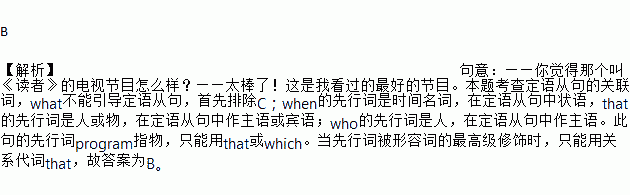
一What do you think of the TV program called Readers?
一Wonderful! It is the best program I have ever watched.
A. when B. that C. what D. who
B 【解析】句意:——你觉得那个叫《读者》的电视节目怎么样?——太棒了!这是我看过的最好的节目。本题考查定语从句的关联词,what不能引导定语从句,首先排除C;when的先行词是时间名词,在定语从句中状语,that的先行词是人或物,在定语从句中作主语或宾语;who的先行词是人,在定语从句中作主语。此句的先行词program指物,只能用that或which。当先行词被形容词的最高级修饰时,只能...科目:初中英语 来源:江苏省苏州市2018年中考英语语法专题练习9《动词和动词短语》 题型:单选题
一Waiter, there's a fly(苍蝇)swimming in my soup.
一So what do you me to do, call a life guard(救生员)?
A. warn B. expect C. invite D. encourage
B 【解析】句意:-服务员,在我的汤里有一只苍蝇在游泳。-那么你想让我做什么,叫一个救生员吗?warn警告;expect期望;invite邀请;encourage鼓励。根据句意可知,这里是期望某人去做某事,故应选B。查看答案和解析>>
科目:初中英语 来源:江苏省苏州市2018年中考英语语法专题练习17《感叹句、祈使句和特殊句》 题型:单选题
throwing those stones, please.
A. Stop B. Stops C. Stopping D. Stopped
A 【解析】句意:请停止投掷那些石头。A. Stop动词原形,停止;B. Stops动词三单,停止;C. Stopping动名词或现在分词,停止;D. Stopped动词过去式或过去分词。根据语义可知,本句为肯定的祈使句,表示“请求、要求或命令”的句子,以动词原形stop开头。故选:A。查看答案和解析>>
科目:初中英语 来源:江苏省苏州市2018年中考英语语法专题练习20《定语从句》 题型:单选题
The car my uncle had just bought was destroyed in the earthquake.
A. whose B. whom C. who D. which
D 【解析】句意:我叔叔刚买的汽车在地震中被损坏了。whose先行词是人或物,在定语从句中作定语;whom先行词指人,在从句中作宾语;who先行词指人,在定语从句中作主语;which先行词指物,在从句中可以作主语也可以作宾语。本句的先行词the car,指物,故关联词可以用that或which,在定语从句中充当bought的宾语,结合选项,故选D。查看答案和解析>>
科目:初中英语 来源:江苏省苏州市2018年中考英语语法专题练习20《定语从句》 题型:单选题
I'd like to tell you about the table manners you should know when you visit France.
A. which B. who C. what D. how
A 【解析】句意:我想告诉你一些当你参观法国时应该知道的餐桌礼仪。分析句子结构,本句定语从句的引导词,what, how不能引导定语从句,首先排除C,D答案;当先行词指人时,才能用who,此句的先行词table manners为下文定语从句的逻辑宾语,且指物,所以引导定语从句的关系代词用that或者which,故选A。查看答案和解析>>
科目:初中英语 来源:外研版初中英语七年级下册Module 8 Story time模块同步检测 题型:阅读单选
One day a king went to a far away place in his country. When he came back, his feet hurt a lot. “There are too many small stones on the roads. They hurt my feet. You should cover (覆盖) every road with leather (皮革),” he told his men. Of course, it would cost a lot of money. One of his men was very smart. He told the king, “Why not cut a little piece of leather to cover your feet?” The king was surprised. He agreed to the man’s idea. He asked his men to make a pair of leather shoes for him.
Maybe this is not the beginning of leather shoes. But it teaches us a lesson of life: if you want to make this world a happy place to live in, the best way is to change yourself, not the world.
1.What happened to the king after his trip?
A. He lost his feet. B. His feet hurt.
C. His shoes were broken. D. He lost many stones.
2.What did the king want his men to do at first?
A. Cover all the roads with leather.
B. Cover all the roads with stones.
C. Make a pair of leather shoes for him.
D. Buy him lots of new shoes.
3.The king’s idea was ______.
A. cheap B. boring C. expensive D. exciting
4.What did the king do at last?
A. Ask his men to take away all the stones on the roads.
B. Ask his men to kill cows to get enough leather.
C. Ask his men to make a pair of leather shoes for him.
D. Stop travelling around the country.
5.What’s the purpose (目的) of the last paragraph?
A. To show the moral (寓意) of the story.
B. To explain the use of leather shoes.
C. To introduce ways to be happy.
D. To tell the beginning of leather shoes.
1.B 2.A 3.C 4.C 5.A 【解析】短文大意:国王在脚在一次出行之后受伤了,就命令他的手下把所有的路都铺上皮革,但这样做却耗资巨大,一名臣子建议国王可以穿上一双皮革做的鞋子,国王同意了他的建议。故事告诉我们:如果想让这个世界生活起来更幸福的话,最好的办法就是去改变自己,去适应自己,而不是去改变这个世界。 1.细节理解题。根据短文中的句子“One da...查看答案和解析>>
科目:初中英语 来源:外研版初中英语七年级下册Module 8 Story time模块同步检测 题型:单选题
Don’t point _____ others with your hand. It’s not polite.
A. at B. to C. in D. for
A 【解析】句意:不要用你的手指指着别人,那是不礼貌的。本题考查point的固定搭配。point at,意为“指着…”;point to意为“指向”; point in意为“有意义、在…有作用”,根据句意可知此项不合题意,所以排除; point for无此用法,所以排除。point at习惯上表示指向离说话人较近的人或事物,意为“指着…”,at是介词,着重与指的对象。point to多用来表...查看答案和解析>>
科目:初中英语 来源:江苏省苏州市2018年中考英语语法专题练习11《动词的语态》 题型:单选题
The telephone in 1876.
A. invents B. invented
C. was invented D. has invented
C 【解析】句意:电话是在1876年被发明的。invents发明,动词的第三人称单数形式;invented过去式;was invented一般过去时态的被动语态;has invented现在完成时。根据句意可知,句中的主语The telephone和动词invent构成被动关系,这句话应使用被动语态,并且in 1876是过去的一个时间,应用一般过去时态,故选C。查看答案和解析>>
科目:初中英语 来源:2018中考英语总复习之冠词专项练习题 题型:单选题
---What’s your hobby, Lucy?
---I like playing _______piano best.
A. the B. an C. a D. /
A 【解析】句意:----露西,你的爱好是什么?-----我最喜欢弹钢琴。演奏乐器,乐器前用定冠词the,即play the+乐器;play the piano:弹钢琴;选A。查看答案和解析>>
湖北省互联网违法和不良信息举报平台 | 网上有害信息举报专区 | 电信诈骗举报专区 | 涉历史虚无主义有害信息举报专区 | 涉企侵权举报专区
违法和不良信息举报电话:027-86699610 举报邮箱:58377363@163.com