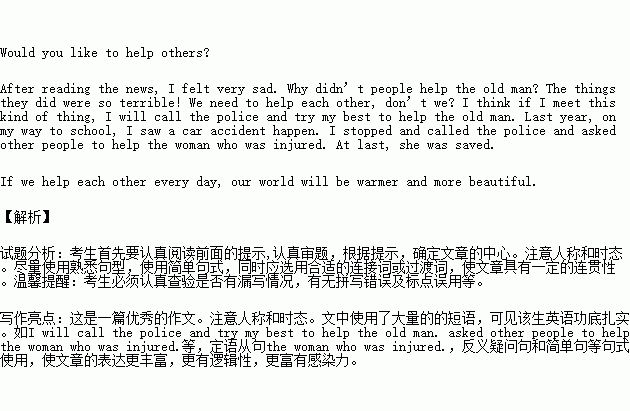
书面表达。
你看过类似的老人跌倒无人理会的新闻吗?你听说过最美女教师救她的学生的故事吗?对这两种社会现象,你有什么看法呢?请你以“Would you like to help others?”为题写一篇短文。
内容包括:
1. 你对上面其中一件事的看法。
2. 如果你遇到了这样的事情会怎样做。
3. 讲述你的一次类似经历。
作文要求:1. 词数80个左右,不得逐字逐句翻译。 2. 条理清晰,语句连贯。
 各地期末复习特训卷系列答案
 小博士期末闯关100分系列答案
科目:初中英语 来源:2016届安徽芜湖南陵县九年级下期中考第一次模拟考试英语卷(解析版) 题型:其他题
补全对话。根据对话内容,请从方框内的选项中选出能填入空白处的最佳选项,其中有两个为多余选项。
A. Try to relax. B. You should get a first-aid book. C. I have tried that, but it doesn’t help. D. You’d better go to see a doctor first. E. What’s wrong with you? F. Why not stay at home? G. I always get nervous before big exams. |
A: You don’t look well today, Robert.1.
B: I didn’t sleep very well last night.
A: Oh, what happened?
B: 2. You know, the Senior High School Entrance Exam is coming, so I was too stressed to sleep.
A: 3. Don’t give yourself too much pressure(压力). Why not listen to light music before going to bed?
B: 4. Maybe some sleeping pills will be helpful to me.
A: Don’t do that. You can’t take medicine without a doctor’s instructions. 5.
查看答案和解析>>
科目:初中英语 来源:2015-2016学年山东夏津县双语中学初二下期第一次月考英语卷(解析版) 题型:阅读理解
阅读理解
American people like to say “Thank you” when others help them or say something kind to them. People of many countries do so, too. It is a very good habit(习惯).
You should say “Thank you” when someone passes you the salt on the table, when someone walking ahead of you keeps the door open for you, when someone says you have done your work well, or you have bought a nice thing, or your city is very beautiful. “Thank you” is used not only between friends, but also between parents and children, brothers and sisters.
“Excuse me” is another short sentence they use. When you hear someone say so behind you, you know that somebody wants to walk past you without touching you. It’s not polite to break others when they are talking. If you want to speak to one of them, say, “Excuse me” first, and then begin talking. You should also do so when you begin to cough or make any noise before others.
Let’s learn to say “Thank you” and “Excuse me”.
1. You should say “Thank you” when ________.
A. you say something kind to others
B. you help others
C. someone helps you
D. you need others to help you
2. From the passage we know “Thank you” is________.
A. widely used in the world
B. used more often than “Excuse me”
C. used only by Americans
D. used only between friends
3.You should say “Excuse me” if you want to _________.
A. speak to others B. help others
C. walk past someone D. A and C
4. When you are going to ask someone to tell you the way, you should say “_________”.
A. Thank you B. That’s very kind of you
C. Excuse me D. I’m sorry
5.This passage mainly tells us the way ____________.
A. to be happy B. to be polite
C. to help others D. to learn from Americans
查看答案和解析>>
科目:初中英语 来源:2015-2016学年山东夏津县双语中学初二下期第一次月考英语卷(解析版) 题型:单项填空
Could you tell me how _______ to the station?
A. get B. gets
C. to get D. getting
查看答案和解析>>
科目:初中英语 来源:2015-2016学年山东夏津县双语中学初二下期第一次月考英语卷(解析版) 题型:单项填空
An _______ girl found the book here just now.
A. eight-years-old B. eight year old
C. eight-year-old D. eight-years old
查看答案和解析>>
科目:初中英语 来源:2015-2016学年湖北宜昌八年级下期八校(3月)联考英语试卷(解析版) 题型:阅读理解
读短文,根据短文内容选择最佳答案.
Each nation has many good people who help to take care of others. For example, some high school and college students in the United States often spend many hours as volunteers in hospitals, orphanages (孤儿院) or homes for the old. They read books to the people in these places, or they just visit them and play games with them or listen to their problems.
Other volunteers go and work in the homes of people who are sick or old. They paint, clean up, or repair their houses, do their shopping or mow (修整) their lawns (草坪).For boys who no longer have fathers there is an organization called Big Brothers. College students and other men take these boys to baseball games or on fishing trips and help them to get to know things that boys usually learn from their fathers.
Each city has a number of clubs where boys and girls can go to play games or learn crafts. Some of these clubs show movies or organize short trips to the mountains, beaches, museums or other places of interest. Most of these clubs use a lot of high school and college students as volunteers because they are young enough to remember the problems of younger boys and girls.
Volunteers believe that some of the happiest people in the world are those who help to bring happiness to others.
1.Where can you often find volunteers in the United States?
A. At a bus stop. B. In a park.
C. In a hospital. D. In a shop.
2.How do volunteers usually help those who are sick or old?
A. They mow their lawns, do their shopping and clean up their house.
B. They cook, sew or wash their clothes.
C. They tell them stories and sing and dance for them.
D. They clean and repair their cars.
3.What is Big Brothers?
A. It’s the name of a club.
B. It’s a home for children who have no brothers.
C. It’s the name of a film.
D. It’s an organization for boys who no longer have fathers.
4.Why do most of the boys’ and girls’ clubs use many high school and college students as volunteers?
A. Because they have a lot of free time.
B. Because they can still remember what they felt when they were younger.
C. Because they know how to do the work.
D. Because they like younger boys and girls.
5.Volunteers think that ______________.
A. they have got to be unhappy in order to make other people happy
B. the happiest people in the world are those who make themselves happy
C. the happiest people in the world are those who are young and healthy
D. bringing happiness to others makes them the happiest people in the world
查看答案和解析>>
科目:初中英语 来源:2015-2016学年湖北宜昌八年级下期八校(3月)联考英语试卷(解析版) 题型:单项填空
_________ children there are in a family, _________ their life will be.
A. The less; the better B. The fewer; the better
C. The little; the richer D. More the; the poorer
查看答案和解析>>
科目:初中英语 来源:2016届江西高安市九年级下期第一次模拟考试英语试卷(解析版) 题型:选词填空
先阅读短文,掌握其大意。然后从方框中选出恰当的词,并用其适当形式填空,每个词限用一次。
leave surely we respect be but meet who meaningful none |
One morning during my second month of the art school, our teacher gave 1. quiz(小测验). I was always a hard-working student and I did well in all my subjects. So it seemed a piece of cake for me. I had finished the questions successfully and easily, until I read the last one: What is the name of the woman 2. cleans the school building every day?
3. it was some kind of joke. I had seen the cleaning woman several times. She was tall, thin and about 50 years old, 4. how could I know her name? It was 5. of my business. I handed in my paper, 6. the last question empty.
Just before the class ended, one student asked if the last question would count towards our quiz grades.
“Of course it will,”said the teacher. “You 7. many people in the future. All people are important. And all jobs need to 8. . They work hard. They deserve(值得) your attention and care, even if all that you can do 9. to smile and say hello.”
I’ve never forgotten that lesson. Actually, that was the 10. lesson in my life. I also learned that the cleaning woman’s name was Ally Black.
查看答案和解析>>
科目:初中英语 来源:2015-2016学年山东高密市文慧学校初一下第一次月考英语卷(解析版) 题型:单词拼写
用适当的物主代词填空
1.This is not your pencil. is red but this one is brown.
2.Tom and Mary have two sons. sons are in the same class.
查看答案和解析>>
湖北省互联网违法和不良信息举报平台 | 网上有害信息举报专区 | 电信诈骗举报专区 | 涉历史虚无主义有害信息举报专区 | 涉企侵权举报专区
违法和不良信息举报电话:027-86699610 举报邮箱:58377363@163.com