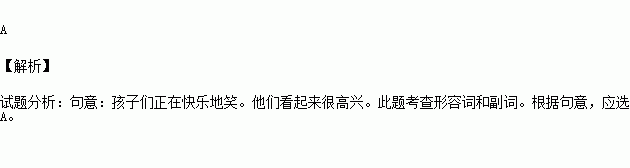
The children are laughing _____.They look_______.
A. happily; happy B. happily; happily
C. happy; happily D. happy; happy
科目:初中英语 来源:2015-2016学年山东临沭县初一下期中考试英语英语试卷(解析版) 题型:单项填空
Where _____ lions from ?
A. does, From B. do, come from
C. is, from D. are ,come from
查看答案和解析>>
科目:初中英语 来源:2015-2016学年湖北黄冈五校初一下期中考试英语英语试卷(解析版) 题型:单项填空
The girl______ long hair and blue eyes is running______ the hallways.
A. has; in B. with; on
C. with; in D. has; on
查看答案和解析>>
科目:初中英语 来源:2015-2016学年甘肃张掖临泽县二中八年级3月考英语英语试卷(解析版) 题型:单项填空
Mike’s mother often tells him too much time playing computer games.
A. to not spend B. not to spend
C. doesn’t spend D. not spend
查看答案和解析>>
科目:初中英语 来源:2015-2016学年甘肃张掖临泽县二中八年级3月考英语英语试卷(解析版) 题型:单项填空
My mother stopped _____ to me because there was a call for her.
A. talking B. to talk
C. saying D. to say
查看答案和解析>>
科目:初中英语 来源:2015-2016学年甘肃张掖临泽县二中八年级3月考英语英语试卷(解析版) 题型:单项填空
I will give him the gift as soon as he ________ .
A. will arrive B. arrive C. arrives D. arrived
查看答案和解析>>
科目:初中英语 来源:2015-2016学年甘肃张掖临泽县二中八年级3月考英语英语试卷(解析版) 题型:单项填空
Could you please ______ the door? It’s cold outside.
A. open B. not open C. opening D. not opening
查看答案和解析>>
科目:初中英语 来源:2015-2016学年福建厦门湖滨中学初二下期中考试英语英语卷(解析版) 题型:单项填空
you, Linda has successfully finished the task already.
A. Thanks
B. Thanks for
C.Thanks to
查看答案和解析>>
科目:初中英语 来源:2016届北京市丰台区中考一模英语试卷(解析版) 题型:阅读理解
阅读下列短文,根据短文内容,从短文后各题所给的A、B、C、D四个选项中,选择最佳选项。
Travel Far, but Think Local
Author Elizabeth Becker says we have a responsibility to respect the places we visit. Some basic rules still hold, such as not travelling at busy times and taking fewer trips but making them longer. The best and easiest way to be a responsible traveler is to use common sense and go local.
Respect traditions. Read about the culture and traditions of the places you visit. Understand the local culture and customs to avoid making any mistakes or upsetting the local people. For example, dress properly when you visit temples and don’t eat or talk loudly in religious(宗教的)sites. It’s also important to respect the local environment. If you visit a beach, leave seashells where you find them and try not to catch fish while swimming.

Learn the language.Nobody expects you to become fluent, but try to learn some basic phrases such as “please” and “thank you”. You’ll be amazed at how much nicer and more helpful people will be if they know you’re making an effort to get involved with their culture.
Spend local.Stay away from international hotels and restaurants run by foreigners. By using local guides, buying local products and staying in family run hotels, you’re not only giving back to the community, but you also get a real sense of the country you’re staying in and the people who live there.
Bargain fairly.Always be polite when you try to get a lower price. Sometimes goods at a local market can seem overpriced. Nobody likes to be cheated and it may be fun to bargain, but remember that for the local people bargaining it may not be a game. For some of them, their business is their only source of income. So try not to be too rude when bargaining.
Don’t litter. In some countries, getting rid of waste is a big problem, so don’t throw rubbish on the ground. Doing so is harmful to the environment and unpleasant for others. Hold on to your rubbish until you find a bin.
Save water.Even in some of the most developed countries, water shortages are a reality. Tourists who take 10-minute showers and leave the taps running aren’t making things any better.
1. From the passage,to understand the local culture better, we should ________.
A. respect traditions B. bargain fairly
C. save water D. Not litter
2. To help the local people, we’d better________.
A. spend in international hotels and restaurants
B.have a bargaining game with local people
C. keep the rubbish and throw it in the bin
D. have some local food in religious sites
3. What’s the purpose of the passage?
A. To advise us to be polite to the local people.
B. To introduce the way to learn the language.
C. To tell us how to be a responsible traveler.
D. To help the people of your travel place.
查看答案和解析>>
湖北省互联网违法和不良信息举报平台 | 网上有害信息举报专区 | 电信诈骗举报专区 | 涉历史虚无主义有害信息举报专区 | 涉企侵权举报专区
违法和不良信息举报电话:027-86699610 举报邮箱:58377363@163.com