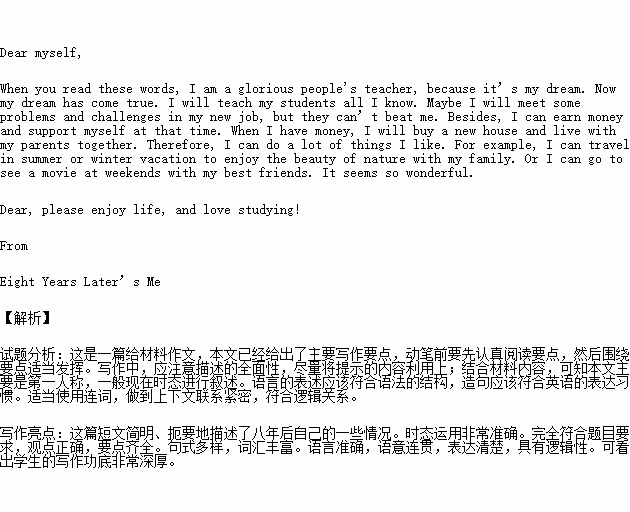
书面表达
某英语报社开展有奖征文比赛,话题是“来自8年后自己的一封信”。 请你以”A Letter From Eight Years Later’s Me” 为题,写一篇100词左右的英语短文。
要点提示:学习(或职业,或事业),朋友,父母,环境 …
要求:1、人称定位:我。
时态定位:站在8年后的角度,叙述未来的状况。所以主体不用将来时。
2、所写内容应包括以上所有提示的要点。
3、鼓励适当发挥(请适当表达自己的观点)。
4、文中不得出现真实的校名、人名。
5、开头、结尾已给出,不计入总词数。
 阅读快车系列答案
科目:初中英语 来源:2015-2016学年江苏靖江靖城中学初二下第一次独立作业英语卷(解析版) 题型:单词拼写
根据中文提示,句意或首字母完成单词。
1.An (国际的) hotel will open in Haian next month.
2.There are (几个) new words in the passage and I can’t understand them.
3.You can drive at most at a of 120km/h on the expressway in China.
4.Next term he will go a for further study.
5.Everyone is here Tom. He is still in hospital today.
查看答案和解析>>
科目:初中英语 来源:2015-2016学年福建长汀县四中八年级上期末考试英语试卷(解析版) 题型:单项填空
—________ do you read English papers?
—Every day. And I like China Daily best.
A .How often B. How long C. How soon
查看答案和解析>>
科目:初中英语 来源:2015-2016学年湖北宜昌九年级下期八校3月联考英语试卷(解析版) 题型:单项填空
---He always seem to ________________.
---That’s because he’s really knowledgeable and experienced.
A. pass by B. be stressed out
C. have a point D. be in a hurry
查看答案和解析>>
科目:初中英语 来源:2015-2016学年湖北宜昌九年级下期八校3月联考英语试卷(解析版) 题型:单项填空
---Who will go to America this summer, you or your brother?
---_________. We will go to Hainan together.
A. all B. both C. neither D. either
查看答案和解析>>
科目:初中英语 来源:2016届山东德州夏津县九年级下期第一次练兵考试英语卷(解析版) 题型:阅读理解
Smartphones, poor sight
Look around and you’ll see people busy on their smartphones. Smartphones do make our lives easier . But have you ever thought about what they mean to your eyes?
According to a study, half of British people own smartphones and they spend an average (平均) of two hours a day using them. There has been a 35% increase in the number of people in the UK who suffer from shortsightedness(近视)since smartphones were introduced there in 1997.
Staring(盯)at smartphones for long time gives you dry eyes. When looking at something in the distance, your eyes automatically blink(自动眨眼)a certain number of times. However, when you look at things closer to your face, the blinking slows down. This reduces the amount of tears and causes discomfort in your eyes. Another bad habit is using smartphones in dark rooms before going to sleep. If you look at a bright screen while your pupils(瞳孔)become larger, too much light enters your eyes. This can do harm to the eyes and cause a disease called glaucoma(青光眼).
While you’re probably not going to stop using to your smart phone, there are a few things you can do to protect your eyes. Hold your phone at least 30 centimeters away from your eyes when using it. Take a break every hour and try the following: look at something at least five meters from you and then focus on the tip of your nose. Repeat this several times. It should reduce the discomfort in your eyes.
1.From Paragraph 2, we learn that _______.
A. most of the British people began to use smartphones 19 years ago
B. each of the British people spends two hours a day on smartphones
C. all British people have suffered from shortsightedness since 1997
D. the number of British people who own smartphones increases by 35%
2. According to Paragraph 3, using smartphones improperly may cause _______.
A. too many blinks B. more tears in the eyes
C. larger pupils D. dry eyes and glaucoma
3.Which of the following is suggested by the writer ?
A. Hold the phone at least half a meter away from the eyes.
B. Don’t use the phone for over an hour without a break.
C. Turn off your phone for a couple of hours every day.
D. Look at something green far away for several minutes.
4.The Chinese meaning of the underlined word “smartphone” is ___________.
A. 小灵通 B. 智能手机 C. 平板电脑 D. 电话机
5.This article is written to advise people_______.
A. not to buy smart phones
B. to stop using smartphones
C. to make full use of smartphones
D. to use smart phones properly
查看答案和解析>>
科目:初中英语 来源:2016届山东德州夏津县九年级下期第一次练兵考试英语卷(解析版) 题型:单项填空
We will go for a picnic as long as it ____ tomorrow.
A. snow B. will be cold
C. doesn’t rain D. be windy
查看答案和解析>>
科目:初中英语 来源:2015-2016学年浙江杭州大江东七年级下期中考试英语试卷(解析版) 题型:单项填空
I’m feeling much better now so you _____ call the doctor.
A. can B. can’t C. have to D. don’t have to
查看答案和解析>>
科目:初中英语 来源:2015-2016学年山东宁津县育新中学初一下期第一次月考英语卷(解析版) 题型:单项填空
—Will the students go swimming after school?
B. —______.
A. Yes, they do B. No, they don’t
C. Yes, they won’t D. No, they won’t
查看答案和解析>>
湖北省互联网违法和不良信息举报平台 | 网上有害信息举报专区 | 电信诈骗举报专区 | 涉历史虚无主义有害信息举报专区 | 涉企侵权举报专区
违法和不良信息举报电话:027-86699610 举报邮箱:58377363@163.com