
The cakes in the restaurant ______, so they _______ well.
A. are tasted better; are sold B. are tasted well; sell
C. taste terrible; are sold D. taste nice; sell
 阅读快车系列答案
科目:初中英语 来源:2014年江苏省徐州市毕业、升学模拟检测英语试卷(解析版) 题型:单项填空
—Mum, may I have some cakes?
— Sorry, there’s ____________ left in the box. I’ll go and buy some for you tonight.
A. nothing B. no one
C. no D. none
查看答案和解析>>
科目:初中英语 来源:2014年江苏省宿迁市中考英语模拟试卷(解析版) 题型:阅读理解
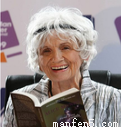
Alice Munro was born in Wingham, Ontario. Her father, Robert Eric Laidlaw, was a fox and mink (貂) farmer, and her mother, Anne Clarke Laidlaw, was a school teacher. Munro began writing as a teenager. Her first story, The Dimensions of a Shadow, came out in 1950 while she was studying at the University of Western Ontario. During this period she worked as a waitress, a tobacco picker, and a library clerk (职员).
Munro’s first collection of stories, Dance of the Happy Shades (1968), won the Governor General’s Award, Canada’s highest literary (文学的) prize. That success was followed by Lives of Girls and Women (1971), a collection of interlinked (相互关联的) stories sometimes incorrectly described as a novel. In 1978, Munro’s collection of interlinked stories Who Do You Think You Are? was published. This book earned Munro a second Governor General’s Literary Award. From 1979 to 1982, she toured Australia, China and Scandinavia. In 1980, Munro held the position of writer in residence (住校) at both the University of British Columbia and the University of Queensland. Through the 1980s and 1990s, she published a short-story collection about once every four years.
On 10 October, 2013, Munro was awarded the Nobel Prize in Literature. She is known as a “master of the contemporary (当代的) short story”. She is the first Canadian and the 13th woman to receive the Nobel Prize in Literature.
1. Where does Alice Munro come from?
A. the USA. B. Canada.
C. Australia.D. England.
2.Which of the following shows the correct order of the events?
① Munro wrote the collection—Lives of Girls and Women.
② Munro won the Governor General’s Award for the first time.
③ Munro did part-time jobs as a waitress, a tobacco picker and a library clerk.
④ Munro came to China for a trip.
A. ③①②④B. ②①③④
C. ④②③①D. ③②①④
3. The best title of the passage should be “_________”.
A. The first woman Nobel Prize winner—Alice Munro
B. Alice Munro—Master of the contemporary short story
C. Munro’s collection of interlinked stories
D. How can one receive the Nobel Prize in Literature
查看答案和解析>>
科目:初中英语 来源:2014年江苏省宿迁市中考英语模拟试卷(解析版) 题型:单项填空
This is _______ book I bought yesterday. Isn’t it ________ interesting one?
A. the; the B. a; an
C. a; the D. the; an
查看答案和解析>>
科目:初中英语 来源:2014年江苏省宿迁市五校联考中考模拟英语试卷(解析版) 题型:阅读理解
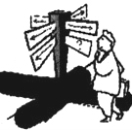
You either have it, or you don’t-a sense of direction. But why is it that some people could find their way across the Sahara without a map while others can lose themselves in the next street?
Scientists say we’re all born with a sense of direction, but it is not properly understood how it works. One theory is that people with a good sense of direction have simply worked harder at developing it. Research being carried out at Liverpool University supports this idea and suggests that if we don’t use it, we lose it.
“Children as young as seven have the ability to find their way around,” says Jim Martland, research director of the project. “However, if they are not allowed out alone or are taken everywhere by car, they never develop the skills.”
Jim Martland also emphasizes that young people should be taught certain skills to improve their sense of direction. He makes the following suggestions:
If you are using a map, turn it so that it relates to(与……有联系) the way you are facing.
If you leave your bike in a strange place, put it near something like a big stone or a tree-something easy to recognize. Note landmarks on the route as you go away from your bike. When you return, go back along the same route.
Simplify(简化) the way for finding your direction by using lines such as streets in a town, streams, or wells in the countryside to guide you. Count your steps so that you know how far you have gone and note any landmarks such as towerblocks or hills which can help to find out where you are.
Now you will never get lost again!
1. Children have the ability to find the way around when they are years old.
A. 5 B. 6 C. 7 D. 8
2. What does the underlined word “emphasize” mean in the passage?
A. To give special importance to something.
B. To express thanks for somebody.
C. To understand or become aware of a fact.
D. To admire somebody.
3. Scientists believe that __________.
A. some babies are born with a sense of direction
B. people learn a sense of direction as they grow older
C. people never lose their sense of direction
D. everybody has a sense of direction from birth
4. What may be the best title of the passage?
A. A research on direction.
B. A sense of direction.
C. People’s ability of finding the way.
D. Scientists’ research on skills.
查看答案和解析>>
科目:初中英语 来源:2014年江苏省宿迁市五校联考中考模拟英语试卷(解析版) 题型:单项填空
The book is well worth ________. I plan _________ one.
A. read; to buy B. reading; buying
C. reading; to buy D. to read; buy
查看答案和解析>>
科目:初中英语 来源:2014年江苏省宿迁市五校联考中考模拟英语试卷(解析版) 题型:单项填空
—Do you know ________ this dictionary belongs to?
—Let me see. Oh, it’s ________.
A. who; mineB. who; me
C. whose; mine D. whose; me
查看答案和解析>>
科目:初中英语 来源:2014年江苏省大丰市中考模拟英语试卷(解析版) 题型:单项填空
The familiar English song ______ me of the happy days I spent in the primary school.
A. remindsB. remembers
C. representsD. reviews
查看答案和解析>>
科目:初中英语 来源:2014年江苏省南通市海安县中考第三次模拟英语试卷(解析版) 题型:其他题
1.The government has to provide food and clothes for them (改为否定句)
The government to provide food or clothes for them.
2.A tourist guide showed the foreigners around Hailing Park yesterday.(改为被动语态)
The foreigners around Hailing Park yesterday.
3.Smoking isn’t allowed at school. Drinking isn’t allowed at school, either. (合并句子)
Smoking drinking is allowed at school.
4.The computer on the desk belongs to Mike. (对画线部分提问)
belongs to Mike?
5.He told me not to be late for the party that night. (改为直接引语)
He said to me, “ be late for the party .”
查看答案和解析>>
湖北省互联网违法和不良信息举报平台 | 网上有害信息举报专区 | 电信诈骗举报专区 | 涉历史虚无主义有害信息举报专区 | 涉企侵权举报专区
违法和不良信息举报电话:027-86699610 举报邮箱:58377363@163.com
