1.['krei?n] ______________
2.[ɡl?v]______________
3.['k?m?r?] ______________
4.['s?s?d?] ______________
5.['m?n?t?] ______________
6.['ta?d?] ______________
7.[p?'?n??] ______________
8.['f??w?d] ______________
9.[k?'lekt] ______________
10.[t???] ______________
科目:初中英语 来源:2020年安徽省合肥市育英学校中考一模英语试卷 题型:阅读单选
In 2019, China has passed lots of policies in many fields, bringing great changes to people’s lives. Here are some of them.
①Rubbish sorting rules
How to correctly sort and throw rubbish into dustbins has become a hot topic of discussion. Thanks to the rubbish sorting rules that went into effect, we can recycle some of the rubbish and protect the environment in a way.
In 2019, 237 cities have started rubbish classification according to a national policy. Shanghai became the first city to start its strict rubbish classification rules on July 1st.
②Nighttim e economy (夜间经济)
The nighttime economy was mentioned in August.It refers to business activities between 6 pm and 6 am in the service industry.They include opening 24-hour convenience stores, extending (延长) the service hours of buses,encouraging cinemas and theaters to offer tickets at lower prices and supporting bookstores, cultural centers and museums in opening to the public at night.
Many Chinese cities such as Beijing and Shanghai,have made plans, set up special zones and extended the operation of public transport to support nighttime markets.
③Throwing things from high buildings becomes illegal (非法的)
It’s no longer only immoral when people throw things out of windows from high buildings. In 2019, it has become an illegal behavior that could face punishment. Those who throw objects on purpose from a high place shall be punished for endangering public safety.
1.What can we know from the first policy mentioned above?
A.Now all the cities have started their rubbish sorting rules.
B.It’s not good for the environment to sort the rubbish.
C.Shanghai didn’t start rubbish sorting rules until July 1st.
D.Few people talk about rubbish sorting at the moment.
2.What have many cities done to support nighttime economy?
a. made plans to support it.
b. set up special places for it.
c. extended the operation of public transport.
d. made special laws (法律) for it.
A.abd B.abc C.bcd D.acd
3.The underlined word “immoral”means “________”in Chinese.
A.不粗鲁的 B.不道德的 C.传统的 D.鼓舞人心的
4.What is the main idea of the passage?
A.Rubbish sorting in China.
B.Some policies that change people’s lives.
C.Throwing objects from high places will be punished.
D.Efforts have been made to support nighttime economy.
查看答案和解析>>
科目:初中英语 来源:苏州市2019-2020学年七年级下学期线上月考英语试卷 题型:单选题
— Excuse me! _______ is it from your home to school?
— About ten minutes’ ride.
A.How long B.How much
C.How often D.How far
查看答案和解析>>
科目:初中英语 来源:江西省抚州市2018-2019学年七年级上学期期中英语试卷 题型:阅读单选
This is a family tree. It's a very big family. Eric and Mary are very old. They have two sons, Peter and Alan. Peter and his "wife(妻子)Susan have twin daughters, Lily and Lucy. Lily is single(单身的), but Lucy is married(已婚的). Her husband is Justin. They have two daughters, Gina and Jenny. They love their daughters very much.
Alan's wife is Sally. They are the parents of Bob and Paul. Paul is single, but Bob is married. His wife is Jane. They have a daughter Alice and a son Sam. Alice has a dog. It's very nice. She love it very much.
1.___________ people are in the family.
A.15 B.16 C.17 D.18
2._______________ is the grandfather of Lucy and Paul.
A.Bob B.Peter C.Eric D.Alan
3._______________is Alice's uncle.
A.Alan B.Paul C.Bob D.Peter
4.Which of the following is TRUE?
A.Gina and Jane are cousins.
B.Paul is Lily's uncle.
C.Lily is Gina's aunt.
D.Peter has a granddaughter and a grandson.
查看答案和解析>>
科目:初中英语 来源:江西省抚州市2018-2019学年七年级上学期期中英语试卷 题型:单选题
—Must I start now?
—No, you_______________.
A.mustn't B.can't C.needn't D.must
查看答案和解析>>
科目:初中英语 来源:山东省2019-2020学年七年级下学期开学考试英语试卷 题型:阅读单选
Lost
My backpack.
It is blue with a duck on it. Please call Linda. Phone 416-3592.
Found
Is this your watch?
It’s a yellow watch.
Please call Paul at 439-9175.
Lost
My school ID card. My name is Jim.
Please call 465-0921.
Found
Is this your English-Chinese dictionary? It’s red. It’s under my desk.
Please call Alan at 485 -7700.
1.If you ______, you can call Alan.
A.lose your watch B.find a backpack
C.lose your dictionary D.find a school ID card
2.What colour is the backpack?
A.It’s blue. B.It’s yellow. C.It’s red. D.It’s black.
3.If you find a school ID card, you can call______.
A.439-9175 B.416-3592 C.485-7700 D.465-0921
4.Which of the following is TRUE according to the ad?
A.Paul found a white watch.
B.Linda found a backpack with a duck on it.
C.Alan found an English-Chinese dictionary.
D.Jim found a school ID card.
5.If the ad is in the newspaper, the name of the topic will probably be______.
A.Lost and Found B.Everyday Newspaper
C.Love Story D.Travel Around
查看答案和解析>>
科目:初中英语 来源:2020年江苏省常州市中考一模英语试卷 题型:阅读单选
Harry Potter and the Deathly Hallows By J. K. Rowling Paperback, 784 pages. Publisher : Arthur a Levine Date:07/07/2009 Reading level: Age: 9-12 Price: $16.69 |
Deceptively Delicious By Jessica Seinfeld Hardcover, 204 pages. Publisher: Collins Date:09/01/2007 Reading Level: Parents Price: $12.83 |
Rich Dad, Poor Dad By Robert T. Kiyosaki Paperback, 266 pages Publisher: Business Plus Date: 01/01/2010 Reading Level: Age 20-25 Price: $5.59 | The Road By Cormac McCarthy Paperback, 304 pages. Publisher: Vintage Books Date: 09/11/2007 Reading Level: Adults Price: $5.50 |
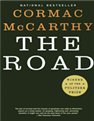
1.How many books written for children are there from the posters above?
A.One. B.Two. C.Three. D.Four.
2.Which of the following books is after 2009 in print?
A.Harry Potter and the Deathly Hallows
B.Deceptively Delicious
C.Rich Dad , Poor Dad
D.The Road
3.—How much will Mr. Wang pay for two of the books for adults? —At least .
A.$29.52 B.$18.42 C.$11.09 D.$18.33
查看答案和解析>>
科目:初中英语 来源:江苏省2019-2020学年七年级下学期线上学习调研英语试卷 题型:材料作文
假如你是李华, 住在城市花园,在那里你结识了一个新邻居叫 Daniel。请你根据下面的提示, 以 “My neighbour”为题,写一篇短文。
1.Daniel 是我的新邻居,他在新知学校读书;
2.他有许多爱好,擅长绘画,将来想当一名艺术家;
3.他家离学校不远,每天骑自行车上学;
4.他很友好并乐于助人,帮助邻居解决各种问题,经常辅导我做家庭作业;
5.有像他这样的邻居,我很幸运。 注意:1.短文应包括所给内容要点,可适当发挥,使文章连贯;
2.词数 70 左右;开头已经为你写好,不计入总词数。
My neighbour
I’m Li Hua. I live in the City Garden._______________________________________________________________________________________________________________________________________________________________________________________________________________________________________________________________________________________________________________________________________________________________________________________________________________________________________________________________________________________________________________________________________________________________________________________________________________________________________________________________________________________________________________________________________________________________________________________________
查看答案和解析>>
科目:初中英语 来源:福建省福州市2018-2019学年九年级上学期期中英语试卷 题型:阅读单选
Experts believe that there are more than 8 million restaurants in the world today. So it might surprise you to learn that restaurants, as we know them, have only existed for a few centuries. Before 1765, there were no restaurants. That is, there were no places that provided the restaurant experience. There was nowhere in which a waiter brought you food and drink that you picked from a menu. In fact, there were no menus anywhere.
There were eating places travellers could go to centuries before that. The countryside was full of inns that would serve food. And there were taverns where one could get drinks. The rich could also eat special meals prepared by private cooks. But none of them could be called a “restaurant”.
A man called Boulanger changed that. In 1765, he opened a place in Paris that sold soups(汤). On his sign he used the word "restaurant" to describe what he was selling. At that time, soups were considered something that could help "restore"(恢复)your health — in French the word "restore" is “restaurer” — so he called the soups "restaurants". Soon, people started buying Boulanger's soups even when they were not ill. And over time, people began to use the word "restaurant" to refer to a place selling soup rather than the soup itself. More "restaurants" opened in France, and people began to buy soups more often.
Later, restaurants in Paris began to serve other food besides soup. In the 1790s, menus started to appear. By the mid-1800s, there were many types of restaurants throughout the world. The United States offered coffee shops. Tea houses became popular throughout China. Paris created beautiful restaurants for the rich. The British began to copy the French, and the restaurant idea spread throughout the British Empire.
Today cities are filled with all types of restaurants. Diners have millions of options from which to choose.
1.What is the passage mainly about?
A.How restaurants developed.
B.What made a good restaurant.
C.Who created the first restaurant.
D.Why restaurants became popular.
2.According to the first paragraph, what made restaurants different from earlier eating places?
A.Restaurants only served food.
B.Restaurants were more expensive.
C.Restaurants were mainly in cities.
D.Restaurants had a list of meal choices.
3.Who did Boulanger expect to come and eat at his restaurant?
A.Rich people.
B.Sick people.
C.Travellers.
D.Workers.
4.When it was first used. what did the word "restaurant" refer to?
A.A person.
B.A place.
C.Illness.
D.Soup.
5.When did restaurants begin to grow internationally?
A.In the 1600s.
B.In the 1700s.
C.In the 1800s.
D.In the 1900s.
查看答案和解析>>
湖北省互联网违法和不良信息举报平台 | 网上有害信息举报专区 | 电信诈骗举报专区 | 涉历史虚无主义有害信息举报专区 | 涉企侵权举报专区
违法和不良信息举报电话:027-86699610 举报邮箱:58377363@163.com