
¡¾ÌâÄ¿¡¿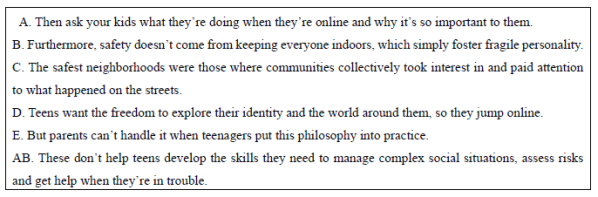
Bicycles, roller skates and skateboards are dangerous. And don¡¯t get me started on walking. But I¡¯m glad I didn¡¯t spend my childhood trapped indoors to protect me from every bump and bruise. ¡°That which does not kill us makes us stronger.¡± ¡¾1¡¿ And now technology has become the new field for the age-old battle between adults and their freedom-craving kids.
Locked indoors, unable to get on their bicycles and hang out with their friends, teens have turned to social media and their mobile phones to socialize with their peers. What they do online often mirrors what they might otherwise do if their mobility weren¡¯t so heavily limited in the age of helicopter parenting. Social media and smartphones have become so popular in recent years. ¡¾2¡¿
As teens have moved online, parents have projected their fears onto the Internet, imagining all the potential dangers that youth might face ¨C from violent strangers to cruel peers to pictures or words that could haunt them on Google for the rest of their lives.
Rather than helping teens develop strategies for negotiating public life and the potential risks of interacting with others, fearful parents have focused on tracking, monitoring and blocking. ¡¾3¡¿ ¡°Protecting¡± kids may feel like the right thing to do, but it gradually weakens the learning that teens need to do as they come of age in a technology-soaked world.
The key to helping youth navigate contemporary digital life isn¡¯t more restrictions. It¡¯s freedom-plus communication. What makes the digital street safe is when teens and adults collectively agree to open their eyes and pay attention, communicate and negotiate difficult situations together. Teens need the freedom to wander the digital street, but they also need to know that caring adults are behind them and supporting them wherever they go. The first step is to turn off the tracking software. ¡¾4¡¿
¡¾´ð°¸¡¿
¡¾1¡¿E
¡¾2¡¿D
¡¾3¡¿AB
¡¾4¡¿A
¡¾½âÎö¡¿
±¾ÎÄÊÇһƪ˵Ã÷ÎÄ¡£½éÉÜÁ˸¸Ä¸¸ÃÈçºÎ´òÓ®Ó뺢×ÓÖ®¼äÔڿƼ¼ÁìÓòµÄÕ½Õù¡£
¡¾1¡¿¸ù¾Ý¿ÕÇ°But I¡¯m glad I didn¡¯t spend my childhood trapped indoors to protect me from every bump and bruise. ¡°That which does not kill us makes us stronger.¡±£¨ µ«ÎҺܸßÐËÎÒûÓаÑÎÒµÄͯÄêÀ§ÔÚÊÒÄÚÀ´±£»¤ÎÒÃâÊÜÿһ´ÎÅöײºÍ²ÁÉË¡£¡°ÄÇЩɱ²»ËÀÎÒÃǵģ¬Ö»»áÈÃÎÒÃǸüÇ¿´ó¡£¡±£©¼°¿ÕºóAnd now technology has become the new field for the age-old battle between adults and their freedom-craving kids. £¨Èç½ñ£¬¿Æ¼¼³ÉΪÁ˳ÉÄêÈ˺ͿÊÍû×ÔÓɵĺ¢×ÓÖ®¼äÓÉÀ´ÒѾõÄÕ½ÕùµÄÐÂÕ½³¡£©¿ÉÖª£¬´Ë´¦ÐèÒªÒ»¸ö³ÐÉÏÆôϵĹý¶É¾ä£¬¼ÈÒªÓëÉÏÎÄÐγÉתÕÛ¹Øϵ£¬ÓÖÒªÒý³öÏÂÎĿƼ¼ÒѾ³ÉΪ³ÉÄêÈ˺ͺ¢×ÓÃÇÖ®¼ä¶·ÕùµÄÐÂÁìÓòÕâÒ»»°Ìâ¡£ÓÉ´Ë¿ÉÖª£¬EÏî¡°µ«ÊÇ£¬µ±ÇàÉÙÄê°ÑÕâÒ»ÀíÄÖîʵ¼ùʱ£¬¸¸Ä¸È´ÎÞÄÜΪÁ¦¡±·ûºÏÓï¾³¡£¹ÊÑ¡E¡£
¡¾2¡¿¸ù¾Ý¿ÕÇ°Social media and smartphones have become so popular in recent years.£¨½üÄêÀ´£¬É罻ýÌåºÍÖÇÄÜÊÖ»ú±äµÃ·Ç³£Á÷ÐУ©¿ÉÖª£¬´Ë´¦³Ð½ÓÉÏÎÄ£¬½²µÄÊÇÇàÉÙÄêʹÓÃÉ罻ýÌåºÍÖÇÄÜÊÖ»úÉÏÍøµÄÔÒò¡£ÓÉ´Ë¿ÉÖª£¬DÏî¡°ÇàÉÙÄêÏëҪ̽Ë÷×Ô¼ºÉí·ÝºÍÖÜΧÊÀ½çµÄ×ÔÓÉ£¬ËùÒÔËûÃÇ»áÉÏÍø¡±·ûºÏÓï¾³¡£¹ÊÑ¡D¡£
¡¾3¡¿¸ù¾Ý¿ÕÇ°Rather than helping teens develop strategies for negotiating public life and the potential risks of interacting with others, fearful parents have focused on tracking, monitoring and blocking.£¨¿Ö¾åµÄ¸¸Ä¸²¢Ã»ÓаïÖúÇàÉÙÄêÖƶ¨²ßÂÔÀ´Ó¦¶Ô¹«¹²Éú»îºÍÓëËûÈË»¥¶¯µÄDZÔÚ·çÏÕ£¬¶øÊÇרעÓÚ¸ú×Ù¡¢¼à¿ØºÍ×èÖ¹£©¿ÉÖª£¬´Ë´¦³Ð½ÓÉÏÎÄ£¬½²µÄÊǸ¸Ä¸µÄÕâЩ×ö·¨¶ÔÇàÉÙÄêµÄÓ°Ïì¡£ÓÉ´Ë¿ÉÖª£¬ABÏî¡°ÕâЩ¶¼²»ÄÜ°ïÖúÇàÉÙÄê·¢Õ¹ËûÃÇÐèÒªµÄ¼¼ÄÜÀ´¹ÜÀí¸´ÔÓµÄÉç»áÇé¿ö£¬ÆÀ¹À·çÏÕ£¬²¢ÔÚËûÃÇÓöµ½Â鷳ʱѰÇó°ïÖú¡±·ûºÏÓï¾³¡£¹ÊÑ¡AB¡£
¡¾4¡¿¸ù¾Ý¿ÕÇ°The first step is to turn off the tracking software.£¨µÚÒ»²½Êǹرոú×ÙÈí¼þ£©¿ÉÖª£¬´Ë´¦³Ð½ÓÕâÒ»»°Ì⣬˵µÄÊǸ¸Ä¸½ÓÏÂÀ´Ó¦¸Ã²ÉÈ¡µÄ×ö·¨¡£ÓÉ´Ë¿ÉÖª£¬AÏî¡°È»ºóÎÊÎÊÄãµÄº¢×Ó£¬µ±ËûÃÇÉÏÍøʱËûÃÇÔÚ×öʲô£¬ÎªÊ²Ã´Õâ¶ÔËûÃÇÈç´ËÖØÒª¡±·ûºÏÓï¾³¡£¹ÊÑ¡A¡£
ÔÚÁùÑ¡ËĵĽâÌâ¹ý³ÌÖУ¬Ñ¡ÏîÖеÄijһ¹Ø¼ü´ÊÉÏÏÂÎÄÖеĹؼü´ÊµÄ¶ÔÓ¦¹ØϵÍùÍùÊÇÖØÒªÏßË÷£¬ÀýÈ籾ƪµÚ4¿Õ£¬¸ù¾Ý¿ÕÇ°The first step is to turn off the tracking software.£¨µÚÒ»²½Êǹرոú×ÙÈí¼þ£©¿ÉÖª£¬´Ë´¦³Ð½ÓÕâÒ»»°Ì⣬˵µÄÊǸ¸Ä¸½ÓÏÂÀ´Ó¦¸Ã²ÉÈ¡µÄ×ö·¨¡£AÏîÖеÄThenÓë¿ÕÇ°Ò»¾äÖеÄThe first stepÕýºÃÏà¶ÔÓ¦£¬ÓÉ´Ë¿ÉÖª£¬AÏî¡°È»ºóÎÊÎÊÄãµÄº¢×Ó£¬µ±ËûÃÇÉÏÍøʱËûÃÇÔÚ×öʲô£¬ÎªÊ²Ã´Õâ¶ÔËûÃÇÈç´ËÖØÒª¡±·ûºÏÓï¾³¡£


| Ä꼶 | ¸ßÖÐ¿Î³Ì | Ä꼶 | ³õÖÐ¿Î³Ì |
| ¸ßÒ» | ¸ßÒ»Ãâ·Ñ¿Î³ÌÍƼö£¡ | ³õÒ» | ³õÒ»Ãâ·Ñ¿Î³ÌÍƼö£¡ |
| ¸ß¶þ | ¸ß¶þÃâ·Ñ¿Î³ÌÍƼö£¡ | ³õ¶þ | ³õ¶þÃâ·Ñ¿Î³ÌÍƼö£¡ |
| ¸ßÈý | ¸ßÈýÃâ·Ñ¿Î³ÌÍƼö£¡ | ³õÈý | ³õÈýÃâ·Ñ¿Î³ÌÍƼö£¡ |
¿ÆÄ¿£º¸ßÖÐÓ¢Óï À´Ô´£º ÌâÐÍ£º
¡¾ÌâÄ¿¡¿The school's music group will be giving a big show tomorrow night and two ______on the weekend.
A£®more
B£®other
C£®else
D£®another
²é¿´´ð°¸ºÍ½âÎö>>
¿ÆÄ¿£º¸ßÖÐÓ¢Óï À´Ô´£º ÌâÐÍ£º
¡¾ÌâÄ¿¡¿It was the boy that ____________ for what the boy had done.
A. were to blame B. were to be blamed
C. was to blame D. was to be blamed
²é¿´´ð°¸ºÍ½âÎö>>
¿ÆÄ¿£º¸ßÖÐÓ¢Óï À´Ô´£º ÌâÐÍ£º
¡¾ÌâÄ¿¡¿Over 100 passengers lost their lives in the recent air crash, which was a deadly to their families.
A. defeat B. challenge C. barrier D. blow
²é¿´´ð°¸ºÍ½âÎö>>
¿ÆÄ¿£º¸ßÖÐÓ¢Óï À´Ô´£º ÌâÐÍ£º
¡¾ÌâÄ¿¡¿¡ªGlad to see you again! I quite appreciate your new haircut.
¡ª . Well, I like things that are in.
A. Of course B. Never mind C. Thank you D. Forget it
²é¿´´ð°¸ºÍ½âÎö>>
¿ÆÄ¿£º¸ßÖÐÓ¢Óï À´Ô´£º ÌâÐÍ£º
¡¾ÌâÄ¿¡¿Her parents¡¯ quarreling with each other ____________led to her family¡¯s breaking up.
A. strictly B. hardly C. constantly D. occasionally
²é¿´´ð°¸ºÍ½âÎö>>
¿ÆÄ¿£º¸ßÖÐÓ¢Óï À´Ô´£º ÌâÐÍ£º
¡¾ÌâÄ¿¡¿
On average, American kids ages 3 to 12 spent 29 hours a week in school, eight hours more than they did in 1981. They also did more household work and participated in more of such ¡¾1¡¿ activities as soccer and ballet. Involvement in sports, in particular, rose almost 50% from 1981 to 1997: boys now spend an average of four hours a week playing sports; girls log half that time. All in all, however, children¡¯s leisure time ¡¾2¡¿ from 40% of the day in 1981 to 25%.
¡°Children are affected by the same time crisis that affects their parents,¡± says Sandra Hofferth, who ¡¾3¡¿ the recent study of children¡¯s timetable. A(n) ¡¾4¡¿ reason, she says, is that more mothers are working outside the home. Nevertheless, children in both double-income and ¡°male bread winner¡± households spent ¡¾5¡¿ amounts of time interacting with their parents, 19 hours and 22 hours ¡¾6¡¿. In contrast, children spent only 9 hours with their single mothers.
All work and no play could make for some very messed-up kids. ¡°Play is a(n) ¡¾7¡¿ way a child explores the world and learns about himself,¡± says T. Berry Brazelton, professor at Harvard Medical School. Unstructured play encourages independent thinking and allows the young to negotiate their relationships with their peers, but kids ages 3 to 12 spent only 12 hours a week ¡¾8¡¿ in it.
The children ¡¾9¡¿ spent a quarter of their rapidly decreasing ¡°free time¡± watching television. But that, believe it or not, was one of the findings parents might ¡¾10¡¿ as good news. If they¡¯re spending less time in front of the TV set, however, kids aren¡¯t replacing it with reading. Despite efforts to get kids more interested in books, the children spent just over an hour a week reading. Let¡¯s face it, who¡¯s got the time?
²é¿´´ð°¸ºÍ½âÎö>>
¿ÆÄ¿£º¸ßÖÐÓ¢Óï À´Ô´£º ÌâÐÍ£º
¡¾ÌâÄ¿¡¿ (2012Äêºþ±±°ËÊиßÈýÁª¿¼£¬29)We welcome rain£¬but a(n)________large amount of rainfall will cause floods.
A£®eventually
B£®extremely
C£®gradually
D£®constantly
²é¿´´ð°¸ºÍ½âÎö>>
¿ÆÄ¿£º¸ßÖÐÓ¢Óï À´Ô´£º ÌâÐÍ£º
¡¾ÌâÄ¿¡¿ A New York couple have been killed in a car crash on their way to hospital£¬but the unborn baby________ the accident.
A£®experienced B£®survived
C£®escaped D£®fled
²é¿´´ð°¸ºÍ½âÎö>>
¹ú¼ÊѧУÓÅÑ¡ - Á·Ï°²áÁбí - ÊÔÌâÁбí
ºþ±±Ê¡»¥ÁªÍøÎ¥·¨ºÍ²»Á¼ÐÅÏ¢¾Ù±¨Æ½Ì¨ | ÍøÉÏÓк¦ÐÅÏ¢¾Ù±¨×¨Çø | µçÐÅթƾٱ¨×¨Çø | ÉæÀúÊ·ÐéÎÞÖ÷ÒåÓк¦ÐÅÏ¢¾Ù±¨×¨Çø | ÉæÆóÇÖȨ¾Ù±¨×¨Çø
Î¥·¨ºÍ²»Á¼ÐÅÏ¢¾Ù±¨µç»°£º027-86699610 ¾Ù±¨ÓÊÏ䣺58377363@163.com