精英家教网 > 高中英语 > 题目详情
I consider myself something of an expert on apologies. A quick temper has   36  me with plenty of opportunities to make them. In one of my earlier   37 , my mother was telling me “Don’t watch the   38  when you say, ‘I’m sorry’. Hold your head up and look at the person in the   39 , so he’ll know you   40  it.”
My mother thus made the key point of a(n)   41  apology: It must be direct. You must never   42  to be doing something else. You do not   43  a pile of letters while apologizing to a person   44   in position after blaming him or her for a mistake that turned out to be your   45 . You do not apologize to a hostess, whose guest of honor you treat   46 , by sending flowers the next day without mentioning your bad   47 .
One of the important things we should do for an   48  apology is a readiness to   49  the responsibility for our careless mistakes. We are used to making excuses, which leaves no   50  for the other person to   51  us. Since most people are open-hearted, the no-excuse apology leaves both parties feeling   52  about themselves. That , after all, is the   53  of every apology. It   54  little whether the apologizer is wholly or only partly at fault. Answering for one’s   55  encourages others to take their share of the blame.
小题1:
A.providedB.mixedC.comparedD.treated
小题2:
A.dreams B.coursesC.memoriesD.ideas
小题3:
A.side B.groundC.wallD.bottom
小题4:
A.mindB.soul C.faceD.eye
小题5:
A.imagineB.enjoy C.mean D.regret
小题6:
A.useful B.successful C.equal D.basic
小题7:
A.pretend B.forget C.refuse D.expect
小题8:
A.hold on B.put away C.look through D.pick up
小题9:
A.poorer B.weaker C.worse D.lower
小题10:
A.fault B.reason C.result D.duty
小题11:
A.cruelly B.freely C.roughly D.foolishly
小题12:
A.manners B.excuses C.efforts D.roles
小题13:
A.active B.effective C.extra D.easy
小题14:
A.raise B.perform C.admit D.bear
小题15:
A.situation B.need C.sign D.room
小题16:
A.advise B.forgive C.warn D.blame
小题17:
A.wiser B.warmer C.better D.cleverer
小题18:
A.purpose B.method C.end D.advantage
小题19:
A.caresB.matters C.depends D.remains
小题20:
A.facts B.states C.rights D.actions

小题1:A
小题2:C
小题3:B
小题4:D
小题5:C
小题6:B
小题7:A
小题8:C
小题9:D
小题10:A
小题11:C
小题12:A
小题13:B
小题14:D
小题15:D
小题16:B
小题17:C
小题18:A
小题19:B
小题20:D

试题分析:本文讲述的是在人与人交往指的道歉的重要性,以及在道歉的时候我们要注意的一些事项。
小题1:A。动词辨析。A提供B混合;C比较D对待;provide … with意为“向……提供……”。
小题2:C。名词辨析。A梦想B课程C记忆D观点;紧接着的就是作者回忆出来的内容。
小题3:B。上下文串联。与后面提到的“要抬起头”正好相反。
小题4:D。考察常识。道歉时看着对方的眼睛,以示真诚,这一点在中西方文化是相同的。
小题5:C。语法分析。mean it意为“这样对方就会明白你有道歉的意思”。it在这里指道歉的行为。
小题6:B。上下文串联。冒号后的内容即为“成功的”道歉的一些基本特征。
小题7:A。动词辨析。A假装B忘记C拒绝D期待; pretend“假装”。根据情景和常识选定。
小题8:C。短语辨析。A坚持B收拾,整理C浏览D恢复;其他三个选项不合语境。
小题9:D。考察常识。职位一般论的是高、低。
小题10:A。名词辨析。Afault“过错(责任)”。B原因C结果D责任;turn out意为“后来证明是”。
小题11:C。roughly此处表示对待客人不礼貌,服务不到位。从前面的要不要道歉的讨论可以猜出这一答案。
小题12:A。上下文串联。bad manners 意为不礼貌的行为,从treat roughly这一信息不难推测出这一答案。
小题13:B。上下文串联。effective与successful有异曲同工之妙。
小题14:D。固定搭配。bear the responsibility(承担责任),系习惯搭配。
小题15:D。名词辨析。A情景B需要C迹象D空间;leave no room不留余地。
小题16:B。动词辨析。A建议B原谅C警告D责备;经常找借口,那么也就会不留余地让别人来“原谅”自己。
小题17:C。上下文串联。better表示“心情更舒畅”。未找借口的道歉,即真诚的道歉,对方的感觉一定很好。
小题18:A。上下文串联。道歉的最终“目的”是化干戈为玉帛,大家和好如初,所以用purpose。 end表示“目的”时用复数较多,而且不及purpose直接。
小题19:B。道歉者是全部还是部分承担责任这些都不太重要:关键是为所作所为主动负责,这也能促使别人共同承担责任。 根据语境不难排除另三个选项。
小题20:D。根据行文逻辑应该是对自己的“行动”负责。answer for在此意为“对……负责”。
点评:本文讲述的是在人与人交往指的道歉的重要性,以及在道歉的时候我们要注意的一些事项。考生在选择答案时要根据上下文的复现或同现以及这些词之间的有机联系来确定答案。由于完形填空的文章是一个意义相关联的语篇,围绕一个话题论述,因此在行文中词语的重复、替代、复现和同现现象是不可避免的。根据这个原则,某一个空格所对应的答案很可能就是在上下文中复现或同现的相关词:原词、同义词、近义词、反义词等。
练习册系列答案
相关习题

科目:高中英语 来源:不详 题型:阅读理解


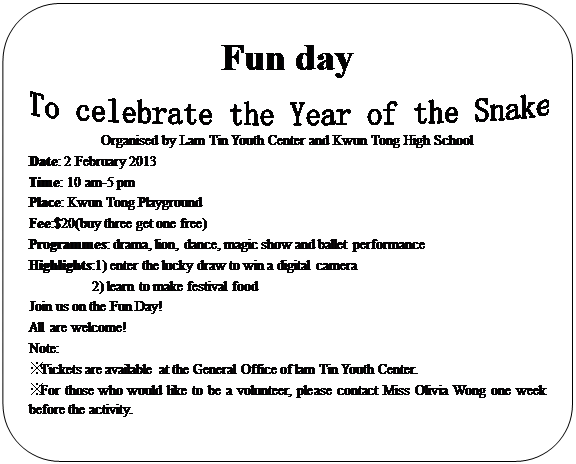
小题1:What you have just read is a _______.
A.noteB.reportC.scheduleD.poster
小题2:What is going to take place on 2 February, 2013?
A.A party for close friends to meet and have fun
B.A party to celebrate a traditional festival.
C.A big event to welcome a Chinese new year.
D.A social gathering to raise money for wildlife.
小题3:Which of the following statements is true?
A.Tickets are sold in Kwun Tong High School
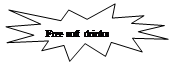
B.It's unnecessary to take soft drinks with you.
C.Free digital cameras are provided for everybody
D.Festival food will be served without extra charge.

查看答案和解析>>

科目:高中英语 来源:不详 题型:阅读理解


HARVARD UNIVERSITY
                                 
Office of Admissions
Financial Aid
Our goal in admissions and financial aid is clear: We want to bring the best people to Harvard, regardless of their ability to pay — and we do. About 70 percent of our students receive some form of aid, with over 60 percent receiving need–based scholarships.
Two principles guide us:
· Admission to Harvard is need-blind, by which we mean that financial need is not a barrier to admission. International students have the same access to financial aid as United States citizens.
· Financial aid at Harvard is entirely need–based and we are committed to meeting the demonstrated need of all students. Students apply for aid annually and every year we review our financial aid program, considering such things as any changed student or family circumstances, university resources, and demand.
Removing Economic Barriers
In the past decade we have increased financial aid for low and middle income families by over 180%. No contribution is expected from parents with incomes under $65,000. Beginning with the class of 2016, those parents with annual incomes between $65,000 and $150,000 are asked to contribute from zero to ten percent of their income. Some families with incomes above $150,000 still qualify for aid. Families at all incomes who have significant assets(资产)will continue to pay more than those in less fortunate circumstances. Students are also asked to contribute to the cost of their education through term-time and summer work.
Families with higher incomes facing unusual financial challenges may also qualify for need–based scholarship assistance, yet those with significant assets at all income levels are asked to contribute proportionately(成比例的)more.
Our financial aid program includes an array of financing options beyond our need–based scholarship program, such as a parent monthly payment plan, various loan programs and the opportunity to pre–pay tuition for four years at a student’s freshman year rate.
There are also other forms of financial assistance such as the Faculty Aide Program, the Harvard College Research Program and the Dean’s Summer Research Program that enable students to create paid partnerships with teachers on academic projects of mutual interest. Over two-thirds of Harvard students choose to work during their time in Cambridge and gain valuable job experience working in a wide array of University settings, including our libraries, dining halls, museums and academic departments.
We hope you will visit our websites for a fuller description of our comprehensive program of financial assistance.
小题1:Admission to Harvard is need-blind in that _______.
A.Harvard does take into account students’ economic situations
B.Students’ ability to pay does not affect their admissions to Harvard
C.Students need to pay big money to Harvard after they are admitted
D.The majority of students in Harvard do not need financial aids
小题2:Based on the requirements above, we can learn that _______.
A.parents with annual incomes of over $ 150,000 needn’t contribute
B.financial aids are not intended for families with higher incomes
C.wealthier families are expected to contribute more to Harvard
D.students are not encouraged to pay the cost of their education
小题3:In what way can students get financial assistance from Harvard?
A.Students can be offered paid-work opportunities outside Harvard.
B.Students can have opportunities to get loans for their education.
C.Students can pay for their education in Harvard within one month.
D.Students earn money by assisting teachers in Cambridge University.

查看答案和解析>>

科目:高中英语 来源:不详 题型:阅读理解

If you are invited to a party by the Austrians and the suggested dress is "informal(非正式的)" (usually marked in the lower left-hand coner of the invitation) , it may mean dark suit and a white shirt for men and cocktail dress( 短短服) for women. Or again, may mean something considerably less formal. "Formal" means a black tie and evening dress for men and a floor-length dress for women. If a man is in doubt(拿不准) about what to wear, he may come slightly overdressed and then take his coat and tie off when he sees that others are wearing sports shirts. National dress is always acceptable.
小题1:If a lady receives an invitation marked with "formal", she should wear
A.a long dressB.a cocktail dressC.a short dressD.a dark suit
小题2:Suppose you are a man invited to an informal party by an Austrian, you'd better          .
A.wear dark clothes and dark suit
B.dress yourself in a dark suit and a white shirt
C.wear a coat and so on
D.wear sports shirts
小题3:The general idea of this passage is                .
A.men and women should be dressed differently
B.national dress is always useful
C.what to wear if a person is invited to an Austrian party
D.men and women should dress themselves beautifully
小题4:The meaning of "overdressed" is                .
A.dressing oneself a little too formallyB.dressing oneself a floor-length dress
C.wearing one's tieD.dressing a sports shirt

查看答案和解析>>

科目:高中英语 来源:不详 题型:阅读理解

In the UK, we like a good bargain. People flock to the sales in January, when stores slash their prices to get rid of all their winter stock. But surprisingly, the British hate haggling. In markets you might see the odd British person battling with a stall owner to bring down the price of a pair of trousers or some furniture. Generally, though, people from the UK are too reserved to haggle. If we think the price of something we want is too high, we’ll simply move on and try somewhere else.
The act of bargaining with someone is very theatrical, in my opinion. It’s a test to see who can stand their ground for the longest. But it is not in British people’s nature to “perform” in public, especially around strangers.
However, in the US, people are generally more willing to haggle. And if you wander into a market, you’re likely to hear a number of phrases that Americans reserve for such occasions.
First, “you drive a hard bargain” is commonly said by the customer to indicate they think the stall holder is working very hard, probably a little too hard, to get the price he wants.
Or you might hear the buyer telling a stall holder that “the kid’s gotta have braces”, which means they don’t have enough spare money lying around to afford the price being offered.
If the customer is really shocked at the price suggested by the seller, they also might say “you’re killing me” to indicate that they think the price is far too high.
In Britain, it’s difficult to imagine anyone saying anything along these lines. If I were forced to bargain, I’d probably say, very simply: “I’m going to make you an offer.” If that offer were refused, I think I’d just walk away.
小题1:The underlined word “haggling” can be replaced by _______.
A.arguing B.bargaining C.performing D.insisting
小题2:Why don’t the British haggle generally?
A.They don’t think it is polite behavior.
B.They have sales every January.
C.They can always get a better price somewhere else.
D.They dislike openly expressing feelings or opinions.
小题3:The underlined phrase “you drive a hard bargain” means_______.
A.the seller has a lot of deals on offer.
B.the buyer will make a final offer
C.the stall holder is too insistent
D.the buyer doesn’t have a lot of spare money
小题4:What’s the author’s attitude toward bargaining?
A.Negative. B.Careless. C.Positive. D.Critical.
小题5:How does the passage mainly develop?
A.By providing examples.
B.By making comparision.
C.By analyzing causes and effects.
D.By following the order of importance.

查看答案和解析>>

科目:高中英语 来源:不详 题型:阅读理解

People from East Asia tend to have more difficulty than those from Europe in distinguishing facial expressions — and a new report published online in Current Biology explains why.
Rachael Jack, University of Glasgow researcher, said that rather than scan evenly(均匀的) across a face as Westerners do, Easterners fix their attention on the eyes.
"We show that Easterners and Westerners look at different face features to read facial expressions," Jack said. "Westerners look at the eyes and the mouth in equal measure, whereas Easterners favor the eyes and neglect (忽略) the mouth."
According to Jack and her colleagues, the discovery shows that human communication of emotion is more complex than previously believed. As a result, facial expressions that had been considered universally recognizable cannot be used to reliably convey emotion in cross-cultural situations.
The researchers studied cultural differences in the recognition of facial expressions by recording the eye movements of 13 Western Caucasian and 13 East Asian people while they observed pictures of expressive faces and put them into categories: happy, sad, surprised, fearful, disgusted, angry, or neutral. They compared how accurately participants read those facial expressions using their particular eye movement strategies.
It turned out that Easterners focused much greater attention on the eyes and made significantly more errors than did Westerners. "The cultural difference in eye movements that they show is probably a reflection of cultural difference in facial expressions," Jack said. "Our data suggests that whereas Westerners use the whole face to convey emotion, Easterners use the eyes more and mouth less."
In short, the data show that facial expressions are not universal signals of human emotion. From here on, examining how cultural factors have diversified these basic social skills will help our understanding of human emotion. Otherwise, when it comes to communicating emotions across cultures, Easterners and Westerners will find themselves lost in translation.
小题1:What were the people asked to do in the study?
A.To make a face at each other.
B.To get their faces impressive.
C.To classify (分类) some face pictures.
D.To observe the researchers' faces
小题2:What does the underlined word "they" in Paragraph 6 refer to?
A.The participants in the study.B.The researchers of the study.
C.The errors made during the study.D.The data collected from the study.
小题3:In comparison(比较) with Westerners, Easterners are likely to         .
A.do translation more successfully
B.study the mouth more frequently
C.examine the eyes more attentively
D.read facial expressions more correctly
小题4:What can be the best title for the passage?
A.The Eye as the Window to the Soul
B.Cultural Differences in Reading Emotions
C.Effective Methods to Develop Social Skills
D.How to Increase Cross-cultural Understanding

查看答案和解析>>

科目:高中英语 来源:不详 题型:阅读理解

In Europe, people hold the fork in the left hand and the knife in the right throughout the meal, a system that is generally agreed to be more efficient than the American zigzag(曲折的)method. Americans hold both the fork and the knife in their right hands throughout the meal, so they continually change their forks to the left hand when they have to cut their meat. It seems to be funny for the Europeans to see Americans busy changing their dinner sets, making a lot of noises.
A few explanations for this American style are as follows:
(1) Americans are practical and efficient. Since most of us are right-handed, it is reasonable to keep our working tools at all times in the right hand that can use them most efficiently.
(2) Americans, the master of the New World are rebels(叛逆者).They use the zigzag method to break the rules in the Old World and in this way they are thumbing their nose at Mother England. Americans are a restless kind. They do not like to sit in one spot for very long when dining.
(3) Forced to do so, they respond by “playing” with the silver.
Whatever the reason for the practice, it is now certainly as American as apple pie. Europeans recognize this and are quick to attack it as evidence of American innocence(无知)of form. Arguments against the zigzag method rest not only on grounds of efficiency but also on those of tradition. In Old World dining, the knife is held in the right hand continually because it can serve as an instant defense against the uninvited intruders(入侵者).However, such alertness(警觉) is out of place in the New World, as every American believes that this is the home of the brave. Americans juggle their silverware, perhaps, to show that they are not afraid and that one of them holding a fork is worth any number of them holding blades(刀).
小题1:Americans use _______ to hold their fork to pick up the salad.
A.the right handB.the left hand
C.both handsD.either of the two hands
小题2:As the masters of the New World, Americans use a different cutting method from that in the Old World to _________________.
A.show their independence of Mother England
B.show their disrespect to Mother England
C.add a new tradition to those in Mother England
D.show off their creativeness to Mother England
小题3:In the last sentence, the word “juggle” probably means ____________.
A.hold B.play withC.pick upD.lay down
小题4:Also in the last sentence, the two “them” refer to ____________.
A.Americans
B.Europeans and Americans separately
C.Americans and Europeans separately
D.Europeans
小题5:Which of the following statements is NOT true?
A.European people hold the fork in the left hand and the knife in the right hand.
B.The zigzag eating method is related to American characteristics.
C.The zigzag eating method has become an American feature.
D.European people will use the American method because of its efficiency.

查看答案和解析>>

科目:高中英语 来源:不详 题型:完形填空

Body language is the quiet, secret and most powerful language of all! It speaks    小题1:   than words. According to specialists, our bodies send out more    小题2:   than we realize. In fact, non-verbal communication (非言语交际) takes up about 50% of what we really    小题3: , and body language is  particularly    小题4:   when we attempt to communicate across cultures. Indeed, what is called body language is so much a part of us that it’s actually often unnoticed. And misunderstandings occur as a result of it.   小题5: , different societies treat the    小题6:  between people differently. Northern Europeans usually do not like having    小题7:   contact (接触) even with friends, and certainly not with strangers. People from Latin American countries,    小题8:  , touch each other quite a lot. Therefore, it’s possible that in conversation, it may look like a Latino is    小题9:  a Norwegian all over the room. The Latino, trying to express friendship, will keep moving    小题10:  . The Norwegian, very probably seeing this as pushiness, will keep    小题11:   -- which the Latino will in return regard as    小题12:  .
Clearly, a great deal is going on when people    小题13:  . And only a part of it is in the words themselves. And when parties (当事人) are from different cultures, there’s a strong possibility of    小题14:  . But whatever the situation, the best    小题15:  is to obey the Golden Rule: treat others as you would like to be treated.
小题16:
A.straighter B.louderC.harderD.further
小题17:
A.soundsB.invitationsC.feelingsD.messages
小题18:
A.hopeB.receiveC.discoverD.mean
小题19:
A.immediateB.misleadingC.importantD.difficult
小题20:
A.For exampleB.ThusC.HoweverD.In short
小题21:
A.tradeB.distanceC.connectionsD.greetings
小题22:
A.eyeB.verbalC.bodilyD.telephone
小题23:
A.in other words B.on the other hand
C.in a similar wayD.by all means
小题24:
A.disturbing B.helpingC.guidingD.following
小题25:
A.closerB.fasterC.fartherD.slower
小题26:
A.stepping forward B.going on
C.backing away D.coming out
小题27:
A.weaknessB.carelessness C.friendliness D.coldness
小题28:
A.talkB.travelC.laughD.think
小题29:
A.curiosityB.excitement C.misunderstandingD.nervousness
小题30:
A.chanceB.timeC.resultD.advice

查看答案和解析>>

科目:高中英语 来源:不详 题型:阅读理解

Nearly all our food comes from the soil. Some of us eat meat, of course, but animals live on plants. If there were no plants, we would have no animals and no meat. So the soil is very necessary for life. The top of the ground is usually covered with grass or other plants. There may be dead leaves and dead plants on the grass. The waste matter (粪) from animals also falls on it.
All soil needs food. If we do not give it any, the plants will be weak. Farmers found that animals’ waste is the best food for the soil, but chemical fertilizers (化肥) are also very useful. The same crop (庄稼) should not be grown in the same place every year; it’s better to have a different crop. A change of crop and the use of a good fertilizer will keep the land good.
小题1:What would happen first without plants?
A.People would have more crops.B.Animals would die.
C.There would be more food.D.There would be less soil.
小题2:What does the writer tell us in the first paragraph (段落)?
A.Leaves, plants, grass and waste live on each other.
B.There would be no animals without meat.
C.There would be no plants without animals.
D.People, animals, plants and soil live on each other.
小题3:Which is the best food for soil in the field?
A.Chemical fertilizersB.Plants and grass.C.Animals’ waste.D.Different crops.
小题4:Why do we often grow a different crop in the same place every year?
A.Because we can keep the soil rich this way.
B.Because we don’t have enough land.
C.Because we want to have a different food.
D.Because we do this as a habit.
小题5:What is the best title for the passage?
A.Soil and WasteB.Plants and AnimalsC.Food and WasteD.Soil and Food

查看答案和解析>>

同步练习册答案