
科目:czyy 来源:2015届浙江兰溪柏社中学七年级上学期单元练习(二)英语试卷(解析版) 题型:单项填空
------Is she __________China?
------Yes, She is ________.
A.in; China
B.a; China
C.from; Chinese
D.from; China
科目:czyy 来源:2012-2013学年浙江兰溪柏社中学七年级上学期单元练习(二)英语试卷(带解析) 题型:单选题
------Is she __________China?
------Yes, She is ________.
| A.in; China |
| B.a; China |
| C.from; Chinese |
| D.from; China |
科目:czyy 来源:北大附中网校2005年12月份初一英语打擂统考 题型:017
—Is she from ________?
—Yes,she is ________
A.China,China
B.Chinese,Chinese
C.China,Chinese
D.Chinese,China
科目:czyy 来源:点击新版全程测试卷(初一上) 题型:017
-Is she ________ friend?
-Yes, ________ .
[ ]
科目:czyy 来源:黄冈题库练考新课堂九年级 英语 题型:050
阅读理解
It is sometimes said that the English are polite people. This can make life difficult for foreigners. Suppose a foreign boy asks an English girl to go out with him and she says, “I finish my work, I'll meet you in the cafe at 7 o'clock.” Is she saying “yes” or “no” to his invitation?
In grammatical terms, she is using the conditional structure(表示条件的句子). By using the conditional, speakers of English can avoid giving a “yes” or “no” answer to a question. It enables people to be diplomatic(婉转的). If the girl doesn't want to go out with the boy, she won't turn up at the cafe. She will let him understand she is still working, if she wants to go out with him, but doesn't want to appear too easy to catch, she has achieved that with her reply. But in this case, as she uses the first conditional which shows probability, she is quite likely to turn up at the cafe. Being polite can make life very difficult!
The conditional is often used by people in the news-politicians, for example-who wish to avoid speaking out their ideas. This is very important if they are on their way to discuss an agreement. No one wants to give away his or her points before he or she starts. A government spokesman might say to a group of workers, “If we could pay you more, we would.” The use of the conditional here makes room for argument although the speaker is using the second conditional form, which shows improbability. So it is unlikely the workers will get their rise.
“If” is a small word, which appears often in the English language. It can show politeness, reported speech and conditionals such as the First-probability-if I can come to your party, I will; the Second-improbability-if I saw you tomorrow, I'd give you the book; and the Third-impossibility (meaning it is too late to change something that has happened)-if you have told me, I would have helped you.
1.The using of the conditional can make a speech ________.
[ ]
2.Which of the following is true according to the passage?
[ ]
A.Language used in the news should make room to argue.
B.Usually English girls are not easy to catch.
C.English people never speak out their ideas in public.
D.The word “if” can show different meanings.
3.In the passage, “If we could pay you more, we would.” probably means “________.”
[ ]
A.the workers will make more money
B.the spokesman doesn't give any promise
C.the spokesman keeps his word
D.the workers' problems aren't difficult
4.This passage is mainly talking about ________.
[ ]
A.the conditional in communication
B.how to invite a girl in Britain
C.British people and their life
D.some language points in daily English
科目:czyy 来源:英语教研室 题型:033
—This is a photo of Reiko. Can you see where Reiko is from?
—Is she from________?
—Yes, she is.
—Does she speak________?
—Yes. But she is studying in China, so she can speak some________.

科目:czyy 来源: 题型:017
-Is she ________ friend?
-Yes, ________ .
[ ]
科目:czyy 来源:双色笔记初中英语总复习 题型:050
It is sometimes said that the English are polite people. This can make life difficult for foreigners. Suppose a foreign boy asks an English girl to go out with him and she says, “If I finish my work, I'll meet you in the cafe at 7 o'clock.” Is she saying “yes” or “no” to his invitation?
In grammatical terms, she is using the conditional structure. By using the conditional, speakers of English can avoid giving a “yes” or “no” answer to a question. It enables people to be diplomatic. If the girl doesn't want to go out with the boy, she won't turn up at the cafe. She will let him understand she is still working. If she wants to go out with him, but doesn't want to appear too easy to catch, she has achieved that with her reply. But in this case, as she uses the first conditional which shows probability, she is quite likely to turn up at the cafe. Being polite can make life very difficult!
The conditional is often used by people in the news-politicians, for example-who wish to avoid speaking out their ideas. This is very important if they are on their way to discuss an agreement. No one wants to give away his or her points before he or she starts. A government spokesman might say to a group of workers, “If we could pay you more, we would.” The use of the conditional here makes room for argument although the speaker is using the second conditional form, which shows improbability. So it is unlikely the workers will get their rise.
“If” is a small word, which appears often in the English language. It can show politeness, reported speech and conditionals such as the First-probability-if I can come to your party, I will; the Second-improbability-if I saw you tomorrow, I'd give you the book; and the Third-impossibility (meaning it is too late to change something that has happened)-if you have told me, I would have helped you.
注:conditional structure表示条件的句式,avoid避免,diplomatic婉转的,achieve达到,politician政客
1.The using of the conditional can make a speech ________.
[ ]
2.Which of the following is TURE according to the passage?
[ ]
A.Language used in the news should make room to argue.
B.Usually English girls are not easy to catch.
C.English people never speak out their ideas in public.
D.The word “if” can show different meanings.
3.In the passage, “If we could pay you more, we would.” probably means ________.
[ ]
A.the workers will make more money
B.the spokesman doesn't give any promise
C.the spokesman keeps his word
D.the workers' problems aren't difficult
4.This passage is mainly talking about ________.
[ ]
A.the conditional in communication
B.how to invite a girl in Britain
C.British people and their life
D.some language points in daily English
科目:czyy 来源: 题型:
用所给单词的适当形式填空,必要时加助动词。
1.I have two______(watch).
2.Are_______(that)your books?
3.Let's_______(do)our homework.
4.That sounds______________(well).
5.---Is she English?
---Yes,______(She)name is Mary.
6.Kate and I______(be)good friends.
7.She can________(play)basketball well.
8.Ma Ming can______(not like)her yellow ruler.
科目:czyy 来源:北京市同步题 题型:完形填空
| 完形填空。 | ||||
| It was Sunday. I stayed at home with my 1 . It was sunny outside and I really wanted to go out with them. My mother 2 the windows. " How nice it is!" she said. "Yes. Let's take Henry to St. Louise Park. He 3 about going there for a long time," said Dad. "Great!" I shouted. I was so 4 that my dream came true. We prepared everything 5 then started our trip to St. Louise Park. Wow! There were so many boats on the big lake in the park. 6 we chose a cartoon boat. "You'll be the captain (船长)!" Dad said. "Great!" I said. Oh! I had the chance to drive a boat all by 7 . "Please have a seat!" I told my parents. They 8 at the back seat. But unfortunately (不幸地), I was not 9 driving a boat, so the boat couldn't go straight. There were also many wild ducks on the lake. When our boat 40 them, they said " Crack- crack" to me. Maybe they were laughing at me. I had a happy and wonderful day. | ||||
|
科目:czyy 来源:同步题 题型:单选题
科目:czyy 来源:0117 月考题 题型:单选题
科目:czyy 来源:期末题 题型:阅读理解
科目:czyy 来源: 题型:单选题
科目:czyy 来源:期中题 题型:单选题
[ ]
科目:czyy 来源:同步题 题型:阅读理解
 ing. If she wants to go out with him, but doesn't want to appear too easy to
  this case, as she uses the first
  hows probability, she is quite likely to turn up at the café.
  is is very important if they are
 your party, I will; the
  give you the book; and the
  oesn't give any promise
科目:czyy 来源:2013届江苏省宿迁市宿豫区初一上学期期末考试英语卷 题型:其他题
选择适当的选项填在对话的空白,使其意思完整、正确。(5分)
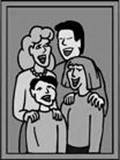 A: Hello,
1.___________________
A: Hello,
1.___________________
B: Oh, you look so happy. Is this your mother?
A: Yes. My mother is a doctor. 2._________________
B: Does you father often go shopping with your mother?
A: No. He just likes going fishing. Look! 3.___________
B: She’s very beautiful. 4.__________________
A: She and I like listening to music.
B: 5._______________ .
|
a. How old is she? b. This girl is my sister. c. She likes doing some shopping. d. Me too. e. Lily. Look at this photo of my family. f. What does she like? |
科目:czyy 来源: 题型:
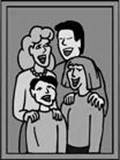 A: Hello, 【小题1】___________________
| a. How old is she? b. This girl is my sister. c. She likes doing some shopping. d. Me too. e. Lily. Look at this photo of my family. f. What does she like? |
科目:czyy 来源:2013年初中毕业升学考试(福建福州卷)英语(解析版) 题型:其他题
根据对话内容。选择恰当的句子补全下列对话。(每小题1分.共5分)
|
A. We've known each other since we were kids. B. Where is she from? C. You mean the girl reading a book? D. What does she look like? E. Could you introduce me to her? F. She is always ready to help others. G. Then let's talk to her when she stops reading. |
W: Do you know the girl in red under the tree?
M: 1.
W: Right. Do you know her?
M : Of course. She's Lily. 2.
W: Is she easy to get along with?
M: Yes. She is kind. 3.
So she is very popular with the people around her.
W: I want to make friends with her. 4.
M: Certainly. But I don't want to disturb her now. She seems to lose herself in the book.
W: OK. 5.
M: All right.
科目:czyy 来源:2013年初中毕业升学考试(湖北黄石卷)英语(解析版) 题型:其他题
根据对话内容,从A—G七个选项中选出五个能补全对话的最佳选项。(有两项多余)
Lily: Hi, Jim! How was your party?
Jim: It’s wonderful! 1.
Lily: I’m sorry. I had planned to, but I had a high fever that day.
Jim: Sorry to hear that. Are you all right now?
Lily: Yes, thanks. 2.
Jim: Well, we had many different kinds of food, such as chicken, pizza, salads …
Lily: Did you have a birthday cake?
Jim: 3.
Lily: What about music?
Jim: It was great! As you know, Linda’s brother is a famous DJ, so she brought lots of good CDs with her. 4. we had an unforgettable time.
Lily: What time did the party end?
Jim: 5. I couldn’t get up the next day.
Lily: Well, it sounds as if you enjoyed yourselves.
Jim: Yes. I like having parties because they can make us happy and relaxed.
A. Yes, a big chocolate one. B. Why didn’t you come?
C. At half past two. D. It’s raining today.
E. What time did they get up? F. We danced till two o’clock in the morning.
G. What did I miss at the party, anyway?