
科目:czyy 来源: 题型:052
The word
“hello”is probably used more often than any other one in the English language. Everyone in the US and other countries use the word. again and again, everyday of the week.The American inventor Thomas Edison is believed to be the first person to use
“hello”on the telephone soon after the invention of it.At first, people began their words on the telephone with
“Are you there?”They were not sure that small machine could really carry voices.Edison was a man of few words. He wasted no time. The first time he picked up the phone, he did not ask if anyone was there. He was sure someone was there and only said
“hello”.From then on,
“hello”is often heard when you pick up the phone.True or false.
(1) Thomas Edison was the first person to invent
“hello”.(2) At first people said
“Are you there?”because they didn't believe the telephone.(3) Edison was a man of few words. It means he didn't like talking very much.
(4) Edison didn't say
“Are you there?” because he believed the telephone and didn't want to waste time.(5) Edison was the first person to use
“hello”on the telephone.科目:czyy 来源:随堂讲与练 八年级上册(配合牛津英语) 牛津版 题型:050
| |||||||||||||||||||||||||||||||||||||||||||||||||||||||||||||||||||||||||
科目:czyy 来源:河北省模拟题 题型:阅读理解
A. only in the USA
B. only in England
C. in many countries
D. in English-speaking countries except the USA
科目:czyy 来源:河北省模拟题 题型:阅读理解
科目:czyy 来源: 题型:阅读理解
The word "hello" is perhaps used more often than any other word in the English language. Everybody in the United States uses this word again and again every day and everywhere. You pick up the phone and the first word you hear is "Hello!" You meet a friend in the street and the first word you say is "Hello!"
Where did the word come from? The American inventor Thomas Edison was the first person to use "hello" in the late eighteenth century after the invention of the telephone. At first people greeted each other on the phone "Are you there?" They were not sure the new thing could really carry voices. But Thomas Edison never wasted time. The first time he picked up the phone, he didn't ask if anyone was in. He was sure someone was there and listening to him, so he said, "Hello!" From then on, the word "hello" became widely used in America.
( )61. The word "hello" was first used__________.
A. in the early 18th century after the invention of the telephone
B. in the late 18th century after the invention of the telephone
C. in England in the late 18th century
D. in America in the early 18th century
( )62. Edison said "Hello" because __________.
A. he was sure he was speaking to the person he called
B. he believed someone was listening to him
C. he wanted to save time and didn't want to talk with others
D. he didn't know the words "Are you there?"
( )63. At first people were not sure__________ could really carry voices.
A. they B. "hello"
C. the telephone D. Edison
( )64. The underlined word "greeted" means__________in Chinese.
A.欢迎 B.打招呼 C.招待 D.欢送
( )65. According to the passage, which of the following sentence is TRUE?
A. The word "hello" is never used in the English language.
B. Thomas Edison invented the telephone.
C. Thomas Edison wasn't the first person to use "hello" on the telephone.
D. You pick up the phone and the first word you hear is "Hello!"
科目:czyy 来源:2013届北京市丰台区中考一模考试英语试卷(带解析) 题型:阅读理解
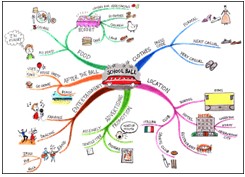
Tony Buzan’s grades were going down at university. Disappointed with his low marks, he went to the library to find a book on how to use his brain. He was directed to the medical section. Confused, he said to the librarian, “I don’t want to take my brain out, I just want to learn how to use it.” Her reply was simple: “There’s no book on that.”
“I thought to myself,” says Buzan, “if I buy a little radio, I get an instruction manual (说明书). If I buy a microwave, I get an instruction manual. But for the most important machine in the world, no instruction manual?”
Fifty years later, Buzan has become the world’s leading speaker on the brain and learning. In the late 1960s, he invented the mind map, a visual representation of thought processes.
This kind of thinking has become a popular tool for planning, organizing, problem solving, and communicating across the world. He has since authored and co-authored over 100 books that have appeared in more than 30 languages.
“I think in most cases, people use less than 1 percent of their brains,” he says.
But how do you expand this 1 percent? How do you become the best student you can be?
According to Buzan, the answer is simple. You take a section of whatever it is that you are trying to learn, he says, and you read it for its essence (精髓、要素). Then you make a mind map of all the important details. For a truly effective mind map, you start with a colored image in the center of your page. Draw the first image that comes to mind on the topic you are mind mapping. Branch off from your central image and create one of your main ideas. From your main branches draw some sub-branches and from those sub-branches you can draw even more branches. He emphasizes that you should use plenty of images and colors as these help with memory recall and encourage creativity.
By using this visual format (形式), according to Buzan, your mind will begin to make associations that will help you remember more information for longer periods of time.
Buzan believes that traditional note-taking methods, such as lists and summaries, do not stimulate the brain’s recall capacity or ability in the same way. Because of this, students will often find themselves locked away in their rooms for hours, trying hard to memorize separate details. Buzan believes that for a more effective and lasting way of studying, you must first understand how your brain works.
“Everyone is born smart,” he says. “You just have to learn how to learn.”
【小题1】What is the main purpose of the first two paragraphs?
| A.To show that Tony Buzan was worried about his study. |
| B.To invite us to think about the importance of manuals. |
| C.To prove that the mind map is a useful tool for the brain. |
| D.To show why Tony Buzan studies the brain and learning. |
| A.Excite. | B.Improve. | C.Encourage. | D.Affect. |
| A.If we learn the mind map, we will become the best student. |
| B.The mind map will help your brain connect separate details. |
| C.The mind map will be more effective if we put more details in it. |
| D.We will solve the problem if we make connections between ideas. |
| A.How to make the mind map? |
| B.Is the mind map widely used? |
| C.Can your memory be mapped? |
| D.Is the mind map helpful in thinking? |
科目:czyy 来源:2013-2014学年辽宁省大石桥市九年级上学期期中考试英语试卷(解析版) 题型:其他题
阅读短文,从A—E五个句子中选择正确选项还原到文中,使短文内容完整。
The 2012 Olympic Games in London is drawing near. For this year’s Games’ slogan, the London Organizing Committee of the Olympic Games (伦敦奥组委) has chosen the phrase, “Inspire a Generation”(激励一代人).
Why do they want to choose this as the slogan? This is
becau se
they hope to inspire athletes to do their best and common people to do better
in their daily lives. 1._________ But if you go there, you’d better do your
best to follow British etiquette. Otherwise, you’ll end up in a right mess! 2.________
Let’s have a look:
se
they hope to inspire athletes to do their best and common people to do better
in their daily lives. 1._________ But if you go there, you’d better do your
best to follow British etiquette. Otherwise, you’ll end up in a right mess! 2.________
Let’s have a look:
Don’t talk about money: British people hate talking about money and it is considered rude to do so. 3._______
Afternoon Tea: The traditional view of the British sitting down for an afternoon tea is wrong. 4._______
Give tips(小费): The British prefer a quiet “thank you” gift for good service. In fact, many British waiters will not make a fuss (大惊小怪) if you decide not to tip at all.
5.________ The British are not like Frenchmen. When Frenchmen meet each other, they often give a kiss. However, many British people prefer a handshake or a pat (拍打) on the back to say “hello”.
Conversation tips: If you want to be friendly, end a sentence with the word “mate”.
A. Here are a few tips for tourists on how to act while in the UK.
B. Few people keep the tradition now.
C. Greet with a kiss
D.The Games are also inspiring lots of tourists to come to London.
E. In fact, never ask anyone about their salary (薪水).
科目:czyy 来源:2012届山东省东营济军生产基地实验学校初三上学期阶段检测英语试卷(带解析) 题型:阅读理解
I live with my grandmother in a Beijing yard house. One day last year, I was surprised to see a big foreigner coming out of the house next door to ours. He was very tall with short brown hair and a pair of glasses.
The first time I saw him, I was too shy to speak to him. “My English is too poor!” I thought. My grandmother told me that he had just moved into our yard. “I don’t like it!” she said. “Foreigners aren’t like us. Maybe he’ll play loud music and parties every night! I’m sure he’s going to cause trouble.”
Several days later, I met the foreigner as I was walking home after work. “Hello!” he said (in Chinese!). “My name’s Tony. I’ve just moved into the house next door to yours.” While I was wondering what to say, he continued, “There’s a nice bar down the road. Why don’t you and your family come and have dinner with me?” “Bars are bad places,” said my grandmother when I told her, but we decided to go.
The bar was not at all what I had expected. It was in a beautiful little yard house, with several large bookshelves and pictures of Tibet on the walls. Several Chinese people and foreigners were sitting drinking or reading books. I noticed that some of the foreigners were speaking Chinese in a low voice to each other! “Oh, what a civilized place!” my grandmother exclaimed.
The bar served special “hutong pizzas”. As we ate, Tony told us about himself-he is an English expert in environment. He always likes to be quiet. My grandmother said to me, “He really seems like a very nice young man.”
【小题1】When the writer first saw the foreigners, she______.
| A.was frightened to him |
| B.wanted to practice English with him |
| C.felt too shy to speak to him |
| D.hoped to invite the foreigner to the bar |
| A.was very excited | B.didn’t go to the bar |
| C.didn’t like bars | D.was angry with Tony |
| A.文明的 | B.喧闹的 | C.野蛮的 | D.讨厌的 |
| A.Tony made a lot of noise every night. |
| B.Tony was an English expert in environment. |
| C.There were some foreigners speaking Chinese in the bar. |
| D.The grandmother thought Tony might cause some trouble. |
| A.A Bar in Tibet |
| B.A Foreigner in Beijing |
| C.Bars are Bad Places |
| D.Foreigners Like Bars |
科目:czyy 来源:2012-2013学年北京市丰台区中考一模考试英语试卷(解析版) 题型:阅读理解
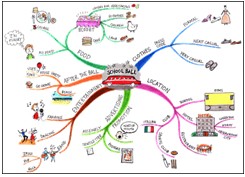
Tony Buzan’s grades were going down at university. Disappointed with his low marks, he went to the library to find a book on how to use his brain. He was directed to the medical section. Confused, he said to the librarian, “I don’t want to take my brain out, I just want to learn how to use it.” Her reply was simple: “There’s no book on that.”
“I thought to myself,” says Buzan, “if I buy a little radio, I get an instruction manual (说明书). If I buy a microwave, I get an instruction manual. But for the most important machine in the world, no instruction manual?”
Fifty years later, Buzan has become the world’s leading speaker on the brain and learning. In the late 1960s, he invented the mind map, a visual representation of thought processes.
This kind of thinking has become a popular tool for planning, organizing, problem solving, and communicating across the world. He has since authored and co-authored over 100 books that have appeared in more than 30 languages.
“I think in most cases, people use less than 1 percent of their brains,” he says.
But how do you expand this 1 percent? How do you become the best student you can be?
According to Buzan, the answer is simple. You take a section of whatever it is that you are trying to learn, he says, and you read it for its essence (精髓、要素). Then you make a mind map of all the important details. For a truly effective mind map, you start with a colored image in the center of your page. Draw the first image that comes to mind on the topic you are mind mapping. Branch off from your central image and create one of your main ideas. From your main branches draw some sub-branches and from those sub-branches you can draw even more branches. He emphasizes that you should use plenty of images and colors as these help with memory recall and encourage creativity.
By using this visual format (形式), according to Buzan, your mind will begin to make associations that will help you remember more information for longer periods of time.
Buzan believes that traditional note-taking methods, such as lists and summaries, do not stimulate the brain’s recall capacity or ability in the same way. Because of this, students will often find themselves locked away in their rooms for hours, trying hard to memorize separate details. Buzan believes that for a more effective and lasting way of studying, you must first understand how your brain works.
“Everyone is born smart,” he says. “You just have to learn how to learn.”
1.What is the main purpose of the first two paragraphs?
A.To show that Tony Buzan was worried about his study.
B.To invite us to think about the importance of manuals.
C.To prove that the mind map is a useful tool for the brain.
D.To show why Tony Buzan studies the brain and learning.
2.What does the word “stimulate” mean in the passage?
A.Excite. B.Improve. C.Encourage. D.Affect.
3.What can we infer from the passage?
A.If we learn the mind map, we will become the best student.
B.The mind map will help your brain connect separate details.
C.The mind map will be more effective if we put more details in it.
D.We will solve the problem if we make connections between ideas.
4.What is the best title for the passage?
A.How to make the mind map?
B.Is the mind map widely used?
C.Can your memory be mapped?
D.Is the mind map helpful in thinking?
科目:czyy 来源:2011-2012学年山东省初三上学期阶段检测英语试卷(解析版) 题型:阅读理解
I live with my grandmother in a Beijing yard house. One day last year, I was surprised to see a big foreigner coming out of the house next door to ours. He was very tall with short brown hair and a pair of glasses.
The first time I saw him, I was too shy to speak to him. “My English is too poor!” I thought. My grandmother told me that he had just moved into our yard. “I don’t like it!” she said. “Foreigners aren’t like us. Maybe he’ll play loud music and parties every night! I’m sure he’s going to cause trouble.”
Several days later, I met the foreigner as I was walking home after work. “Hello!” he said (in Chinese!). “My name’s Tony. I’ve just moved into the house next door to yours.” While I was wondering what to say, he continued, “There’s a nice bar down the road. Why don’t you and your family come and have dinner with me?” “Bars are bad places,” said my grandmother when I told her, but we decided to go.
The bar was not at all what I had expected. It was in a beautiful little yard house, with several large bookshelves and pictures of Tibet on the walls. Several Chinese people and foreigners were sitting drinking or reading books. I noticed that some of the foreigners were speaking Chinese in a low voice to each other! “Oh, what a civilized place!” my grandmother exclaimed.
The bar served special “hutong pizzas”. As we ate, Tony told us about himself-he is an English expert in environment. He always likes to be quiet. My grandmother said to me, “He really seems like a very nice young man.”
1.When the writer first saw the foreigners, she______.
|
A.was frightened to him |
|
B.wanted to practice English with him |
|
C.felt too shy to speak to him |
|
D.hoped to invite the foreigner to the bar |
2.From the sentence “Bar are bad places”, we can know that the grandmother______.
|
A.was very excited |
B.didn’t go to the bar |
|
C.didn’t like bars |
D.was angry with Tony |
3.What’s the meaning of the word “civilized” in the passage?
|
A.文明的 |
B.喧闹的 |
C.野蛮的 |
D.讨厌的 |
4.Which of the following sentence is Not true?
|
A.Tony made a lot of noise every night. |
|
B.Tony was an English expert in environment. |
|
C.There were some foreigners speaking Chinese in the bar. |
|
D.The grandmother thought Tony might cause some trouble. |
5.The best title for this story is______.
|
A.A Bar in Tibet |
|
B.A Foreigner in Beijing |
|
C.Bars are Bad Places |
|
D.Foreigners Like Bars |
科目:czyy 来源:2014届江苏盱眙县明祖陵中学八年级下期期末考试英语卷(解析版) 题型:阅读理解
Reading Oliver James'Affluenza, I thought about what often happens at home. My 12-year-old daughter is in tears."I have so take a test tomorrow. I don't understand any of it," she cries out. After shouting and shutting her door, she calms down enough to go through her notes. The following dry I ask her how the test went and the just says "OK,I got a nine".
"Wow. well done!" I say, before she finishes with "But I never get a ten!"
According to James, this obsession with getting top marks has been a bad development, which encourages people to think of education in terms of work and money. To test this, I asked my daughter why she was so worried about her tests. She looked at me as if I was thick. "Well, if I don't get good grades, I won't be able to afford nice things like a car and stuff."
I was quite surprised, because I don't consider myself a pushy parent. But James suggests and it leaves students feeling failures even if they are very bright. He points to the Danish system(体制)of education as a better model. Creating happy citizens who have good social skills is seen as more important than high achievements at school or the needs of business.
For me, I cannot remember the last time I had to work out the area of a circle, recite a Shakespeare poem or grammar rules, yet I have lived a happy life. What I really needed to learn at school was how to make polite conversations, or how to avoid getting into debt or how to develop good personality.
This is in fact similar to what Oliver James really has in mind. And he is looking for schools where students are encouraged to find and follow their own interests, something more like Tongjon. Tongjon has been developed in some Korean private schools. It is quite different from the more rigid system of learning things by heart that is used in Korea, and indeed in many other school systems around the world.
As the Russian poet Pushkin said," Inspiration(灵感)is needed in geometry(几何学)just as much as in poetry ",and inspiration does not come from endlessly revising for tests or getting worried about them .
1.What does the writer probably think of his/her daughter?
A. She sets herself a goal too high to reach.
B. She should be more polite to her parents.
C. She is hard-working but not very bright.
D. She takes her grades much too seriously.
2.What does the word "obsession"in paragraph 3 mean?
A.A plain and unavoidable fact.
B.A satisfied and very proud state.
C.A practical and widely-used way.
D.A fixed and often unreasonable idea.
3.What can we infer from the passage?
A. Social skills are as important as high grades.
B. Interest in grades can shake self-confidence.
C. The writer regrets not having studied hard at school.
D. Danish educational system is for very smart students.
4.The writer wants to tell us that____.
A.learning happily is the key to self-development.
B. top marks may be helpful to increase one's interest.
C. tests should be improved to give children inspiration.
D. education should meet one's needs for word and money.
科目:czyy 来源:我爱学习 八年级英语(上) 题型:050
阅读理解。
The United States has many different kinds of climates(气候). On the northwest coast(海岸), the temperature changes very little between summer and winter, but the north central (中部的) states have a very different kind of ctimate. In those states, people wear light clothes in summer, and they need heavy woollen clothes in winter.
In the northeast of the United states, summer temperatures are very different from winter temperatures. Summer is usually hot, and winter is usually cold. Spring temperatures are warm, and fall temperatures are cool.
Years ago, people in the cold parts of the United States didn't often get fresh vegetables and fresh fruits during the summer. Today, however (然而), trucks and trains carry fruits and vegetables very quickly to all parts of the United States. In this way, Americana “send their climates” to people in other states.
根据短文内容,选择最佳答案填空。
(1)The summer and winter temperatures are almost the same ________.
[ ]
A.in the northeastern states
B.on the north central states
C.in the western states
D.on the northwest coast
(2)The word “fall”in this passage means ________.
[ ]
(3)Today people ________ can get fresh vegetables and fruits.
[ ]
A.in the north central states
B.in every part of the USA
C.in the cold parts of the USA
D.in the southwest part of the USA
(4)From this passage we know that the climate of the United States ________.
[ ]
A.is always very cold
B.is warm in winter
C.is widely different
D.changes very little between summer and winter
科目:czyy 来源:复习与测评 单元综合测试卷 七年级下册(配合牛津英语) 牛津版 题型:050
| |||||||||||||||||||||||||||||||||||||||||||||||||||||||||||||||||||||||||
科目:czyy 来源:英语教研室 题型:030
1. The monkeys the water and saw there was another moon in it.?
2. When you walk across the street, you must first.?
3. The lovely cat just , it is sleeping now.?
4. Now they to talk about what they are going to do next.?
5.—Hello! Li Lei. What ??
—Well, I have just lost my pen.
6. Do you have a dictionary? I want to the word in it.?
7. It is my birthday. Will you come to my house and with me??
8. I yesterday. I didn’t go to school.?
9. Jane is very beautiful. She her mother.?
10. Would you let me at your new shirt, Mary??
11. I have lost my way. I how I can get back.?
12. Domao and Xiao mao are twins. They .
科目:czyy 来源: 题型:030
补全对话:(每空一词)
may,sure,mean,pleasure,tell,ask,help,better,yes,don't
A
: May I 1 you a question?B
: 2 , please.A
: What does the word “SILENCE” 3 ?B
: Sorry, I 4 know. Wang Wei 5 know it.A
: Excuse me, Wang Wei. Can you 6 me?C
: Sure.A
: What does"SILENCE" mean?C
: I am not 7 .You'd 8 ask Mary.A
: Hello, Mary. Can you 9 me what that word mean?B
: Certainly. It means“Don't talk here.”A
: Thank you very much.B
: It's a 10 .科目:czyy 来源: 题型:050
阅读理解
Visit the East Garden Zoo
Come and see the new polar bears from Canada. The pandas are waiting to meet you, and the dolphins are waiting to swim for you. The cranes are waiting to sing for you and the mynahs are waiting to say hello to you. The snakes are waiting to dance for you.
Tickets Adults
(成人): $4 children: Over 12 $2 Under 12 $1Opening Time 9
∶00-16∶00 on weekdays 9∶30-17∶00 at weekendsKEEP THE ZOO CLEAN!
DO NOT FEED THE ANIMALS!
(1) Where do the polar bears come from?
[ ]
A
.They come from China.B
.They come from England.C
.They come from the USA.D
.They come from Canada.(2) When can you visit the zoo?
[ ]
A
.At 4∶30 in the afternoon on Saturdays.B
.At 8∶30 in the morning on Wednesday.C
.At 9∶00 in the evening on Mondays.D
.At 9∶00 in the morning on Sundays.(3) You may not know the word
”mynah”, but you can guess it is good at ________.[ ]
|
A .singing |
B .dancing |
C .speaking |
D .listening |
(4) What should a visitor do in the East Garden Zoo?
[ ]
|
A .Play with the animals. |
B .Leave no litter. |
|
C .Feed the animals. |
D .Go near the animals. |
(5) Mrs. Smith wants to take her 4-year-old son and 10-year-old daughter to the zoo?
[ ]
|
A .$4 |
B .$6 |
C .$7 |
D .$8 |
科目:czyy 来源: 题型:050
Mother's Day is a holiday for mothers. It is celebrated
(庆祝)in the United States, English, India and some other countries. In a short time, it becomes widely celebrated. Mother's Day falls on the second Sunday in May. On that day, many people send gifts(礼物)of love to their mothers. Those whose mothers are still living often wear a pink(粉红色)or red rose(玫瑰)or carnation(康乃馨花), while those whose mothers are dead wear a white one.The idea of a day for mothers was first given by Miss Anna Jarvis of Philadelphia. As a result of her hard work, the celebration of the first American Mother's Day was held in Philadelphia on May 10, 1908. Soon the holiday became popular all over the country and around the world.
In China, people do the same on the day for mothers. And, in some cities, people sometimes ask a song to be broadcast
(广播)for his or her mother only. This might cost a little money for some of them, but, as it is said,“Love is invaluable.”On May 8, 1999, just the day before the Mother's Day this year, a Chinese mother was killed in criminal bombing
(罪恶轰炸). Her name is Shao Yunhuan, a heroic(英雄的)mother. All the Chinese will remember her for ever.(1) Mother's Day ________.
[ ]
A
.is a holiday for mothersB
.is celebrated in the United Stated onlyC
.falls on May 10 every yearD
.was given by Miss Anna Jarvis(2)
“Love is invaluable.”Here the word“invaluable” means ________.[ ]
|
A .美好的 |
B .无价的 |
|
C .永恒的 |
D .无私的 |
(3) Maybe you've known the criminal bombing, which of the following ideas do you agree to?
[ ]
A
.Shao Yunhuan is a heroic mother.B
.A Chinese mother is the same as an American mother.C
.The bombing cannot get away with the crimeD
.All of the above.科目:czyy 来源:随堂讲与练 九年级下册(配合牛津英语) 牛津版 题型:054
| |||||||||||||||||||||||||||||||||||||||||||||||||||||||||||||||||||||||||||||||||||||||||||||||||||||||||||||||||||||||||||||||||||||||||||||||
科目:czyy 来源:浙江省宁波五校2012届九年级下学期第一次联考英语试题 题型:050
| |||||||||||||||||||||||||||||||||||||||||||||||||||||||||||||||||||||||||
科目:czyy 来源: 题型:050
The United States has many kinds of climates(气候). On the northwest coast(海岸), the temperature changes very little between summer and winter, but the north central(中部的)states have a very different kind of climate. In those states, people wear light clothes in summer, and they need heavy woollen clothes in winter.
In the southwest coast, the climate is rainy and warm during the winter, but the summer is dry and hot. In the northeast of the United States, summer temperatures are very different from winter temperatures. Summer is usually hot, and winter is usually cold. Spring temperatures are warm, and fall temperatures are cool.
Years ago, people in the cold parts of the United States didn't often get fresh(新鲜的)vegetables and fresh fruits during summer. Today trucks and trains carry fruits and vegetables very quickly to all parts of the United States. In this way, Americans “send their climates” to people in other states.
(1) The summer and winter temperatures are almost the same _______.
[
]A
.in the northeastern statesB
.on the north central statesC
.in the western statesD
.on the northwest coast(2) The word
“fall” in this passage means ________.[
]|
A .drop |
B .down |
C .autumn |
D .spring |
(3) Today people ________ can get fresh vegetables and fruits.
[
]A
.in the north central statesB
.in every part of the USAC
.in the cold parts of the USAD
.in the southwest part of the USA(4) From this passage we know that the climate of the United States ________.
[
]A
.is always very coldB
.is warm in winterC
.is widely differentD
.changes very little between summer and winter