科目:czyy 来源:69领航·单元同步训练 八年级英语(EEC) 题型:050
| |||||||||||||||||||||||||||||||||||||||||||||||||||||||||||||||
科目:czyy 来源:同步题 题型:阅读理解
People have lots of different thoughts that they wish to express. For
many reasons, most people just keep their thoughts to themselves and never
tell them to others.Another form of self-expression is the written word.
For many people, it is easier for them to express their thoughts or
emotions in writing, instead of speaking them out. It is an especially
popular way for expression among shy and highly self-conscious
(自尊) people.People's thoughts are written down and then
published(出版) so that othe rs can read and enjoy them. There are
many reasons why newspapers and publishers actually publish
people's thoughts, but the major reason is to give information.With
the introduction of newer technologies, new ways now appear to
share people's ideas quickly. Blogs are just one way.People can
now let the world know their hopes, dreams and day to day activities
through a web blog. Better than that, many sites allow customers to
words web and log. Slogging is the term that is used to refer to
activities relating to a blog, such as creating it, updating and
adding content(内容). And the blogger is the person who puts that
content on the blog.Blogs can be very powerful. Blogs can change
the world by changing the opinions of large numbers of people
around the world
 g to everybody you meet about it
 科目:czyy 来源:河北省模拟题 题型:阅读理解
科目:czyy 来源:同步题 题型:阅读理解
科目:czyy 来源:江苏同步题 题型:阅读理解
[ ]
[ ]
[ ]
[ ]
[ ]
科目:czyy 来源:月考题 题型:阅读理解
[ ]
[ ]
[ ]
[ ]
[ ]
科目:czyy 来源:北京市期中题 题型:阅读理解
科目:czyy 来源:期中题 题型:阅读理解
科目:czyy 来源:河北省期末题 题型:阅读理解
科目:czyy 来源:辽宁省期中题 题型:阅读理解
科目:czyy 来源:2012-2013学年江苏省启东市东海中学八年级上学期期中考试英语试卷(带解析) 题型:阅读理解
阅读理解
Young people and older people don’t always agree. They sometimes have different ideas about living, working and playing. But in one special programme in New York State, adults and teenagers live together in a friendly way.
Each summer 200 teenagers and 50 adults live together for eight weeks as members of a special work group. Everyone works several hours each day. They do so not just to keep busy but to find meaning and enjoyment in work. Some teenagers work in the woods or on the farms near the village. Some learn to make things like tables and chairs and build houses. The adults teach them these skills.
There are several free hours each day. Weekends are free, too. During the free hours some of the teenagers learn phototaking or painting. Others sit around and talk or sing. Each teenager chooses his own way to spend his free time.
When people live together, rules are necessary. In this programme the teenagers and the adults make the rules together. If someone breaks a rule, the problem goes before the whole group. They talk about it and ask, “Why did it happen? What should we do about it?”
One of the teenagers has this to say about his experience, “You stop thinking only about yourself, You learn to think about the group.”
【小题1】 In one special programme in New York State, young and older people _______ .
| A.don’t work well together. |
| B.are friendly to one another. |
| C.teach one another new ways of building houses. |
| D.spend eight weeks together, working as farmers. |
| A.lead a busy life. | B.learn new skills of farming; |
| C.get used to the life on the farms | D.find value and pleasure in work |
| A.the teenagers don’t have to obey the rules |
| B.the teenagers have to obey the rules the adults make |
| C.the members have no free time on weekends |
| D.the members are not allowed to break the rules they make together |
| A.unpleasant | B.tiring | C.helpful | D.boring |
| A.The rules of living together |
| B.Life in New York State |
| C.Teenagers in the special group |
| D.Free hours in the special work group |
科目:czyy 来源:2012-2013学年江苏省启东市八年级上学期期中考试英语试卷(解析版) 题型:阅读理解
阅读理解
Young people and older people don’t always agree. They sometimes have different ideas about living, working and playing. But in one special programme in New York State, adults and teenagers live together in a friendly way.
Each summer 200 teenagers and 50 adults live together for eight weeks as members of a special work group. Everyone works several hours each day. They do so not just to keep busy but to find meaning and enjoyment in work. Some teenagers work in the woods or on the farms near the village. Some learn to make things like tables and chairs and build houses. The adults teach them these skills.
There are several free hours each day. Weekends are free, too. During the free hours some of the teenagers learn phototaking or painting. Others sit around and talk or sing. Each teenager chooses his own way to spend his free time.
When people live together, rules are necessary. In this programme the teenagers and the adults make the rules together. If someone breaks a rule, the problem goes before the whole group. They talk about it and ask, “Why did it happen? What should we do about it?”
One of the teenagers has this to say about his experience, “You stop thinking only about yourself, You learn to think about the group.”
1. In one special programme in New York State, young and older people _______ .
|
A.don’t work well together. |
|
B.are friendly to one another. |
|
C.teach one another new ways of building houses. |
|
D.spend eight weeks together, working as farmers. |
2.All the members work some time every day mainly to _______ .
|
A.lead a busy life. |
B.learn new skills of farming; |
|
C.get used to the life on the farms |
D.find value and pleasure in work |
3. Living together, _________ .
|
A.the teenagers don’t have to obey the rules |
|
B.the teenagers have to obey the rules the adults make |
|
C.the members have no free time on weekends |
|
D.the members are not allowed to break the rules they make together |
4. The last programme shows that the teenager thinks his experience in the programme is ____ .
|
A.unpleasant |
B.tiring |
C.helpful |
D.boring |
5. The best title for the passage is __________ .
|
A.The rules of living together |
|
B.Life in New York State |
|
C.Teenagers in the special group |
|
D.Free hours in the special work group |
科目:czyy 来源: 题型:050
| |||||||||||||||||||||||||||||||||
科目:czyy 来源:同步题 题型:阅读理解
科目:czyy 来源:101网校同步练习 初二英语 人教社(新课标 2002-3年通过) 人教版 题型:050
| |||||||||||||||||||||||||||||||||||||||||||||||||||||||||||
科目:czyy 来源:浙江慈溪市四校2011-2012学年八年级下学期期中联考英语试题 题型:050
| |||||||||||||||||||||||||||||||||||||||||||||||||||||||||||||||||||||||||
科目:czyy 来源:江苏省江阴市青阳片2012届九年级下学期期中检测英语试题 题型:050
| |||||||||||||||||||||||||||||||||||||||||||||
科目:czyy 来源:江苏省名校济川中学2006-2007秋学期初三期末考试英语试题-牛津英语 题型:050
| |||||||||||||||||||||||||||||||||||||||||||||||||||||||||||||||||||||||||
科目:czyy 来源:轻松新课堂·初中英语作业本·9A(牛津版) 牛津版 题型:051
阅读理解。
Different countries and different people have different manners(礼貌).We must find out their customs(风俗)so that they will not think us ill-mannered.Here are examples of the things that a person with good education does or does not do.
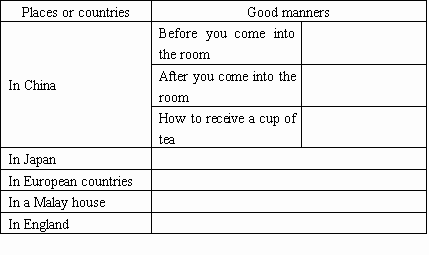
If you visit a Chinese family, you should knock at the door first.When the door opens, you will not move before the host(男主人)says,“Come in, please.”After you enter the room, you will not sit down until the host asks you to take a seat.When a cup of tea is put on a tea-table before you or sent to your hands, you will say“Thank you”and receive it with both hands, not one hand, or they will think you are ill-mannered.Before entering a house in Japan, it is good manners to take off your shoes.In European countries, even though shoes sometimes become very dirty, this is not done.In a Malay house, a visitor never finishes the food on the table.He leaves a little to show that he has had enough.In England, a visitor always finishes a drink or the food to show that he has enjoyed it.This will make the host enjoy.
1.Does the writer think it is necessary to know different customs in different countries?
________________________________
2.When can you enter the room if you visit a friend in China?
________________________________
3.In which country do you have to take off your shoes when you enter your host's house?
________________________________
4.Why does a visitor always finish the food at dinner in his friend's home in England?
________________________________
科目:czyy 来源:三点一测丛书 九年级英语 题型:053
阅读理解
Different countries and different people have different manners. Here are some examples of things that a person with good manners does or does not do.
If you visit a Chinese family you should knock at the door first. When the door opens, you will not move before the host says “Come in, please.” After you come into the room, you won't sit down until the host asks you to. When a cup of tea is put on a tea table before you or sent to your hand, you will say “Thank you” and receive it with your two hands, or they will think you are not polite.
Before coming into the house in Japan it is good manners to take off your shoes. In European countries, if your shoes become very dirty, this is not done.
In a Malay house, a guest never finishes the food on the table. He leaves a little to show that he has had enough.
In England, guest always finishes a drink or the food to show that he has enjoyed it. This will make the host very pleased.
What are good manners in these parts of the world? Fill in the chart.