
科目:czyy 来源:同步题 题型:阅读理解
科目:czyy 来源: 题型:阅读理解
| A.words | B.eyes | C.feet | D.smile |
| A.attention | B.pity | C.trust | D.duty |
| A.had great difficulty looking after himself |
| B.always asked people for help |
| C.couldn’t have a big smile |
| D.liked to talk about people’s shoes |
| A.he had a nice talk to the man |
| B.the man looked him in the eye |
| C.he didn’t move his feet before the man |
| D.the man had a big smile on the face |
| A.the disable man had something wrong with his mind |
| B.not many people went down to the man’s level |
| C.the man was good at telling people about the world |
| D.the writer would not give the man move help |
科目:czyy 来源:2011—2012学年广西赣州市兴国县九年级上单元检测(一)英语 题型:阅读理解
He was struggling(费劲) to tie his shoes. I was struggling with whether I should help him. I did, and he was grateful. “Thank you,” he said. “I’m glad I could help. I just thought it would be easier for me to reach,” I said. He was a disabled man, and forced to look down most of the time. His arms and legs were twisted(扭曲的) terribly, and he couldn’t do what the rest of us would consider easy tasks. He always managed to look up to see how you reacted(反应) to his words, however. He had a big smile, making me feel comfortable. I was still on my knees by his wheelchair. “Nice shoes,” he said. “Thanks. No one ever complimented me on them before,” I said. “No one has the same view of the world as I do,” he replied. “Tell me about the world as you see it,” I said smiling.
“Most people can see if someone is comfortable with them or not in their eyes. I see it in their feet.” he said. “If people keep moving their feet, I just let them go, because I know they’re impatient with me. I don’t want to make people uncomfortable. “What about me? I asked. “I could see your compassion. And then you came down to my level. I was the one who was nervous.” he said. “I don’t normally have someone look me in the eye.”“They don’t know what they’re missing,” I told him. “My old face is nothing to brag(自夸) about.” he said. “But that smile is so big.” Yes, and it’s not only a big smile but an attitude.
【小题1】The disabled man knew people were impatient mostly by their ________.
| A.words | B.eyes | C.feet | D.smile |
| A.attention | B.pity | C.trust | D.duty |
| A.had great difficulty looking after himself | B.always asked people for help |
| C.couldn’t have a big smile | D.liked to talk about people’s shoes |
| A.he had a nice talk to the man | B.the man looked him in the eye |
| C.he didn’t move his feet before the man | D.the man had a big smile on the face |
| A.the disable man had something wrong with his mind |
| B.not many people went down to the man’s level |
| C.the man was good at telling people about the world |
| D.the writer would not give the man move help |
科目:czyy 来源: 题型:
| A.zhaoweiping@sohu.com | B.wudong@yahoo.com |
| C.tomsmith@163.com | D.lwh988@263.com |
| A.Mr. Zhao | B.Mr. Wu | C.Mr. Smith. | D.Mr. Li |
科目:czyy 来源: 题型:阅读理解
科目:czyy 来源:2010年湖北省武汉市毕业升学考试英语卷doc 题型:阅读理解
He was struggling(费劲) to tie his shoes. I was struggling with whether I should help him.
I did, and he was grateful.
“Thank you,” he said.
“I’m glad I could help. I just thought it would be easier for me to reach,” I said.
He was a disabled man, and forced to look down most of the time. His arms and legs were twisted(扭曲的) terribly, and he couldn’t do what the rest of us would consider easy tasks. He always managed to look up to see how you reacted(反应) to his words, however. He had a big smile, making me feel comfortable.
I was still on my knees by his wheelchair.
“ Nice shoes,” he said.
“Thanks. No one ever complimented me on them before,” I said.
“No one has the same view of the world as I do,” he replied.
“Tell me about the world as you see it,” I said smiling.
“Most people can see if someone is comfortable with them or not in their eyes. I see it in their feet.” he said. “If people keep moving their feet, I just let them go, because I know they’re impatient with me. I don’t want to make people uncomfortable.
“What about me? I asked.
“I could see your compassion. And then you came down to my level. I was the one who was nervous.” he said. “I don’t normally have someone look me in the eye.”
“They don’t know what they’re missing,” I told him.
“My old face is nothing to brag(自夸) about.” he said.
“But that smile is so big.”
Yes, and it’s not only a big smile but an attitude.
1. The disabled man knew people were impatient mostly by their _________.
|
A.words |
B.eyes |
C.feet |
D.smile |
2. The unlined word compassion is the closet in meaning to ___________.
|
A.attention |
B.pity |
C.trust |
D.duty |
3. We learn that the disabled man _________.
|
A.had great difficulty looking after himself |
B.always asked people for help |
|
C.couldn’t have a big smile |
D.liked to talk about people’s shoes |
4. The writer felt comfortable because _________.
|
A.he had a nice talk to the man |
B.the man looked him in the eye |
|
C.he didn’t move his feet before the man |
D.the man had a big smile on the face |
5. We can infer from the passage that _________.
|
A.the disable man had something wrong with his mind |
|
B.not many people went down to the man’s level |
|
C.the man was good at telling people about the world |
|
D.the writer would not give the man move help |
科目:czyy 来源:2013届福建省福州延安中学九年级中考模拟英语卷(带解析) 题型:阅读理解
He was struggling(费劲) to tie his shoes. I was struggling with whether I should help him.
I did, and he was grateful.
“Thank you,” he said.
“I’m glad I could help. I just thought it would be easier for me to reach,” I said.
He was a disabled man, and forced to look down most of the time. His arms and legs were twisted(扭曲的) terribly, and he couldn’t do what the rest of us would consider easy tasks. He always managed to look up to see how you reacted(反应) to his words, however. He had a big smile, making me feel comfortable.
I was still on my knees by his wheelchair.
“ Nice shoes,” he said.
“Thanks. No one ever complimented (赞美) me on them before,” I said.
“No one has the same view of the world as I do,” he replied.
“Tell me about the world as you see it,” I said smiling.
“Most people can see if someone is comfortable with them or not in their eyes. I see it in their feet.” he said. “If people keep moving their feet, I just let them go, because I know they’re impatient with me. I don’t want to make people uncomfortable.
“What about me? I asked.
“I could see your compassion. And then you came down to my level. I was the one who was nervous.” he said. “I don’t normally have someone look me in the eye.”
“They don’t know what they’re missing,” I told him.
“My old face is nothing to brag(自夸) about.” he said.
“But that smile is so big.”
Yes, and it’s not only a big smile but an attitude.
【小题1】The disabled man knew people were impatient mostly by their _________.
| A.words | B.eyes | C.feet | D.smile |
| A.注意 | B.同情 | C.信任 | D.职责 |
| A.had great difficulty looking after himself |
| B.always asked people for help |
| C.couldn’t have a big smile |
| D.liked to talk about people’s shoes |
| A.he had a nice talk to the man | B.the man looked him in the eye |
| C.he didn’t move his feet before the man | D.the man had a big smile on the face |
| A.the disable man had something wrong with his mind |
| B.not many people went down to the man’s level |
| C.the man was good at telling people about the world |
| D.the writer would not give the man more help |
科目:czyy 来源:2012-2013学年广东省九年级第三次模拟英语卷(解析版) 题型:阅读理解

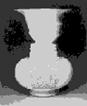
Look at the center circles of Diagram (图) A and Diagram B. Which of the centre circles looks larger?
Take a first look and you probably think that the centre circle in Diagram A is smaller than that in Diagram B. In fact , they are exactly the same size.
Then look at the picture on the right. What do you see? A vase ? Or two faces? Does the picture change quickly from one to the other again and again? Maybe or maybe not, but you can never see them at the same time.
"What's happening? Is something wrong with my eyes?" You may wonder at what you see. Don't worry. Here is how it goes:
When we look at things, our eyes send messages to our brains and then our brains interpret (解读) the information. However, sometimes our brains interpret the received information in a wrong way. It seems that our eyes are playing a joke on us. This often happens and we call it "Visual illusion" (视觉错误).
Movie makers often make use of illusions. They make the objects around actors much smaller or bigger than usual. This makes us believe that the actors are much larger or smaller than they usually are. The movies Jurassic Park and Honey I shrunk the kids just make use of illusions.
1.The centre circle in Diagram A looks smaller than that in Diagram B. That's because .
A. something is wrong with our eyes
B. the two circles are not the same size
C. our brains interpret the information in a wrong way
D. the two pictures change quickly from one to the other
2.What's the right order according to the passage?
a. We look at things with our eyes. b. Our brains interpret the messages.
c. Our brains tell us what we have seen. d. Our eyes send messages to our brains.
A.adbc
B.cabd
C.acdb
D.bcad
3.Movie makers make use of visual illusions to .
A.help the actors look better
B.make the actors much braver
C.help the actors become stronger
D.make the actors seem different in size
4.In the picture on the right, it seems that Line AB is shorter than Line CD, but in fact Line AB is as long as Line CD. Which paragraph can explain what has happened to our eyes?___________

A.The second one.
B.The third one.
C.The fifth one.
D.The sixth one.
5.The text is probably taken from .
A.an advertisement
B.a science book
C.a movie magazine
D.a story book
科目:czyy 来源:2013届江苏省初二下学期月考英语试卷 题型:阅读理解
Around the world, people have different ideas about what good manners are.
When you go to restaurants in different parts of the world, it’s important to know the right and wrong things to do. (2)For example, in China it’s OK to make a lot of noise in a restaurant. In fact, if a restaurant isn’t noisy and lively, you may think there’s something wrong with it. However, in many Western countries, restaurants are quiet places. If a table is too loud, other people who are eating there will be unhappy.
Paying the bill is also (1)__________ __________ country to country. In China one person usually pays for everyone. In Western countries, if friends eat together, they usually share the cost. This is called “ go Dutch”. Also, when Westerners pay the bill, they usually leave some money for the waiter. This is called “leaving a tip(小费)”. Leaving a tip is thought to be polite.
The way people eat food is different in the world, but you can find the same kinds of food in many countries. Chinese and Italian food, for example, are popular all over the world.
1. 在(1)处填上适当的词,使句意完整,上下文通顺:____________ _____________
2.将(2)句译成中文:__________________________________.
3. 根据短文内容回答问题:
How will other people feel if a table is too loud in Western countries?
_____________________________________________
4.在文中找出 People think it’s polite to leave a tip的同义句:
_______________________________________________
5.在文中找出本文的中心句:____________________________________________
科目:czyy 来源:2011-2012学年江苏省盐城市九年级中考模拟考试英语试卷(解析版) 题型:完型填空
Miracles(奇迹)will happen if you don't give up trying. Even if you have 16 for one hundred times, you may succeed when you try for the 10lst time.
When I was born, my doctor told my mother that there was something wrong with my 17 . They were too soft to be able to walk. Although the news was bad, my mother didn't become 18 . She didn't believe what the doctor said 19 started to look for other ways.
My mother kept looking for other doctors for me, and finally she 20 . The doctor and his team in the hospital did 21 they could to help me. They also asked my parents to teach me to do some 22 to help me walk. One day when my mother came to pick me 23 . I crawled(爬) towards her. She was so surprised and happy that she couldn't believe 24 eyes. Crawling was not walking, but it was a good 25 . Day by day, I could walk by myself.
When I grew up, my mother 26 told me these stories. She said that if I thought of what she said whenever I met 27 , I could do anything successfully. I have been working hard and I have turned out to be a very 28 person. I get best 29 in school and I am a good dancer and swimmer. Thanks to my mother's strong resolution(决心), I live a 30 life now. What the story tells us, as my mother always says, is: Never give up.
1.A. achieved B. failed C. suggested D. told
2.A. legs B. hands C. arms D. eyes
3.A. patient B. confident C. frustrated(沮丧的) D. proud
4.A. or B. and C. if D. because
5.A. forgot B. changed C. succeeded D. worked
6.A. nothing B. somewhere C. anywhere D. everything
7.A. time B. exercise C. medicine D. shopping
8.A. away B. from C. into D. up
9.A. her B. my C. his D. its
10.A. advice B. end C. chance D. start
11.A. hardly B. never C. always D. nearly
12.A. dreams B. experiments C. jobs D. difficulties
13.A. excellent B. dangerous C. busy D. special
14.A. presents B. friends C. books D. grades
15.A. happy B. sad C. tired D. boring
科目:czyy 来源:2011年四川省遂宁市中考英语试卷 题型:完型填空
Around the world, people have different ideas about what good manners are.
When you go to restaurants in different parts of the world, it’s 46 to know the right and wrong things to do. For example, in China it’s OK to 47 a lot of noise in a restaurant. In fact, if a restaurant isn’t 48 or lively, you may think there’s something wrong with it. However, in many western countries, restaurants are quiet places. If a table is too loud, other people who are eating there might even 49 to the owner of the restaurant.
Paying the bill 50 also different from country to country. In China, one person usually pays 51 everybody. In western countries, one person pays if he or she is entertaining clients(宴请宾客), but 52 friends eat together, they usually share the cost. This is called “Going Dutch(均摊费用)”.Also, when westerners pay the bill, they usually leave some money for the 53 .This is called “leaving a tip(小费)”. Leaving a tip is thought to be polite. In the US, it’s 54 to leave tips of 10%,15%,or 20% of the bill, which is decided by how good the service is. Good waiters can make a lot of money!
The way people eat food is different in the world, but you can 55 the same kind of food in many countries. Chinese and Italian food, for example, are popular all over the world.
【小题1】A. popular B. difficult C. important
【小题2】A. cause B. keep C. make
【小题3】A. noisy B. noise C. lucky
【小题4】A. shout B. explain C. complain
【小题5】A. are B. is C. be
【小题6】A. on B. for C. in
【小题7】A. until B. when C. unless
【小题8】A. gatekeeper B. seller C. waiter
【小题9】A. terrible B. common C. serious
【小题10】A. invent B. find C. prefer
科目:czyy 来源: 题型:阅读理解
| A. It’s a good idea to use a large phone. B. Everybody using the mobile phones should be careful. C. The buttons are getting closer together. D. She says we should check how much time we are spending in typing text messages. |
| A.He wants to ask us not to send text messages with mobile phones. |
| B.He wants to tell us to uses small mobile phones to send text messages. |
| C.He wants to tell us some good ways to communicate with friends. |
| D.He wants to tell us the damage(损害) of sending text messages too much. |
科目:czyy 来源:2012-2013学年浙江杭州萧山市九年级上学期期初摸底考试英语试卷(解析版) 题型:完型填空
阅读下面短文,掌握大意,然后从A、B、C、D四个选项中选出一个最佳选项。
Miracles(奇迹)will happen if you don't give up trying. Even if you have 31 for one hundred times, you may succeed when you try for the 10lst time.
When I was born, my doctor told my mother that there was something wrong with my 32 . They were too soft to be able to walk. Although the news was bad, my mother didn't become 33 . She didn't believe what the doctor said 34 she started to look for other ways.
My mother kept looking for other doctors for me, and finally she 35 . The doctor and his team in the hospital did 36 they could to help me. They also asked my parents to teach me to do some 37 to help me walk. One day when my mother came to pick me 38 .I crawled(爬) towards her. She was so surprised and happy that she couldn't believe 39 eyes. Crawling was not walking, but it was a good 40 . Day by day, I could walk by myself.
When I grew up, my mother 41 told me these stories. She said that if I thought of what she said whenever I met 42 , I could do anything successfully. I have been working hard and I have turned out to be a very 43 person. I get best 44 in school and I am a good dancer and swimmer. 45 my mother's strong resolution, I live a happy life now. What the story tells us, as my mother always says, is: Never give up.
1. A.achieved B.failed C.suggested D.told
2. A.legs B.hands C.arms D.eyes
3. A.patient B.confident C.frustrated D.proud
4. A.or B.and C.if D.because
5. A.forgot B.changed C.succeeded D.worked
6. A.nothing B.somewhere C.anywhere D.everything
7. A.time B.exercise C.medicine D.shopping
8. A.away B.from C.into D.up
9. A.her B.my C.his D.its
10. A.advice B.end C.chance D.start
11. A.hardly B.never C.always D.nearly
12. A.dreams B.experiments C.jobs D.difficulties
13. A.excellent B.dangerous C.busy D.special
14. A.presents B.friends C.books D.grades
15. A.According to B.Instead of C.Thanks to D.Together with
科目:czyy 来源:2012年外研版初中英语七年级下册Module3练习卷(解析版) 题型:单词拼写
根据所给动词的正确形式填空
1.How __________ you __________ (get)to the park the day after tomorrow?
2. There is something wrong with my watch. It __________(not work).
3. What day _________(be)it today? It __________(be)Saturday.
4. Susan and Mary _________(get)to school early every day.
5. Lily __________(do)eye exercises every day.
6. I’m sorry ________(hear)that news.
7. —Who is ___________(talk)on the phone? —My sister is.
8.—What is Mary doing now? —I think she is ____________(wait)for the bus now.
9.My mother is ____________ (cook)in the kitchen now.
10. I am ____________(write)a letter to my parents.
科目:czyy 来源:2013-2014学年福建省九年级上学期期末考试英语试卷(解析版) 题型:阅读理解
He was struggling(费劲) to tie his shoes. I was struggling with whether I should help him. I did, and he was grateful.
“Thank you,” he said.
“I’m glad I could help. I just thought it would be easier for me to reach,” I said.
He was a disabled man, and forced to look down most of the time. His arms and legs were twisted(扭曲的) terribly, and he couldn’t do what the rest of us would consider easy tasks. He always managed to look up to see how you reacted(反应) to his words, however. He had a big smile, making me feel comfortable.
I was still on my knees by his wheelchair.
“ Nice shoes,” he said.
“Thanks. No one ever complimented (赞美) me on them before,” I said.
“No one has the same view of the world as I do,” he replied.
“Tell me about the world as you see it,” I said smiling.
“Most people can see if someone is comfortable with them or not in their eyes. I see it in their feet.” he said. “If people keep moving their feet, I just let them go, because I know they’re impatient with me. I don’t want to make people uncomfortable.
“What about me? I asked.
“I could see your compassion. And then you came down to my level. I was the one who was nervous.” he said. “I don’t normally have someone look me in the eye.”
“They don’t know what they’re missing,” I told him.
“My old face is nothing to brag(自夸) about.” he said.
“But that smile is so big.”
Yes, and it’s not only a big smile but an attitude.
1.The disabled man knew people were impatient mostly by their _________.
A. words B. eyes C. feet D. smile
2.The unlined word “compassion ”means _______ in Chinese.
A. 注意 B. 同情 C. 信任 D. 职责
3.We learn that the disabled man _________.
A. had great difficulty looking after himself
B. always asked people for help
C. couldn’t have a big smile
D. liked to talk about people’s shoes
4.The writer felt comfortable because _________.
A. he had a nice talk to the man
B. the man looked him in the eye
C. he didn’t move his feet before the man
D. the man had a big smile on the face
5.We can infer (推断)from the passage that _________.
A. the disable man had something wrong with his mind
B. not many people went down to the man’s level
C. the man was good at telling people about the world
D. the writer would not give the man more help
科目:czyy 来源:2011年江苏省南京市建邺区中考英语一模试卷 题型:阅读理解

【小题1】If you want to learn something about computers, you may send e-mails to _____.
| A.zhaoweiping@sohu.com | B.wudong@yahoo.com |
| C.tomsmith@163.com | D.lwh988@263.com |
| A.Mr. Zhao | B.Mr. Wu | C.Mr. Smith. | D.Mr. Li |
科目:czyy 来源:2011-2012学年浙江省杭州市初三下学期开学检测英语试卷 题型:完型填空
Miracles(奇迹)will happen if you don't give up trying. Even if you have 1 for one hundred times, you may succeed when you try for the 10lst time.
When I was born, my doctor told my mother that there was something wrong with my 2 . They were too soft to be able to walk. Although the news was bad, my mother didn't become 3 . She didn't believe what the doctor said 4 started to look for other ways.
My mother kept looking for other doctors for me, and finally she 5 . The doctor and his team in the hospital did 6 they could to help me. They also asked my parents to teach me to do some 7 to help me walk. One day when my mother came to pick me 8 . I crawled(爬) towards her. She was so surprised and happy that she couldn't believe 9 eyes. Crawling was not walking, but it was a good 10 . Day by day, I could walk by myself.
When I grew up, my mother 11 told me these stories. She said that if I thought of what she said whenever I met 12 , I could do anything successfully. I have been working hard and I have turned out to be a very 13 person.. I get best grades in school and I am a good dancer and swimmer. 14 my mother's strong resolution, I live a happy life now. What the story tells us, as my mother always says, 15_: Never give up.
|
1. |
|
|
2. |
|
|
3. |
|
|
4. |
|
|
5. |
|
|
6. |
|
|
7. |
|
|
8. |
|
|
9. |
|
|
10. |
|
|
11. |
|
|
12. |
|
|
13. |
|
|
14. |
|
|
15. |
|
科目:czyy 来源:2010年湖北省武汉市初中毕业升学考试英语卷doc 题型:阅读理解
He was struggling(费劲) to tie his shoes. I was struggling with whether I should help him.
I did, and he was grateful.
“Thank you,” he said.
“I’m glad I could help. I just thought it would be easier for me to reach,” I said.
He was a disabled man, and forced to look down most of the time. His arms and legs were twisted(扭曲的) terribly, and he couldn’t do what the rest of us would consider easy tasks. He always managed to look up to see how you reacted(反应) to his words, however. He had a big smile, making me feel comfortable.
I was still on my knees by his wheelchair.
“ Nice shoes,” he said.
“Thanks. No one ever complimented me on them before,” I said.
“No one has the same view of the world as I do,” he replied.
“Tell me about the world as you see it,” I said smiling.
“Most people can see if someone is comfortable with them or not in their eyes. I see it in their feet.” he said. “If people keep moving their feet, I just let them go, because I know they’re impatient with me. I don’t want to make people uncomfortable.
“What about me? I asked.
“I could see your compassion. And then you came down to my level. I was the one who was nervous.” he said. “I don’t normally have someone look me in the eye.”
“They don’t know what they’re missing,” I told him.
“My old face is nothing to brag(自夸) about.” he said.
“But that smile is so big.”
Yes, and it’s not only a big smile but an attitude.
【小题1】 The disabled man knew people were impatient mostly by their _________.
| A.words | B.eyes | C.feet | D.smile |
| A.attention | B.pity | C.trust | D.duty |
| A.had great difficulty looking after himself | B.always asked people for help |
| C.couldn’t have a big smile | D.liked to talk about people’s shoes |
| A.he had a nice talk to the man | B.the man looked him in the eye |
| C.he didn’t move his feet before the man | D.the man had a big smile on the face |
| A.the disable man had something wrong with his mind |
| B.not many people went down to the man’s level |
| C.the man was good at telling people about the world |
| D.the writer would not give the man move help |
科目:czyy 来源:2010年湖北省荆州市升学考试英语卷 题型:阅读理解
He was struggling(费劲) to tie his shoes. I was struggling with whether I should help him.
I did, and he was grateful.
“Thank you,” he said.
“I’m glad I could help. I just thought it would be easier for me to reach,” I said.
He was a disabled man, and forced to look down most of the time. His arms and legs were twisted(扭曲的) terribly, and he couldn’t do what the rest of us would consider easy tasks. He always managed to look up to see how you reacted(反应) to his words, however. He had a big smile, making me feel comfortable.
I was still on my knees by his wheelchair.
“ Nice shoes,” he said.
“Thanks. No one ever complimented me on them before,” I said.
“No one has the same view of the world as I do,” he replied.
“Tell me about the world as you see it,” I said smiling.
“Most people can see if someone is comfortable with them or not in their eyes. I see it in their feet.” he said. “If people keep moving their feet, I just let them go, because I know they’re impatient with me. I don’t want to make people uncomfortable.
“What about me? I asked.
“I could see your compassion. And then you came down to my level. I was the one who was nervous.” he said. “I don’t normally have someone look me in the eye.”
“They don’t know what they’re missing,” I told him.
“My old face is nothing to brag(自夸) about.” he said.
“But that smile is so big.”
Yes, and it’s not only a big smile but an attitude.
1.The disabled man knew people were impatient mostly by their _________.
A. words B. eyes C. feet D. smile
2.The unlined word compassion is the closet in meaning to ___________.
A. attention B. pity C. trust D. duty
3.We learn that the disabled man _________.
A. had great difficulty looking after himself
B. always asked people for help
C. couldn’t have a big smile
D. liked to talk about people’s shoes
4.The writer felt comfortable because _________.
A. he had a nice talk to the man
B. the man looked him in the eye
C. he didn’t move his feet before the man
D. the man had a big smile on the face
5.We can infer from the passage that _________.
A. the disable man had something wrong with his mind
B. not many people went down to the man’s level
C. the man was good at telling people about the world
D. the writer would not give the man move help
科目:czyy 来源:2013届广东深圳宝安区初三上期期中联考英语卷(带解析) 题型:完型填空
Around the world, people have different ideas about what good manners are.
When you go to restaurants in different parts of the world, it's __1___ to know the right and wrong things to do. For example, in China it's OK to __2__ a lot of noise in a restaurant. In fact, if a restaurant isn't noisy and __3___, you may think there is something wrong with it. However, in many western countries, restaurants are __4___ places. If a table is too loud, other people who are eating there might even __5___ to the owner of the restaurant.
Paying the bill is also different from country to country. In China,one person usually pays for __6__. In western countries, one person pays if he or she is entertaining clients(宴请宾客), but when friends eat together, they usually share the cost. This is called doing Dutch(均摊费用). Also, when westerners pay the __7__ , they usually leave some money for the__8___. This is called “Leaving a tip”. Leaving a tip is thought to be polite. In the U.S., it's __9___ to leave tips of 10%, 15%, or 20% of the bill, which is decided by how good the service is. Good waiters can make a lot of money!
The food people eat is different in the world, but you can find the same kind of food in many countries. Chinese and Italian food, for example, are __10__ all over the world.
| 【小题1】 |
|
| 【小题2】 |
|
| 【小题3】 |
|
| 【小题4】 |
|
| 【小题5】 |
|
| 【小题6】 |
|
| 【小题7】 |
|
| 【小题8】 |
|
| 【小题9】 |
|
| 【小题10】 |
|