
题目列表(包括答案和解析)
1阅读下面短文,掌握大意,然后从A、B、C、D四个选项中选出最佳选项。


These days, a lot of photos about how a three-year-old girl looked after her disabled father are 1 spread over the Internet. Many people were 2 by her. And people gave her a 3 nickname (绰号) “little strong girl”.
The little girl is Dong Xinyi. She was born in a small 4 in Dezhou, Shangdong Province. When she was several months 5 , her father Dong Jianshe had an accident 6 riding his motorcycle and lost his 7 . Two years later her mother left her father 8 the poor life. As an old saying goes, “ The children of 9 people manage household affairs early.” Little Xinyi had to do lots of housework. She 10 her father in her power. She cooked noodles, carried water, cleaned rooms and washed clothes. The little girl brings happiness and 11 to her poor family. And 12 , the local government has 13 medical treatment to her father and promised to cover all medical expenses(费用). 14 the same time, the government is also planning to raise money for the girl’s 15 . Now Dong Xinyi has got a chance to go to nursery school(幼儿园) like other children,
1.A. happily B. certainly C. carefully D. widely
2.A. moved B. married C. made D. named
3.A. bad B. wrong C. bright D. stupid
4.A. city B. village C. hospital D. capital
5.A. young B. little C. old D. big
6.A. where B. while C. whether D. how
7.A. legs B. son C. daughter D. wife
8.A. because B. instead of C. instead D. because of
9.A. rich B. great C. poor D. disabled
10.A. took care B. took care of C. looked around D. looked for
11.A. sadness B. success C. freedom D. hope
12.A. luckily B. unluckily C. likely D. really
13.A. refused B. noticed C. offered D. bought
14.A. On B. At C. In D. To
15.A. information B. interest C. suggestion D. education
The word that has changed the world
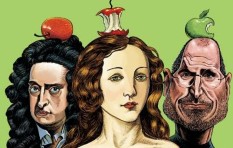
Apple is one of the most popular fruits in our life, and people eat apples every day. But there are 11 apples that are especially important to the history of our human beings and they have changed the whole world.
Long long ago when the world just started, apple was a forbidden 12 in the Garden of Eden, however, a girl named Eve stole and ate it. Unfortunately, she was discovered by God, and was driven away 13 the Garden together with a boy called Adam. After they 14 the garden, Adam and Eve had their own babies and 15 the ancestors of all of us. This is the beginning of our world, history 16 morality.*
In the Autumn of 1665, there 17 a young man sitting under an apple tree in his garden. His name was Newton. While he was thinking of one problem, suddenly, an apple dropped down from the tree and fell on his head. 18 this, Newton discovered gravitation* on that day and his new idea of science made people really 19 and happy, also he changed our opinions about nature and the way 20 we think, then people began to 21 what science was at that time.
And today, Jobs Steve, this crazy old man changed the world by his apple products. For example, iPhones 22 be found 23 in the street, young people feel cool when they use this kind of new high-tech* product. Don’t you think 24 apple products have become a symbol of our time? As Jobs Steve often said he was born to change the world and he made it. 25 he has died, people remember him and miss him, because he made our life more colorful and amazing.
1.A.one B.two C.three D.four
2.A.vegetable B.fruit C.food D.noodle
3.A.from B.in C.with D.under
4.A.went B.walked C.lived D.left
5.A.got B.turned C.made D.became
6.A.but B.or C.and D.though
7.A.had B. wasC.haveD.is
8.A.Because of B.Because C.For D.Since
9.A.bored B.tired C.relaxed D.surprised
10.A./ B.which C.how D.what
11.A.learn B.know C.talk D.share
12.A.need B.should C.can D.must
13.A.somewhere B.nowhere C.everywhere D.anywhere
14.A.what B.who C.where D.that
15.A.Although B.But C.However D.Even
Worries about school bus safety have drawn much attention. Now schools in some poor areas are looking 41 some other ways to go to school.
In the countryside, students are living in different places. And there isn’t enough time for school buses to go around and pick up 42 student. So the most useful way is to let students living in the 43 village take a special school bus which is for them only. And the cost is 44 by their parents and the school.
Each bus is asked to carry only five students on the same route(路线) every day. Traffic police are also making daily checks to make sure drivers don’t carry__45 than 5 students. For a bus like this, the drivers can 46 make any money. So schools pay 300 yuan to drivers every month. The rest comes from the parents’ pockets(口袋).
The roads to the students’ homes are rough(崎岖的) and sometimes even dangerous, 47 falling rocks and narrow(狭窄的) bridges. After spending at least an hour on the road, the students finally make it home. 48 the money for taking a bus has increased and it’s not easy for parents to make money, they are glad to know that their children will 49 home safely each day. And they feel happy to see their child enjoy their time at school. But one girl says she’s seen the big yellow school 50 on TV, and wonders when she’ll ride one of her own.
1.A. at B. up C. for D. through
2.A. all B. every C. both D. either
3.A. near B. far C. same D. poor
4.A. bought B. spent C. paid D. took
5.A. few B. fewer C. many D. more
6.A. always B. often C. sometimes D. hardly
7.A. and B. but C. with D. without
8.A. Because B. Although C. If D. When
9.A. get B. arrive at C. arrive in D. reach to
10.A. desks B. bags C. buses D. bikes
The bullet (子弹头) train D106 from Changsha to Shanghai has a short stop in Quzhou for only one minute.
Named 21 the letter D, the new trains run at speeds of 200 to 250 kilometers one hour. This is much 22 than Z-type and T-type trains. For example, it 23 take people 12 hours to travel from Shanghai to Beijing. But now it only 24 10. The most interesting part of the bullet trains is the revolving (旋转的) seats. People can adjust (调整) their seats as they like, so that it is 25 for you to talk with others around you face to face. The new trains run 26 big cities. They 27 the long trips much faster and more comfortable.
However, many passengers still won’t choose the bullet trains 28 some reasons. The ticket
29 of the bullet trains are much higher. For example, a hard seat ticket from Beijing to Jinan is only 90 yuan for T-type trains. But on the bullet trains all the seats are 30 . And they cost 153 to 184 yuan. On the other hand, the bullet trains don’t stop at small stations.
1.A. with B. begin C. at D. after
2.A. fast B. faster C. quickly D. slower
3.A. would B. will C. used to D. was used to
4.A. cost B. takes C. need D. spends
5.A. difficult B. hard C. easily D. easy
6.A. between B. among C. along D. around
7. A. get B. let C. make D. allow
8.A. because B. for C. since D. with
9. A. prices B. speeds C. costs D. seats
10.A. hard B. big C. expensive D. soft

These days, a lot of photos about how a three-year-old girl looked after her disabled father are 31 spread over the Internet. Many people were 32 by her. And people gave her a 33 nickname (绰号) “little strong girl”.
The little girl is Dong Xinyi. She was born in a small 34 in Dezhou, Shangdong Province. When she was several months 35 , her father Dong Jianshe had an accident 36 riding his motorcycle and lost his 37 . Two years later her mother left her father 38 the poor life. As an old saying goes, “ The children of 39 people manage household affairs early.” Little Xinyi had to do lots of housework. She 40 her father in her power. She cooked noodles, carried water, cleaned rooms and washed clothes. The little girl brings happiness and 41 to her poor family. And 42 , the local government has 43 medical treatment to her father and promised to cover all medical expenses(费用). 44 the same time, the government is also planning to raise money for the girl’s 45 . Now Dong Xinyi has got a chance to go to nursery school(幼儿园) like other children,
1.A.happily B. certainly C. carefully D. widely
2.A.moved B. married C. made D. named
3.A. bad B. wrong C. bright D.stupid
4.A. city B. village C. hospital D. capital
5.A. young B. little C. old D. big
6.A. where B. while C. whether D. how
7.A. legs B. son C. daughter D. wife
8.A. because B. instead of C. instead D. because of
9.A. rich B. great C. poor D. disabled
10.A. took care B. took care of C. looked around D. looked for
11.A.sadness B. success C. freedom D. hope
12.A.luckily B. unluckily C. likely D. really
13.A. refused B. noticed C. offered D. bought
14.A.On B. At C. In D. To
15.A. information B. interest C. suggestion D. education
湖北省互联网违法和不良信息举报平台 | 网上有害信息举报专区 | 电信诈骗举报专区 | 涉历史虚无主义有害信息举报专区 | 涉企侵权举报专区
违法和不良信息举报电话:027-86699610 举报邮箱:58377363@163.com