
题目列表(包括答案和解析)
听力测试
(一)听句子,选择与画面一致的选项。每个句子听一遍:

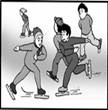
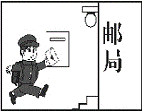
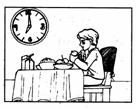
1. ( A B C ) 2. ( A B C ) 3. ( A B C ) 4. ( A B C )
(二)、请听句子,选出恰当的答语。每个句子听一遍:
( )5. A. It’s Sunday. B. It’ April 21. C. It’s half past eleven.
( )6. A. It’s very hot. B. It’s very heavy. C. It’s very large.
( )7. A. Yes, please. B. You are welcome. C. Sorry, I can’t.
( )8. A. No, it isn’t. B. Yes, it is. C. Thank you.
( )9. A. About 40 minutes.
B. About half an hour’s walk.
C. About 5 meters long.
( )10. A. I think it is interesting.
B. I like a story.
C. I’m reading.
(三)听对话,宣战正确答案。每组对话听两遍。
( )11. When was Edison born?
A. In 1874. B. In 1931. C. In 1847.
( )12. Why wasn’t the boy at school yesterday?
A. He had to look after his mother.
B. He had to look after his father.
C. He was ill in bed.
( )13. What’s the woman’s telephone number?
A. 3897244. B. 3879224. C. 3789244.
( )14. Why was the girl late again for school?
A. She was ill. B. She got up late. C. She met a traffic accident.
( )15. When does the dialogue happen?
A. During class. B. After class. C. Before class.
( )16. What does the girl’s mother do?
A. A nurse. B. A doctor. C. A worker.
( )17. What size does the man wear?
A. The large size. B. The small size. C. The medium size.
(四)对话理解: 对话听两遍:
听第一段对话,回答第18-21小题。
( )18. What’s wrong with the boy?
A. He’s got a headache. B. He’s got a high temperature.
C. He’s got a cold.
( )19. How long has he been like this?
A. For one day. B. For two days. C. For three days.
( )20. Is he seriously ill?
A. Yes, he is. B. Yes. But he will be well soon. C. No, he isn’t.
( )21. How many times should he take the medicine a day?
A. One time. B. Two times. C. Three times.
听第二段对话,回答第22-25小题。对话听两遍:
( )22. Where does the man want to go?
A. London. B. Hong Kong. C. America.
( )23. When will he go there?
A. June 29th. B. June 30th. C. July 1st.
( )24. When will the earliest flight leave?
A. At 7:00 in the evening. B. At 8:00 in the morning.
C. At 7:00 in the morning.
( )25. Does it stop in Beijing?
A. Yes, it does. B. No, it doesn’t. C. We don’t know.
(五)听短文回答问题,短文听两遍。
( )26. Where did Mr. White work?
A. France. B. America. C. England.
( )27. Why was Mrs. White angry?
A. Her husband wouldn’t go to see their son.
B. Her husband was hit by a car.
C. Her husband didn’t love her.
( )28. How did Mr. and Mrs. White go to Paris?
A. By ship. B. By train. C. By plane.
( )29. Mr. White didn’t know how they had got to Paris because _____ on their way.
A. he was asleep
B. he was thinking about his work
C. he was worried about his son
( )30. From this passage we know_____.
A. Mr. White loved nobody except himself
B. Mr. White couldn’t get on well with anybody
C. Mr. White was always interested in his work
(一)交际应答。录音中有五个句子,每个句子听一遍,然后从每小题A、B、C中选出能对每个句子做出适当反应的答语。
1.A.Yes, please. B.Good idea. C.Of course, it is.
2.A.Certainly you are. B.Sure. Hold on, please. C.I’ll do that.
3.A.Oh, they are over there. B.I’m glad you’ve found it. C.Go straight and turn left.
4. A.OK, I wil. B.Yes, I think so. C.Good for you.
5.A.Never mind. B.You are welcome. C.I’m sorry.
(二)情景反应。录音中有五组对话,听对话两遍后,从每小题A、B、C中选出能回答所给问题的正确答案。
6.When will Mrs White come back?
A.Right now. B.Quite soon. C.At four.
7.What sport does the woman like?
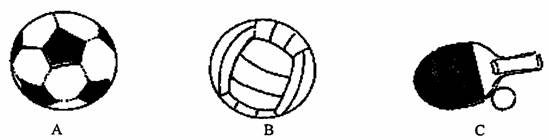
8.What does the woman prefer to do?
A.To see the new play. B.To do some shopping. C.To visit the museum.
9.What are the man and woman doing?
A.They are looking for a CD player in a shop.
B.They are learning how to press the button.
C.The man is teaching the woman how to use the CD player.
10.Why was Frank on the news last night?
A.He walked along the beach at night.
B.He swam alone in the cold water.
C.He got the boy out of water and saved him.
(三)对话理解。录音中有一段对话,听对话两遍后,从每小题A、B、C中选出能回答所给问题的正确答案。
11.Where could the dialogue happen?
A.In a shop. B.In a library. C.In a hospital.
12.Why did the young man go to see the doctor?
A.He didn’t know where to begin his talk.
B.He felt difficult to fall asleep.
C.He felt unhappy most of the day.
13.How long has the young man been ill?
A.For about two years. B.For about three weeks. C.For about six months.
14.In what season did the young man feel worse?
A.In Spring. B.In Autumn. C.In winter.
15.What did the doctor ask the young man to do?
A.To take some medicine. B.To burn away his worries. C.To take more exercises.
(四)短文理解。录音中有一篇短文,听短文两篇后,从每小题A、B、C中选出能回答所给问题的正确答案。
16.What happened to the three boys in a cold day?
A.They lost their way.
B.They couldn’t find the big house.
C.They had to spend the night in the open air.
17.What did the three boys ask the farmer to do?
A.To give them some water and food.
B.To let them stay in his house for a night.
C.To tell them the way to walk out of the forest.
18.Why did one of the boys have to sleep in the big house?
A.The farmer didn’t like the third boy.
B.One of the boys made a loud noise when he slept.
C.There wasn’t enough room in the farmer’s house.
19.Who was the first to sleep with the horses?
A.Mike B.Jack C.Tom
20.Why were all the horses outside at the house door?
A.Because someone drove them out of the house.
B.Because the smell in the big house was really terrible.
C.Because the horses didn’t like to stay with people at night.
It is so cold on that dark winter day in 1942. But it is no different from any other day in this Nazi concentration camp (纳粹集中营). I am 1 dead, living on from day to day, from hour to hour, 2 I was taken from my home and brought here with tens of thousands of other Jews (犹太人). Will I still be 3 tomorrow?
I walk back and forth (来回) next to the barbed wire fence (带刺的铁丝网), trying to keep my body 4 . I am hungry. I have been hungry for long. Each day, as more of us disappear, the happy 5 seems like a dream, and I sink deeper and deeper into hopelessness.
Suddenly, I notice a young girl walking past 6 the other side of the fence. She stops and looks at me with sad eyes that seem to say she cannot understand why I am here. I want to look away, but I cannot move my eyes away from hers. Then she reaches into her pocket, and pulls out a red apple. Oh, how long has it been since I saw 7 ! She looks round carefully and then with a smile quickly throws the apple over the fence. I run to pick it up, holding it in my shaking (颤抖) 8 fingers. In my world of death this apple is a sign of life, of love. I looked up in time to see the girl disappearing.
The next day I cannot help myself-I am 9 at the same time to that place near the fence. And again she comes and brings me an apple. For seven months we meet like this. One day I hear terrible news: We’re being shipped to another camp.
The next day when I greet her, my heart is 10 and I can hardly speak as I say what must be said: “Don’t bring me an apple tomorrow.” I tell her, “I am being sent to another camp.” Turning before I lose all my control (控制), I run away from the fence. I cannot 11 to look back.
And then one day the war has ended. Few of us who are still alive are freed. I have 12 everything, but I still have the memory of this girl.
1. A. almost B. mostly C. probably D. quite
2. A. long before B. soon after C. even though D. ever since
3. A. out B. alive C. free D. hungry
4. A. healthy B. strong C. warm D. comfortable
5. A. past B. future C. moment D. present
6. A. by B. on C. to D. from
7. A. it B. this C. one D. that
8. A. frozen B. dirty C. little D. painful
9. A. pushed B. taken C. drawn D. driven
10. A. beating B. hurting C. sinking D. breaking
11. A. imagine B. bear C. stop D. expect
12. A. forgotten B. left C. missed D. lost
听短文,从所给的A、B、C三个选项中选出一个最佳选项。
1. How long has Kelly lived in England?
A. For about 3 years.
B. For about 13 years.
C. For about 16 years.
2. What does Kelly think of her language school?
A. Boring.
B. Terrible.
C. Interesting.
3. What does Miss White teach at the beginning of each class?
A. Grammar.
B. Pronunciation.
C. Writing.
4. What time may Kelly have Chinese classes on Sundays?
A. At 11:00 am.
B. At 3:00 pm.
C. At 8:00 pm.
5. Where is Kelly from?
A. China.
B. England.
C. America.
第1卷(选择题共70分)
1.5 CBABC 6―10ACCAA 11-15ABCBC 16-20ADBAC 21-25 BDBAB
26-30 ACBCB 31-35 ADABD 36―40 ACDBC 41~45 BDCBA 46―50 BDABD
5 1-55 CCDAB 56-60 CBDAD
评分说明:凡与答案不符者不得分。1-40小题,每小题1分;41-60小题,每小题1.5分。
第Ⅰ卷(非选择题共50分)
四、1.1 5 2.Chinese 3.physics 4.skating 5.six
评分说明:每小题1分。大、小写错误,每处扣O.5分。
五、1.without 2 .borrow 3.Invited 4.interest 5.check 6.visitors 7.loudly 8;Thousands 9.1east 1 0.increasing
评分说明:每小题1分。与答案不符,但只要单词拼写正确,符合本题要求,句意和语法皆无
错误,也可给分。大小写错误,每处扣0.5分;词形及拼写错误,该词不给分。每小题只能写一种形式。如写了两种以上的形式,即使其中―种是对的,也不给分。
六、1.were doing 2.to do 3.has invented 4.is used 5.to keep 6.Don’t know 7.Knows 8.Can spend 9.talking 1 0.will have
评分说明:每小题1分。所用动词形式与答案不同,但根据上下文,语法、意义皆能讲通,也可给分。所用时态正确,但所填单词有拼写错误,扣0.5分。
七、1.Nice to meet you.too. 2.What’S your favorite subject 3.Yes,l do. 4.How much is it/How much does it cost 5.How often do you read Chinese?-
评分说明:每个句子2分。与所给答案不同,但只要语法、句意、拼写(含大小写)皆正确,且符合情景,也可给满分。如果所写句子能连接对话并基本能表达应表达的意思,但有语法错误、大小写错误或单词拼写错误,每处扣O.5分。所写句子不符合对话情景,不能连接对话,不给分。
八、书面表达
( 一 )One possible version:
Make Home a happier Place
Maybe you don’t think your parents understand you.You don’t seem SO close to them as
you used to be.How can you get on well with your parent? Here is some advice:
1.Talk to them about your school life and your plans for the future。
2.Tell them your needs and find out what their needs are.
3.Do some housework.They will feel that you are no longer a small child.
If you follow these steps,slowly, you will get along well with your parents
(二)评分说明:参考《中考指导》附2008年中考试题评分标准n
本资料由《七彩教育网》www.7caiedu.cn 提供!
湖北省互联网违法和不良信息举报平台 | 网上有害信息举报专区 | 电信诈骗举报专区 | 涉历史虚无主义有害信息举报专区 | 涉企侵权举报专区
违法和不良信息举报电话:027-86699610 举报邮箱:58377363@163.com