
题目列表(包括答案和解析)
The number of speakers of English in Shakespeare’s time is estimated(估计) to have been about five million. Today it is estimated that some 260 million people speak it as a native language, mainly in the United States, Canada, Great Britain, Ireland, South Africa, Australia and New Zealand. In addition to the standard varieties of English found in these areas, there are a great many regional and social varieties of the language as well as various levels of usage that are employed both in its spoken and written forms.
In fact, it is impossible to estimate the number of people in the world who have acquired an adequate(足够的) working knowledge of English in addition to their own languages. The purpose for English learning and the situations in which such learning takes place are so varied that it is difficult to explain and still more difficult to judge what forms an adequate working knowledge for each situation.
The main reason for the widespread demand for English is its present-day importance as a world language. Besides serving the indefinite needs of its native speakers, English is a language in which some of important works in science, technology, and other fields are being produced, and not always by native speakers. It is widely used for such purposes as meteorological and airport communications, international conferences, and the spread of information over the radio and television networks of many nations. It is a language of wider communication for a number of developing countries, especially former British colonies. Many of these countries have multilingual populations and need a language for internal communication in such matters as government, commerce, industry, law and education as well as for international communication and for entrance to the scientific and technological developments in the West.
1.What would be the best title for this passage?
|
A.The Difficulties of Learning English |
B.International Communications |
|
C.The Standard Varieties of English |
D.English as a World Language |
2.Which of the following statements is NOT true?
|
A.Some 260 million people in the world have an adequate working knowledge of English. |
|
B.There are some 260 million native speakers of English in the world. |
|
C.It is almost impossible to estimate the number of people with an adequate working knowledge of English. |
|
D.People learn English for a variety of reasons. |
3.According to the passage, what is the main reason for the widespread use of English?
|
A.It was popular during Shakespeare’s time. |
B.It is used in former British colonies. |
|
C.It serves the needs of its native speakers. |
|
|
D.It is a world language that is used for international communication. |
4.What forms an adequate working knowledge of English?
|
A.The ability to read a newspaper. |
|
|
B.It is difficult to judge because it differs for each situation. |
|
|
C.Being able to speak several languages. |
D.Being a native speaker. |
5.What type of developing countries would be most likely to use English?
|
A.Those geographically close to the United States. |
|
B.Those interested in the culture of the United States. |
|
C.Former colonies of Great Britain. |
|
D.Countries where international conferences are held. |
6.C。细节题。根据文章最后一段倒数第2句可推知此题
When a first-time father saw his newborn son, he immediately noticed the baby's ears obviously standing out from his head. He expressed his concern to the nurse that some children might be made fun of his child. A doctor examined the baby and reassured the new dad that his son was healthy---- the ears presented only a small problem with its appearance.
But the nervous father continued. He wondered if the child might suffer psychological effects of ridicule, or if they should consider plastic surgery(整形手术). The nurse assured him that it was really no problem, and he should just wait to see if the boy grows into his ears.
The father finally felt more optimistic about his child, but now he worried about his wife's reaction to those large ears. She had been delivered by operation, and had not yet seen the child.
“She doesn't take things as easily as I do,” he said to the nurse.
By this time, the new mother was settled in the recovery room and ready to meet her new baby. The nurse went along with the dad to lend some support in case this inexperienced mother became upset about her baby's large ears.
The baby was in a blanket(毛毯) with his head covered for the short trip through the cold air-conditioned corridor. The baby was placed in his mother's arms, who eased the blanket back so that she could look at her child for the first time.
She took one look at her baby's face and looked to her husband and gasped, “Oh, Honey! Look! He has your ears!”
No problem with Mom. She married those ears...and she loves the man to whom they are attached.
The poet Kahlil Gibran said, “Beauty is not in the face; beauty is a light in the heart.” It's hard to see the ears when you're looking into the light.
【小题1】When the father first saw his baby, he was worried that________.
| A.The baby might not grow up healthily. |
| B.The baby might be laughed at by others. |
| C.The baby might disappoint its mother. |
| D.the baby might have mental problems. |
| A.could not function well. |
| B.looked the same as others. |
| C.only caused a small problem. |
| D.needed to have plastic surgery. |
| A.She blamed her husband for the baby’s big ears. |
| B.She was the first to discover the baby’s large ears. |
| C.She suggested having an operation on the baby immediately. |
| D.She found something similar between the baby and its father. |
| A.The ears. | B.The parents. | C.The doctor and nurse. | D.The problems |
| A.To advise readers to listen carefully. |
| B.To draw a conclusion from the story. |
| C.To criticize the wrong attitude to physical beauty. |
| D.To stress the importance of doctor-patient relationship. |
When a first-time father saw his newborn son, he immediately noticed the baby's ears obviously standing out from his head. He expressed his concern to the nurse that some children might be made fun of his child. A doctor examined the baby and reassured the new dad that his son was healthy---- the ears presented only a small problem with its appearance.
But the nervous father continued. He wondered if the child might suffer psychological effects of ridicule, or if they should consider plastic surgery(整形手术). The nurse assured him that it was really no problem, and he should just wait to see if the boy grows into his ears.
The father finally felt more optimistic about his child, but now he worried about his wife's reaction to those large ears. She had been delivered by operation, and had not yet seen the child.
“She doesn't take things as easily as I do,” he said to the nurse.
By this time, the new mother was settled in the recovery room and ready to meet her new baby. The nurse went along with the dad to lend some support in case this inexperienced mother became upset about her baby's large ears.
The baby was in a blanket(毛毯) with his head covered for the short trip through the cold air-conditioned corridor. The baby was placed in his mother's arms, who eased the blanket back so that she could look at her child for the first time.
She took one look at her baby's face and looked to her husband and gasped, “Oh, Honey! Look! He has your ears!”
No problem with Mom. She married those ears...and she loves the man to whom they are attached.
The poet Kahlil Gibran said, “Beauty is not in the face; beauty is a light in the heart.” It's hard to see the ears when you're looking into the light.
1.When the father first saw his baby, he was worried that________.
|
A.The baby might not grow up healthily. |
|
B.The baby might be laughed at by others. |
|
C.The baby might disappoint its mother. |
|
D.the baby might have mental problems. |
2.According to the doctor and nurse, the baby’s ears________.
|
A.could not function well. |
|
B.looked the same as others. |
|
C.only caused a small problem. |
|
D.needed to have plastic surgery. |
3.What is true about the baby’s mother?
|
A.She blamed her husband for the baby’s big ears. |
|
B.She was the first to discover the baby’s large ears. |
|
C.She suggested having an operation on the baby immediately. |
|
D.She found something similar between the baby and its father. |
4.What does the underlined word they refer to in the last but on paragraph(倒数第2段)?
|
A.The ears. |
B.The parents. |
C.The doctor and nurse. |
D.The problems |
5.What’s the function of the last paragraph?
|
A.To advise readers to listen carefully. |
|
B.To draw a conclusion from the story. |
|
C.To criticize the wrong attitude to physical beauty. |
|
D.To stress the importance of doctor-patient relationship. |
第一节:听独白或对话(共5小题;每小题1.5分,满分22.5分)
听下面5段对话或独白。每段对话或独白后有几个小题,从题中所给的A、B、C三个选项中选出最佳选项,并标在试卷的相应位置,听每段对话或独白前,你将有时间阅读各个小题,每小题5秒钟;听完后,各小题将给出5秒钟的作答时间。每段对话或独白读两遍。
听第1段对话,回答第1-3题。
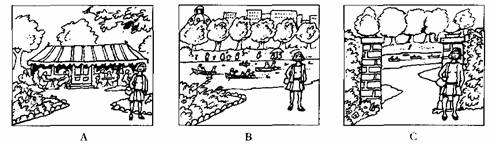
1.Where does Jane ask Tom to meet her at first?
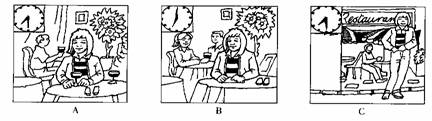
2.When and where do they agree to meet finally?
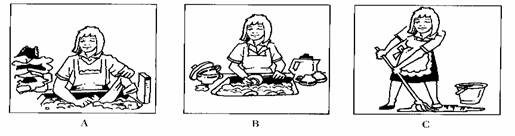
3.What does Jane have to do before going out to meet Tom?
听第2段对话,回答第4-6题。
4.According to Peter, what is the problem with the building?
A. The air-conditioning is too strong.
B. The air-conditioning is out of order.
C. The air-conditioning stops working sometimes.
5.Why did Peter miss the breakfast yesterday morning?
A. He overslept.
B. He couldn't fall asleep the night before.
C. He talked with his roommates late into the night.
6.How many students will be staying in this room?
A. Two. B. Three. C. Four.
听第3段对话,回答第7-9题。
7.Which subject (s) does David find particularly difficult?
A. Math. B. English. C. The sciences.
8.What does David do to help his uncle with the cows?
A. He milks the cows on Sundays and cleans the cowshed sometimes.
B. He drives the tractor on Sundays and does the milking sometimes.
C. He cleans the cowshed on Sundays and drives the tractor sometimes.
9.What is David going to do now?
A. He is going to work on his own farm.
B. He is preparing to attend an agricultural college.
C. He is going to study hard to pass the exams.
听第4段对话,回答第10-12题。
10.What is the probable relation between the man and woman?
A. A research student and a stranger.
B. A social worker and a businessman.
C. A businessman and a research student.
11.What made the woman begin to smoke at the age of 17?
A. Her boyfriend offered her a cigarette.
B. She often went to parties with her friends.
C. She wanted to follow her friends’ example.
12.What was the result of the woman's first attempt to stop smoking?
A. She stopped smoking for a while.
B. She managed to give up smoking completely.
C. She began to smoke fewer cigarettes than before.
听第5段对话,回答第13-15题。
13.What do the students come to the school for?
A. Visiting the school.
B. Attending summer courses.
C. A sightseeing tour of the area.
14.How long has the school been open?
A. Twenty years. B. Five years. C. Twenty-five years.
15.What could the students do in the study center if they were out late the night before?
A. Talk to the teachers. B. Use the equipment. C. Do the homework.
第二节:听取信息(共5小题;每小题1.5分,满分7.5分)
听下面1段对话。请根据题目要求,从所听到的内容中获取必要的信息,填入答题卡 标号为16—20的空格中。听录音前,你将有10秒钟的阅题时间,录音读两遍。你有80秒钟的作答时间。
|
Caller information |
|
|
Name of caller |
John Smith |
|
Where to go |
London |
|
When to go |
(16.) |
|
What to do there |
(17.) |
|
How long to stay |
A week or so |
|
Ticket information |
||||
|
Class |
Airline |
Price |
When to leave |
When to arrive |
|
Economy |
(18.) |
RMB 5600 |
7:40 a.m. |
In the morning |
|
Pacific Airline |
(19.) |
11:40 a.m. |
(20.) |
湖北省互联网违法和不良信息举报平台 | 网上有害信息举报专区 | 电信诈骗举报专区 | 涉历史虚无主义有害信息举报专区 | 涉企侵权举报专区
违法和不良信息举报电话:027-86699610 举报邮箱:58377363@163.com