
题目列表(包括答案和解析)
The number of speakers of English in Shakespeare’s time is estimated(估计) to have been about five million. Today it is estimated that some 260 million people speak it as a native language, mainly in the United States, Canada, Great Britain, Ireland, South Africa, Australia and New Zealand. In addition to the standard varieties of English found in these areas, there are a great many regional and social varieties of the language as well as various levels of usage that are employed both in its spoken and written forms.
In fact, it is impossible to estimate the number of people in the world who have acquired an adequate(足够的) working knowledge of English in addition to their own languages. The purpose for English learning and the situations in which such learning takes place are so varied that it is difficult to explain and still more difficult to judge what forms an adequate working knowledge for each situation.
The main reason for the widespread demand for English is its present-day importance as a world language. Besides serving the indefinite needs of its native speakers, English is a language in which some of important works in science, technology, and other fields are being produced, and not always by native speakers. It is widely used for such purposes as meteorological and airport communications, international conferences, and the spread of information over the radio and television networks of many nations. It is a language of wider communication for a number of developing countries, especially former British colonies. Many of these countries have multilingual populations and need a language for internal communication in such matters as government, commerce, industry, law and education as well as for international communication and for entrance to the scientific and technological developments in the West.
1.What would be the best title for this passage?
|
A.The Difficulties of Learning English |
B.International Communications |
|
C.The Standard Varieties of English |
D.English as a World Language |
2.Which of the following statements is NOT true?
|
A.Some 260 million people in the world have an adequate working knowledge of English. |
|
B.There are some 260 million native speakers of English in the world. |
|
C.It is almost impossible to estimate the number of people with an adequate working knowledge of English. |
|
D.People learn English for a variety of reasons. |
3.According to the passage, what is the main reason for the widespread use of English?
|
A.It was popular during Shakespeare’s time. |
B.It is used in former British colonies. |
|
C.It serves the needs of its native speakers. |
|
|
D.It is a world language that is used for international communication. |
4.What forms an adequate working knowledge of English?
|
A.The ability to read a newspaper. |
|
|
B.It is difficult to judge because it differs for each situation. |
|
|
C.Being able to speak several languages. |
D.Being a native speaker. |
5.What type of developing countries would be most likely to use English?
|
A.Those geographically close to the United States. |
|
B.Those interested in the culture of the United States. |
|
C.Former colonies of Great Britain. |
|
D.Countries where international conferences are held. |
6.C。细节题。根据文章最后一段倒数第2句可推知此题
Many people who work in London prefer to live outside it, and to go in to their offices or schools every day by train, car or bus, even though this means they have to get up early in the morning and reach home late in the evening.
One advantage of living outside London is that houses are cheaper. Even a small flat in London without a garden costs quite a lot to rent. With the same money, one can get a little house in the country with a garden of one’s own.
Then, in the country one can rest from the noise and hurry of the town. Even though one has to get up earlier and spend more time in trains or buses, one can sleep better at night and during weekends and on summer evenings, one can enjoy the fresh, clean air of the country. If one likes gardens, one can spend one’s free time digging, planting, watering and doing the hundred and one other jobs which are needed in a garden. Then, when the flowers and vegetables come up, one has the reward of one who has shared the secret of Nature.
Some people, however, take no interest in country things: for them, happiness lies in the town, with its cinemas and theatres, beautiful shops and busy streets, dance-halls and restaurants. Such people would feel that their life was not worth living if they had to live it outside London. An occasional walk in one of the parks and a fortnight’s (two weeks) visit to the sea every summer is all the country they want: the rest they are quite prepared to leave to those who are glad to get away from London every night.
1.Which of the following statements is NOT true?
|
A.People who like country things prefer to live outside the city. |
|
B.People who work in London prefer to live in the country. |
|
C.Because of certain disadvantages of living outside London, some people who work in London prefer to live inside London. |
|
D.Because of certain advantages of living outside London, many people who work in London prefer to live outside London. |
2.One can use the same money for ________ to buy a little house with a garden in the country.
|
A.getting a small flat with a garden |
B.having a small flat with a garden |
|
C.renting a small flat without a garden |
D.buying a small flat without a garden |
3.When the flowers and vegetables in the garden come up, those _______ have the reward of one who has shared the secret of Nature.
|
A.who live in the country |
|
B.who have spent time working in the garden |
|
C.who have a garden of their own |
|
D.who have been digging, planting and watering |
4.People who think happiness lies in the town would feel that _______ if they had to live it outside London.
|
A.their life was meaningless |
B.their life was invaluable |
|
C.they didn’t deserve a happy life |
D.they were not worthy of their happy life |
5.The underlined word rest in the last paragraph refers to ________.
|
A.the rest time |
B.the rest people |
|
C.the rest of the country |
D.the rest of the parks and of the sea |
6.C。推断题。根据其上文:这些人偶尔去公园散散步后去海边度两周假;本句接着说:其余的就留给那些每天晚上喜欢离开伦敦的人,那么,“其余的”显然指“其余的乡村”。从而可推知题
There seems never to have been a civilization(文明) without toys, but when and how they developed is unknown. They probably came about just to give children something to do.
In the ancient world, as is today, most boys play with some kinds of toys and most girls with another. In societies where social roles are strictly determined, boys pattern their play after the activities of their fathers and girls after the tasks of their mothers. This is true because boys and girls are being prepared, even in play, to step into the roles and responsibilities of the adult world.
What is remarkable about the history of toys is not so much how they changed over the centuries but how much they have remained the same. It is the universality of toys about their development in all parts of the world and their continuing to the present that is amazing. In Egypt, the Americas, China, Japan and among the Arctic peoples, generally the same kinds of toys appeared. Nearly every civilization had dolls, little weapons, toy soldiers, tiny animals and vehicles.
Because toys can be generally regarded as a kind of art form, they have not been subject to (服从于) technological progress that characterizes inventions for adult use. The progress from the wheel to the oxcart to the automobile is a direct line of advancement. The progress from a rattle (拨浪鼓) used by a baby in 3,000 BC to one used by an infant today, however, is not characterized by inventiveness. Each rattle is the product of the artistic tastes of the times and subject to the limitations of materials then ready for use. (words: 285 ; time : 5ms)
1. The reason why the toys most boys play with are different from those that girls play with is that ________ .
A. their social roles are strictly determined
B. most boys would like to follow their fathers' jobs
C. boys like to play with their fathers while girls with their mothers
D. they like challenging activities.
2. "The universality of toys" lies in the fact that ________ .
A. technological advances have greatly improved the making of toys
B. the improvement of techniques in making toys depends on the efforts of universities
C. the exploration of the universe has led to the creation of new kinds of toys
D. the basic characteristics of toys are the same all over the world
3. Regarded as a kind of art form, toys ________.
A. follow a direct line of development
B. also greatly interest adults
C. are not characterized by progress in technology
D. show the pace of social progress
(C)篇
1. A。由原文第二段第二句可知。
2. D。根据文章第三段第一句和第三句可知,玩具的基本的特征变化不大。
3. C。由文章最后一段第一句可知,玩具作为一种艺术形式,不因科技变化而变化。
听下面5段对话或独白。每段对话或独白后有几个小题,从题中所给的A、B、C三个选项中选出最佳选项,并标在试卷的相应位置。听每段对话或独白前,你将有时间阅读各个小题,每小题5秒钟;听完后,各小题将给出5秒钟的作答时间。每段对话或独白读两遍。
听第1段材料,回答第1和第2题。
1. What do the two speakers both want to do in the coming new year?
A. To save some money. 苑B. To work harder. C. To lose weight.
2. What did Henry do last year?
A. He joined a health club. B. He stopped smoking. C. He got a good job.
听第2段材料,回答第3至第5题。
3. Why did the man talk to the woman?
A. He wanted to buy a house. B. He wanted to get a job. C. He wanted to rent a flat.
4. What is the flat the man is interested in?
A. It has a bathroom and one bedroom.
B. It has two bedrooms and a sitting room.
C. It has a kitchen but it hasn't a bathroom.
5. How much will the man pay for the biggest one each year?
A. 3,600 dollars. B. 2,400 dollars. C. 3,000 dollars.
听第3段材料,回答第6至第8题。
6. Where are they planning to go in the morning?
A. To a park. B. To an art museum. C. To a shopping center.
7. Why does the man want to visit the zoo in the afternoon?
A. The zoo will be closed the rest of the week.
B. The zoo is free to visitors that day only.
C. There are unusual animals on display.
8. Why does the woman want to go shopping instead?
A. She wants to buy souvenirs of their visit.
B. She saw some nice clothes at a shopping center.
C. She wants to buy a gift for her friend.
听第4段材料,回答第9至第11题。
9. Where does the dialogue take place?
A. At the airport. B. In a railway英才苑station. C. In a restaurant.
10. What's the woman's baggage number?
A. 703-9962. B. 703-9926. C. 703-1926.
11. What time might it probably be when the dialogue took place?
A. In the morning. B. At noon. C. In the afternoon.
听第5段材料,回答第12至第15题。
12. How did the speaker's friends feel about his change of interest?
A. They were very glad about it.
B. They were afraid he wasn't fully prepared.
C. They were puzzled by his decision.
13. Why did the speaker change his interest to underwater exploration?
A. It is much cheaper than space travel.
B. It is much safer than space travel.
C. It is more exciting than space travel.
14. In what way does the speaker think diving is similar to space travel?
A. They both attract scientists' attention.
B. They are both expensive.
C. They can both be quite challenging.
15. Why does the speaker give this talk?
A. To explain the danger of exploring space.
B. To explain why he took up underwater exploration.
C. To show how simple diving can be
第一节:听独白或对话(共5小题;每小题1.5分,满分22.5分)
听下面5段对话或独白。每段对话或独白后有几个小题,从题中所给的A、B、C三个选项中选出最佳选项,并标在试卷的相应位置,听每段对话或独白前,你将有时间阅读各个小题,每小题5秒钟;听完后,各小题将给出5秒钟的作答时间。每段对话或独白读两遍。
听第1段对话,回答第1-3题。
1.Where does Jane ask Tom to meet her at first?
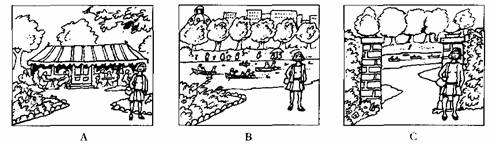
2.When and where do they agree to meet finally?
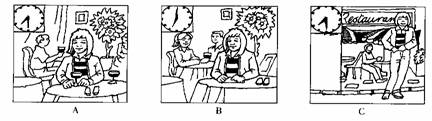
3.What does Jane have to do before going out to meet Tom?
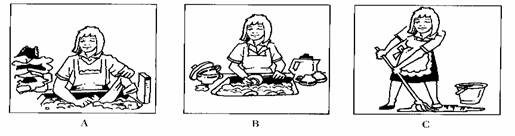
听第2段对话,回答第4-6题。
4.According to Peter, what is the problem with the building?
A. The air-conditioning is too strong.
B. The air-conditioning is out of order.
C. The air-conditioning stops working sometimes.
5.Why did Peter miss the breakfast yesterday morning?
A. He overslept.
B. He couldn't fall asleep the night before.
C. He talked with his roommates late into the night.
6.How many students will be staying in this room?
A. Two. B. Three. C. Four.
听第3段对话,回答第7-9题。
7.Which subject (s) does David find particularly difficult?
A. Math. B. English. C. The sciences.
8.What does David do to help his uncle with the cows?
A. He milks the cows on Sundays and cleans the cowshed sometimes.
B. He drives the tractor on Sundays and does the milking sometimes.
C. He cleans the cowshed on Sundays and drives the tractor sometimes.
9.What is David going to do now?
A. He is going to work on his own farm.
B. He is preparing to attend an agricultural college.
C. He is going to study hard to pass the exams.
听第4段对话,回答第10-12题。
10.What is the probable relation between the man and woman?
A. A research student and a stranger.
B. A social worker and a businessman.
C. A businessman and a research student.
11.What made the woman begin to smoke at the age of 17?
A. Her boyfriend offered her a cigarette.
B. She often went to parties with her friends.
C. She wanted to follow her friends’ example.
12.What was the result of the woman's first attempt to stop smoking?
A. She stopped smoking for a while.
B. She managed to give up smoking completely.
C. She began to smoke fewer cigarettes than before.
听第5段对话,回答第13-15题。
13.What do the students come to the school for?
A. Visiting the school.
B. Attending summer courses.
C. A sightseeing tour of the area.
14.How long has the school been open?
A. Twenty years. B. Five years. C. Twenty-five years.
15.What could the students do in the study center if they were out late the night before?
A. Talk to the teachers. B. Use the equipment. C. Do the homework.
第二节:听取信息(共5小题;每小题1.5分,满分7.5分)
听下面1段对话。请根据题目要求,从所听到的内容中获取必要的信息,填入答题卡 标号为16—20的空格中。听录音前,你将有10秒钟的阅题时间,录音读两遍。你有80秒钟的作答时间。
|
Caller information |
|
|
Name of caller |
John Smith |
|
Where to go |
London |
|
When to go |
(16.) |
|
What to do there |
(17.) |
|
How long to stay |
A week or so |
|
Ticket information |
||||
|
Class |
Airline |
Price |
When to leave |
When to arrive |
|
Economy |
(18.) |
RMB 5600 |
7:40 a.m. |
In the morning |
|
Pacific Airline |
(19.) |
11:40 a.m. |
(20.) |
湖北省互联网违法和不良信息举报平台 | 网上有害信息举报专区 | 电信诈骗举报专区 | 涉历史虚无主义有害信息举报专区 | 涉企侵权举报专区
违法和不良信息举报电话:027-86699610 举报邮箱:58377363@163.com