
题目列表(包括答案和解析)
Many people who work in London prefer to live outside it, and to go in to their offices or schools every day by train, car or bus, even though this means they have to get up early in the morning and reach home late in the evening.
One advantage of living outside London is that houses are cheaper. Even a small flat in London without a garden costs quite a lot to rent. With the same money, one can get a little house in the country with a garden of one’s own.
Then, in the country one can rest from the noise and hurry of the town. Even though one has to get up earlier and spend more time in trains or buses, one can sleep better at night and during weekends and on summer evenings, one can enjoy the fresh, clean air of the country. If one likes gardens, one can spend one’s free time digging, planting, watering and doing the hundred and one other jobs which are needed in a garden. Then, when the flowers and vegetables come up, one has the reward of one who has shared the secret of Nature.
Some people, however, take no interest in country things: for them, happiness lies in the town, with its cinemas and theatres, beautiful shops and busy streets, dance-halls and restaurants. Such people would feel that their life was not worth living if they had to live it outside London. An occasional walk in one of the parks and a fortnight’s (two weeks) visit to the sea every summer is all the country they want: the rest they are quite prepared to leave to those who are glad to get away from London every night.
1.Which of the following statements is NOT true?
|
A.People who like country things prefer to live outside the city. |
|
B.People who work in London prefer to live in the country. |
|
C.Because of certain disadvantages of living outside London, some people who work in London prefer to live inside London. |
|
D.Because of certain advantages of living outside London, many people who work in London prefer to live outside London. |
2.One can use the same money for ________ to buy a little house with a garden in the country.
|
A.getting a small flat with a garden |
B.having a small flat with a garden |
|
C.renting a small flat without a garden |
D.buying a small flat without a garden |
3.When the flowers and vegetables in the garden come up, those _______ have the reward of one who has shared the secret of Nature.
|
A.who live in the country |
|
B.who have spent time working in the garden |
|
C.who have a garden of their own |
|
D.who have been digging, planting and watering |
4.People who think happiness lies in the town would feel that _______ if they had to live it outside London.
|
A.their life was meaningless |
B.their life was invaluable |
|
C.they didn’t deserve a happy life |
D.they were not worthy of their happy life |
5.The underlined word rest in the last paragraph refers to ________.
|
A.the rest time |
B.the rest people |
|
C.the rest of the country |
D.the rest of the parks and of the sea |
6.C。推断题。根据其上文:这些人偶尔去公园散散步后去海边度两周假;本句接着说:其余的就留给那些每天晚上喜欢离开伦敦的人,那么,“其余的”显然指“其余的乡村”。从而可推知题
听下面5段对话或独白后有几个小题,从题中所给的A、B、C三个选项中选出最佳选项,并标在试卷的相应位置。每段对话或独白前,你将有时间阅读各个小题,每小题5秒钟;听完后,各小题将给出5秒钟的答题时间。每段对话或独白读两遍。
听第1段材料,回答第1至3题。
1.What was the woman’s main purpose in going to Ottawa during the vacation?
A.To visit a Canadian family.
B.To go sightseeing.
C.To learn English.
2.Why did the woman like staying with the Smiths?
A.They were her relations.
B.She could speak English with them.
C.She could eat Western food every day.
3.What did the woman particularly like about the Canadian classes?
A.The students have more freedom.
B.Listening,speaking,reading and writing were all included in one class.
C.There were a lot of activities.
听第2段材料,回答第4至6题。
4.What did the man ask the woman to do on Sunday afternoon?
A.To come to a dinner party.
B.To watch a volleyball game.
C.To meet his friends.
5.What did the woman have to do then?
A.To invite some friends.
B.To go to Mexico City.
C.To pick up her brother-in-law at the airport.
6.What did the man suggest?
A.She come over after she gets back from the airport.
B.She bring something to eat.
C.She order pizza for dinner.
听第3段材料,回答第7至9题。
7.Why will they put on a show?
A.For fun. B.For money. C.For nothing.
8.What can we know from their dialogue?
A.They want to put on three show all.
B.They are going to choose one out of three shows.
C.They will sing three songs in the play.
9.What can we learn about the man?
A.He often gets up on a stage.
D.He sings popular songs for money.
C.He will sing and dance in the show.
听第4段材料,回答第10至12题。
10.Why does the girl work hard at her lessons?
A.She wants to be an engineer in the future.
B.She is going to be a biologist after she graduates.
C.She is going to take an exam.
11.What can we learn about the boy?
A.He is an engineer.
B.He is a doctor.
C.He is a friend of the girl’s.
12.What are those technical words about?
A.Engineering. B.Biology. C.Technology.
听第5段材料,回答第13至15题。
13.Which of the following people are unlucky?
A.People who have boring jobs.
B.People who have a lot of spare time.
C.People who earn a lot of money.
14.Why are many successful sportsmen young people?
A.Because they are under 35.
B.Because they can move fast.
C.Because they are interesting.
15.Which of the following group of people work till they die?
A.Writers, artists and actors.
B.Artists,musicians and teachers.
C.Writers;musicians and engineers.
第一节:听独白或对话(共5小题;每小题1.5分,满分22.5分)
听下面5段对话或独白。每段对话或独白后有几个小题,从题中所给的A、B、C三个选项中选出最佳选项,并标在试卷的相应位置,听每段对话或独白前,你将有时间阅读各个小题,每小题5秒钟;听完后,各小题将给出5秒钟的作答时间。每段对话或独白读两遍。
听第1段对话,回答第1-3题。
1.Where does Jane ask Tom to meet her at first?
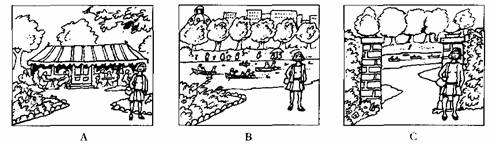
2.When and where do they agree to meet finally?
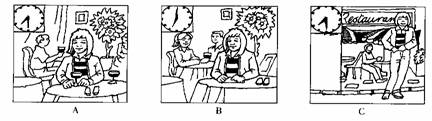
3.What does Jane have to do before going out to meet Tom?
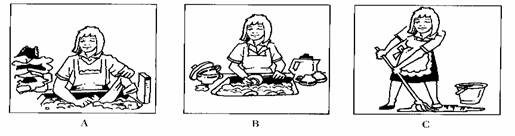
听第2段对话,回答第4-6题。
4.According to Peter, what is the problem with the building?
A. The air-conditioning is too strong.
B. The air-conditioning is out of order.
C. The air-conditioning stops working sometimes.
5.Why did Peter miss the breakfast yesterday morning?
A. He overslept.
B. He couldn't fall asleep the night before.
C. He talked with his roommates late into the night.
6.How many students will be staying in this room?
A. Two. B. Three. C. Four.
听第3段对话,回答第7-9题。
7.Which subject (s) does David find particularly difficult?
A. Math. B. English. C. The sciences.
8.What does David do to help his uncle with the cows?
A. He milks the cows on Sundays and cleans the cowshed sometimes.
B. He drives the tractor on Sundays and does the milking sometimes.
C. He cleans the cowshed on Sundays and drives the tractor sometimes.
9.What is David going to do now?
A. He is going to work on his own farm.
B. He is preparing to attend an agricultural college.
C. He is going to study hard to pass the exams.
听第4段对话,回答第10-12题。
10.What is the probable relation between the man and woman?
A. A research student and a stranger.
B. A social worker and a businessman.
C. A businessman and a research student.
11.What made the woman begin to smoke at the age of 17?
A. Her boyfriend offered her a cigarette.
B. She often went to parties with her friends.
C. She wanted to follow her friends’ example.
12.What was the result of the woman's first attempt to stop smoking?
A. She stopped smoking for a while.
B. She managed to give up smoking completely.
C. She began to smoke fewer cigarettes than before.
听第5段对话,回答第13-15题。
13.What do the students come to the school for?
A. Visiting the school.
B. Attending summer courses.
C. A sightseeing tour of the area.
14.How long has the school been open?
A. Twenty years. B. Five years. C. Twenty-five years.
15.What could the students do in the study center if they were out late the night before?
A. Talk to the teachers. B. Use the equipment. C. Do the homework.
第二节:听取信息(共5小题;每小题1.5分,满分7.5分)
听下面1段对话。请根据题目要求,从所听到的内容中获取必要的信息,填入答题卡 标号为16—20的空格中。听录音前,你将有10秒钟的阅题时间,录音读两遍。你有80秒钟的作答时间。
|
Caller information |
|
|
Name of caller |
John Smith |
|
Where to go |
London |
|
When to go |
(16.) |
|
What to do there |
(17.) |
|
How long to stay |
A week or so |
|
Ticket information |
||||
|
Class |
Airline |
Price |
When to leave |
When to arrive |
|
Economy |
(18.) |
RMB 5600 |
7:40 a.m. |
In the morning |
|
Pacific Airline |
(19.) |
11:40 a.m. |
(20.) |
Tykoon is an online website that allows you to teach your child financial principles through allowances, assignment of tasks and daily chores. As the parent, you can assign a cash value to the things you want your child to do. Then, your child can go in, accept the task and add to their wish list of what they would like to purchase with the money that they earn.
Let’s start with the parent side of things. The parent must be the one to set up the account. You simply enter your information and your child’s information to get started. You are then able to assign allowance amounts to your child.
Then you can add tasks for your child to accept and link them to either their weekly allowance or a pre-determined amount. Your child is then able to accept or decline their tasks. They can see how much each task earns, how often they need to do it and what they will get if they do! They can add items that they are working toward earning and can even earn nn-cash incentives such as extra TV time or staying up late!
Tykoon is a great way to start teaching your child about responsibility and financial principles in fun and safe way. Through the creation of their own profile and the ability to accept or decline tasks, they are taught the skills that they will need later in life when they are managing their own budgets! So, head over and sign up for a free account today and watch your child get excited about doing their chores!
And right now, as a special reward, if you share Tykoon with your friends and have five friends sign up and stay active for more than a month, you’ll earn a $25 Amazon.com gift card! So get your child enrolled(注册), tell your friends and let’s start teaching all our kids about the important financial principles today!
66.The purpose of the text is to___________.
A. make an advertisement B. share teaching experience
C. describe an online website D. present a way of making money
【答案】A
【解析】第一段介绍Tykoon,二,三,四段介绍怎样操作以及所带来的好处, 最后一段是奖励措施。因此, 本文的目的是做广告,吸引大家都来参与。
67.The underlined word“incentives” in Paragraph 3 is closest in meaning to “_________”.
A. promises B. rewards C. gifts D. tasks
【答案】B
【解析】根据下文such as extra TV time or staying up late!,可见,“incentives”表示的是一种奖励。
68.What can kids learn from Tykoon?
A. The ability to manage their budgets. B. The responsibility to do daily chores.
C. The skills to earn their own living. D. The tricks to accept or refuse tasks.
【答案】A
【解析】根据第四段they are taught the skills that they will need later in life when they are managing their own budgets!他们被教给在以后生活中他们自己管理自己财务时需要的技巧。
69.It can be inferred from the last paragraph that_________.
A. no parents will resist the special reward B. Amazon is a very popular website
C. Tykoon wants to attract more visitors D. friends should share information
【答案】C
【解析】如果你能分享给5个朋友,让他们也签约并且保持活跃至少一个月,你就会得到价值25美元的亚马逊礼品卡。
70.What is the best title of the text?
A. Tykoon—A Safe Way to Manage Your Financial Issues
B. How to Create Funny Tasks for Your Kids on the Website
C. Opening an Online Account with the Help of Tykoon
D. Teaching Your Kids Financial Principles with Tykoon
【答案】D
【解析】纵观全文可知。
How far would you be willing to go to satisfy your need to know? Far enough to find out your possibility of dying from a terrible disease? These days that’s more than an academic question, as Tracy Smith reports in our Cover Story.
There are now more than a thousand genetic(基因的)tests, for everything from baldness to breast cancer, and the list is growing. Question is, do you really want to know what might eventually kill you? For instance, Nobel Prize-winning scientist James Watson, one of the first people to map their entire genetic makeup, is said to have asked not to be told if he were at a higher risk for Alzheimer’(老年痴呆症).
“If I tell you that you have an increased risk of getting a terrible disease, that could weigh on your mind and make you anxious, through which you see the rest of your life as you wait for that disease to hit you. It could really mess you up.” Said Dr. Robert Green, a Harvard geneticist.
“Every ache and pain,” Smith suggested, could be understood as “the beginning of the end.”“That ’s right. If you ever worried you were at risk for Alzheimer’s disease, then every time you can’t find your car in the parking lot, you think the disease has started.”
Dr. Green has been thinking about this issue for years. He led a study of people who wanted to know if they were at a higher genetic risk for Alzheimer’s. It was thought that people who got bad news would, for lack of a better medical term, freak out. But Green and his team found that there was“no significant difference”between how people handled good news and possibly the worst news of their lives. In fact, most people think they can handle it. People who ask for the information usually can handle the information, good or bad, said Green.
71.The first paragraph is meant to__________.
A. ask some questions B. introduce the topic
C. satisfy readers’ curiosity D. describe an academic fact
【答案】B
【解析】通过两个问题引出话题。
72.Which of the following is true of James Watson?
A. He is strongly in favor of the present genetic tests.
B. He is more likely to suffer from Alzheimer’s disease.
C. He believes genetic mapping can help cure any disease.
D. He doesn’t want to know his chance of getting a disease.
【答案】D
【解析】根据第二段Nobel Prize-winning scientist James Watson, one of the first people to map their entire genetic makeup, is said to have asked not to be told if he were at a higher risk for Alzheimer’。“James Watson要求如果他的基因表明他有很高的老年痴呆症的可能不要告诉他。”
73.According to Paragraphs 3 and 4, if a person is at a higher genetic risk, it is__________.
A. advisable not to let him know B. impossible to hide his disease
C. better to inform him immediately D. necessary to remove his anxiety
【答案】A
【解析】根据这两个自然段可知,如果你提前被告知你将来可能患某种可怕的疾病会mess you up。
74.The underlined part“freak out”in Paragraph 5 is closest in meaning to“_________”.
A. break down B. drop out C. leave off D. turn away
【答案】A
【解析】根据下文But的转折,以及no significant difference可知,freak out的意思是A(精神垮掉)。
75.The study led by Dr. Green indicates that people__________.
A. prefer to hear good news B. tend to find out the truth
C. can accept some bad news D. have the right to be informed
【答案】C
【解析】根据第五段内容 In fact, most people think they can handle it可知答案选C.
湖北省互联网违法和不良信息举报平台 | 网上有害信息举报专区 | 电信诈骗举报专区 | 涉历史虚无主义有害信息举报专区 | 涉企侵权举报专区
违法和不良信息举报电话:027-86699610 举报邮箱:58377363@163.com