题目列表(包括答案和解析)
The art of reading fiction is largely a matter of inferring meanings. To infer means to understand facts which are not directly stated---only suggested. Inference is one of the commonest ways of knowing things: a child holds his knee and cries; this action implies his feeling; an observer infers that the child is hurt. To infer accurately in everyday life requires caution in observing; to infer skillfully in fiction requires caution in reading; both require disciplined imagination.
The short-story reader can expect to find certain basic elements in any story. For example, all stories involve a person or persons, in a particular setting, faced with a demand for a response. The response called for may be a physical action, such as defeating an adversary(对手) or escaping from a danger; or it may be a mental action, such as adjusting to others or within oneself. In either case, the short story is a description in two ways: first, it shows the motives for a given human action; second, it makes a point about the general human situation. Such descriptions, however, rather than being stated directly, usually are implied by the elements of the story.
When the reader of a story understands all the facts and their interrelationships, he is ready to infer the significance of the story as a whole---its comment on the human situation. This comment, or theme, is the seed from which the story grew. It is also the idea by which all the separate elements of the story are governed, while these in turn further shape and modify the theme. In addition to action, character, and setting, these elements include structure, mood, tone, and point of view.
Fiction reading requires an awareness of all the ways in which a story communicates. It also requires attention to detail. What the author provides is a network of points which serve as clues to his meaning. He invites the reader to develop the meaning by inference, actually to create much of the story himself and so make it part of his own experience.
1.According to the author, "infer" means ________ .
A.knowingfactsbeyondthestatement
B.lookingformoreevidencesforthestatement
C.findingoutadifferentmeaningfromthestatement
D.addingsomefactstothestatement
2.What is inferring in fiction based on?
A.Readers’guessing. B.Thebasicelementsofthestory.
C.Thesettingofthestory. D.Theinterrelationshipsbetweenpeopleinthestory.
3.What is the implied meaning of the last sentence?
A.Inferringcanreallyhelpthereaderdevelopimaginationandenrichhimself.
B.Inferringcanhelpthereaderwriteastoryofhisown.
C.Thereadershouldlookforanexperiencedescribedinthestoryhereads.
D.Theexperiencedescribedinthestorywillleaveagreatimpactonitsreader.
4.What is the main idea of this passage?
A.Inferringisanartofwriting. B.Inferringisaneedinfictionwriting
C.Inferringisthebasicskillinreadingfiction. D.Inferringiscommoninreading.
Harald Kaas was sixty. His back became rounded, and he bent a little. His forehead, always of the broadest-no one else’s hat would fit him - was now one of the highest, that is to say, he had lost all his teeth, which were strong though small, and blackened by smoking. Now, instead of “deuce take it” he said “deush take it”. He had always held his hands half closed as though grasping something; now they stiffened so that he could never open them fully. The little finger of his left hand had been bitten off. According to Harald’s version of the story, the fellow swallowed the piece on the spot.
He was fond of showing off the left part, and it often served as an introduction to the history of brave adventures, which became greater and greater and greater as he grew older and quieter. His small sharp eyes were deep set and looked at one with great intensity. There was power in his individuality. He has no lack of self-respect.
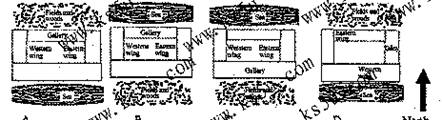
His house, raised on an old foundation, looked out to the south over many islands; farther out were more islands and the open sea. Its eastern wing was barely half furnished, and the western inhabited by Harald Kaas. These wings were connected by a gallery, behind which were the fields and woods to the north.
In the gallery itself were heads of bears, wolves, foxes and lynxes and stuffed birds from land and sea. Skins and guns hung on the walls of the front room. The inner rooms were also full of skins and filled with the smell of wild animals and tobacco-smoke. Harald himself called it “man-smell”; no one who had once put his nose inside could ever forget it. Valuable and beautiful skins hung on the walls and sat, and walked on skins, and each one of them was a subject of conversation. Harald Kaas, seated in his log chair by the fireside, his feet on the bearskin, opened his shirt to show the scars on his hairy chest (and what scars they were) which had been made by a bears teeth, when he had driven his knife, right up to the end, into the monster’s heart. All the tables, and cupboards, and carved chairs listened in their silence.
68.Who or what most probably bit harald Kaass’ little finger off?
A.On of his fellow hunters
B.An adversary in a boxing match
C.A wild animal
D.One of his hunting dogs
|
A. Try to know more about your child.
B. Being a daddy is your top priority.
C. Value your child for what he is.
D. Let your child teach you.
E. Time is of the essence.
F. Look for the good and praise it.
Seven Simple Rules for Dad
My main object in life is to make sure I do the best possible job raising Tommy, now aged ten. That means I have to be the best possible father I can be. I am no psychologist, but I do see what succeeds with my son and me. I also observe other fathers. Here is what I have found works best in the dad department.
1.
|
1. |
The key to a happy child is having a dad who is there with him consistently, day in and day out. It is far better to spend evening after evening just sitting near him while he reads a book or plays on the computer than to spend a couple of hours every Saturday buying him toys or taking in a movie.
2. Share your strengths and fears.
You are your child's ally, not his adversary. The child who knows that his father was once afraid of the dark, and is still afraid of needles, gets to know that his own weaknesses are part of mankind, not a unique shame.
3.
|
2. |
Encouragement is the primary engine of human development. I have been telling Tommy for a year now that he is a whiz in math because I know he can calculate in a nanosecond the number of toys he can buy with his allowance. Now he's a whiz in math at school too. Consistent recognition of a child's strengths is more important by far than vitamins. You deny it to them at their peril and yours.
4. Do not allow your children to be rude.
My son is expected to share, answer others when they greet him and congratulate those who succeed. By teaching him about politeness, I make sure he realizes that others' feelings are worth taking into account. If he can get that into his little towhead, he will have learned the most basic foundation of human interaction.
5.
|
3. |
A common misstatement about child development is that “kids don't come with instruction manuals(操作指南).” Not true—they do. They tell you when they’re hungry. They tell you when they're lonely or scared. They are like little guided tours of themselves. Children will tell you what they want, although not always with words. Fatigue, irritability and sadness are ways of telling Dad what they need. Look and listen.
6.
|
4. |
When Tommy knows he is loved for himself, not for any particular accomplishment, he has a certain peace that allows him to learn better, sleep better, play better, be more helpful around the house. Whether he becomes a rocket scientist or a plumber, I want Tommy to know he's No. 1 with me.
7.
|
5. |
If you decide your kids come before your sales quota or bridge game, you will find that all the other pieces of Daddyhood fall into place. When you put your kids first, you're getting the most value for every hour on earth. What’s more, you have made the rightest decision of your life.
—benjamin j. stein in The Washingtonian
Harald Kaas was sixty. His back became rounded, and he bent a little. His forehead, always of the broadest-no one else’s hat would fit him - was now one of the highest, that is to say, he had lost all his teeth, which were strong though small, and blackened by smoking. Now, instead of “deuce take it” he said “deush take it”. He had always held his hands half closed as though grasping something; now they stiffened so that he could never open them fully. The little finger of his ldft hand had been bitten off. According to Harald’s version of the story, the fellow swallowed the piece on the spot.
He was fond of showing off the ldft part, and it often served as an introduction to the history of brave adventures, which became greater and greater and greater as he grew older and quieter. His small sharp eyes were deep set and looked at one with great intensity. There wsa power in his individuality. He has no lack of self-respect.
His house, raised on an old foundation, looked out to the south over many islands; farther out were more islands and the open sea. Its eastern wing was barely half furnished, and the western inhabited by Harald Kaas. These wings were connected by a gallery, behind which were the fields and woods to the north.
In the gallery itself were heads of bears, wolves, foxes and lynxes and stuffed birds from land and sea. Skins and guns hung on the walls of the front room. The inner rooms were also full of skins and filled with the smell of wild animals and tobacco-smoke. Harald himself called it “man-smell”; no one who had once put his nose inside could ever forget it. Valuable and beautiful skins hung on the walls and sat, and walked on skins, and each one of them was a subject of conversation. Harald Kaas, seated in his log chair by the fireside, his feet on the bearskin, opened his shirt to show the scars on his hairy chest (and what scars they were) which had been made by a bears teeth, when he had driven his knife, right up to the end, into the monster’s heart. All the tables, and cupboards, and carved chairs listened in their silence.
68.Who or what most probably bit harald Kaass’ little finger off?
A.On of his fellow hunters
B.An adversary in a boxing match
C.A wild animal
D.One of his hunting dogs
|