
题目列表(包括答案和解析)
听力理解
一、听对话,选择与对话内容相符的图片,每段对话读两遍.(共4分,每小题1分)
1.
A.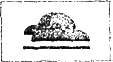
B.
C.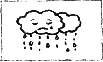
2.
A.
B.
C.
3.
A.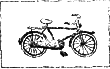
B.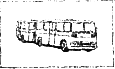
C.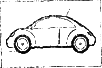
4.
A.
B.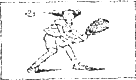
C.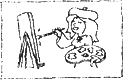
二、听对话,根据对话的内容,选择正确答案.每段对话读两遍.(共12分,每小题1分)
请听一段对话,完成第5至第6小题.
5.Where does the woman want to go?
A.Bookstore.
B.Hospital.
C.Cinema.
6.How may she go there?
A.By taxi.
B.On foot.
C.By bus.
请听一段对话,完成第7至第8小题.
7.What does the boy like doing at the weekend?
A.Running.
B.Playing football.
C.Collecting stamps.
8.What music does the girl like?
A.Pop music.
B.Jazz.
C.Blues.
请听一段对话,完成第9至第10小题.
9.Who is answering the phone?
A.Susan.
B.Judy.
C.Jack.
10.What does Susan ask Judy to do tomorrow?
A.Take a message for her.
B.Bring the book and a basketball.
C.Play basketball with her brother.
请听一段对话,完成第11至第13小题.
11.Why is Fred invited to the program?
A.To talk about learning to drive.
B.To advertise his driving school.
C.To share his driving experiences.
12.Why does Fred have so many customers now?
A.He works harder.
B.He offers lower prices.
C.He works for a big school.
13.What does Fred do first in training beginners?
A.He lets them sleep.
B.He sits beside them.
C.He gets them relaxed.
请听一段对话,完成第14至第16小题.
14.What are the two speakers mainly talking about?
A.The environmental protection.
B.The environmental problems.
C.The environment and traffic.
15.How many suggestions are mentioned in the dialogue?
A.Three.
B.Four.
C.Five.
16.What can we learn from the dialogue?
A.The man has very short hair.
B.The woman rides a bike to the company.
C.The woman lives far from the company.
三、听独白,记录关键信息,独白读两遍.(共10分,每小题2分)
请根据所听到的独白内容和卡片上的提示词语,将所缺的关键信息填写在下面卡片中的相应位置上.
About the Climbing CentreLocation:in North Wales
History:17.set up in ________
Services:●18.run courses from ________ to September
●19.a ________course in good value at£280
●20.________ rooms all together for 70 people
●21.________ or play table tennis in the evenings.
听力理解(共24分)
一、听对话,从下面各题所给的A、B、C三幅图片中选择与对话内容相符的图片。每段对话读两遍。(共4分,每小题1分)
1.
A.
B.
C.
2.
A.
B.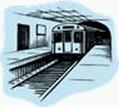
C.
3.
A.
B.
C.
4.
A.
B.
C.
二、听对话或独白,根据对话或独白的内容,从下面各题所给的A、B、C三个选项中选择最佳选项。每段对话或独白读两遍。(共12分,每小题1分)
请听一段对话,完成第5至第6小题。
5.Where will they go in the afternoon?
A.To the cinema.
B.To the park.
C.To the boy’s home.
6.When are they going to meet?
A.At 6∶00.
B.At 6∶30.
C.At 6∶50.
请听一段对话,完成第7至第8小题。
7.What are the two persons?
A.They are students.
B.They are workers.
C.They are farmers.
8.Why is Mary so happy today?
A.It’s her birthday today.
B.She passed the physics test.
C.She has won a big prize.
请听一段对话,完成第9至第10小题。
9.Where did Jane stay when she was in Canada?
A.At a hotel.
B.With a family.
C.In the school.
10.What interested Jane most there?
A.Games among the students.
B.Talking with her friends.
C.The way of teaching and learning.
请听一段对话,完成第11至第13小题。
11.What are they going to do together?
A.Visit Australia.
B.Attend a summer school.
C.Have a bike tour.
12.What will they both see?
A.Famous places in Beijing.
B.Sydney Opera House.
C.Great Barrier Reef.
13.What will the girl bring back after her visit?
A.Better grades.
B.Nice pictures.
C.Knowledge of Beijing.
请听一段独白,完成第14至第16小题。
14.How did the speaker find about the language there?
A.Different from what he learned.
B.Understood better than at home.
C.Nice and easy though with accents.
15.What does the speaker think about the weather?
A.Foggy and unpleasant.
B.Clear but changeable.
C.Snowy but sunny later.
16.Which is true to the British people from the speech?
A.They speak with no difference.
B.They welcome Chinese students.
C.They enjoy seeing ancient things.
三、听对话,根据所听到的对话内容和提示词语,记录关键信息。对话读两遍。(共8分,每小题2分)
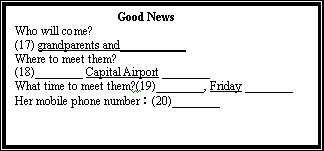
| |||||||||||||||||||||||||||||||||||||||||||||||||||||||||||||||||||||||||
听力(共20小题;每小题1分,满分20分)
第一节
每小题你将听到一个对话,从A、B、C三幅图中找出与你所听内容相符的选项。话读一遍。

第二节
听下面的对话或独白,每段对话或独白后有几小题,请根据你所听到的内容,从所给的A、B、C三个选项中选出一个适当的答语。听每段对话或独白前,你都有时间阅读各个小题,每小题5秒钟;听完后,各个小题将给出5秒钟的作答时间。每段对话或独白读两遍。
听第6段材料,回答6-7题。
6.Where are the two speakers?
A.At the cinema.
B.At the doctor's.
C.At school.
7.What's wrong with the woman?
A.She's badly ill.
B.She's forgetful.
C.She's too fat.
听第7段材料,回答8-10题。
8.What are they talking about?
A.An interesting book.
B.A new computer game.
C.An educational CD-ROM.
9.What they're talking about is something about ________.
A.history
B.geography
C.English grammar
10.According to the passage, we see that Sandy is very ________.
A.helpful
B.generous
C.outgoing
听第8段材料,回答11-15题。
11.What are they talking about?
A.James's homework.
B.James's school life.
C.James's problem.
12.James's problem is about his ________.
A.homework
B.pen friend
C.hobbies
13.Who gives him good advice?
A.His teacher.
B.His mother.
C.James himself.
14.According to the passage we know ________ is a good way of solving the problem.
A.planning time well
B.choosing some of it to do
C.doing some of it in class
15.James is suggested to go to ________ when he has difficulty in his homework.
A.his teachers
B.his classmates
C.his parents
听第9段材料,回答16-20题。
16.Long, long ago, the world only had ________.
A.a few hundred people
B.a few thousand people
C.10,000 people
17.People moved from place to place long ago because ________.
A.they liked animals
B.they had to look for animals for food
C.there weren't any factories
18.When machines were invented, ________.
A.life in the villages stayed the same
B.life in the villages changed again and again
C.people's life got much better
19.When factories were built, ________.
A.people began to live in them
B.more and more people lived around them
C.people no longer worked in the village
20.Which of the following is TRUE?
A.Some people don't like to live in big cities.
B.Everyone likes to live in big cities.
C.All rich people are from big cities.
听力理解
一、听对话,选择与对话内容相符的图片。每段对话读两遍。
(共4分,每小题1分)
二、听对话或独白,根据对话或独白的内容,选择正确答案。每段对话或独白读两遍。
(共14分,每小题1分)现在请听一段对话,完成第
5小题。5.How much are the shoes?
A.$60.
B.$70.
C.$80.
现在请听一段对话,完成第6小题。
6.Where does the man want to go?
A.A bookstore.
B.A park.
C.A hospital.
现在请听一段对话,完成第7小题。
7.What’s wrong with the man?
A.He has a headache.
B.He has a cold.
C.He has a toothache.
现在请听一段对话,完成第8小题。
8.Who is the girl in the photo?
A.Mary.
B.Mary’s sister.
C.Mary’s friend.
现在请听一段对话,完成第9至第10小题。
9.What does the man invite Julia to do on Friday night?
A.Watch a movie.
B.Go dancing.
C.Have a dinner.
10.What time does the man finish the class?
A.At 9∶00.
B.At 9∶30.
C.At 10∶00.
现在请听一段对话,完成第11至第12小题。
11.What is Grandpa doing now?
A.Watering the flowers.
B.Talking to Tom on the phone.
C.Playing the computer games.
12.Why does Grandma call Tom?
A.To ask for help.
B.To tell some news.
C.To give some advice.
现在请听一段独白,完成第13至第15小题。
13.What is the speaker?
A.A history teacher.
B.A tour guide.
C.A new student.
14.When was Buckingham Palace opened to the public?
A.In 1705.
B.In 1993.
C.In 1753.
15.How many places of interest in London are mentioned in the passage?
A.Two.
B.Three.
C.Four.
现在请听一段对话,完成第16至第18小题。
16.Which country does Ann like best?
A.Japan.
B.India.
C.China.
17.What is Ann’s opinion in the dialogue?
A.Students should learn more about world cultures at school.
B.Everyone should travel to a foreign country only once.
C.People should speak English when they’re traveling.
18.What are they mainly talking about?
A.Traveling.
B.Languages.
C.Cultures.
三、听对话,记录关键信息(共8分,每小题2分)
请根据所听到的对话内容和卡片上的提示词语,填写所缺的关键信息。对话读两遍。

湖北省互联网违法和不良信息举报平台 | 网上有害信息举报专区 | 电信诈骗举报专区 | 涉历史虚无主义有害信息举报专区 | 涉企侵权举报专区
违法和不良信息举报电话:027-86699610 举报邮箱:58377363@163.com