精英家教网 > 高中英语 > 题目详情
My husband and I sat outside. A small child about three came up the street, accompanied by her mother. As she saw another girl a few feet away, she gave her admiring comment, “Mommy, I like her dress.” Her mom   21 , “Well, why don’t you go and tell her?”
The little girl walked   22  toward the girl wearing the pretty dress. The other one,
  23  the same age, was standing with her   24  turned, alongside her parents. They had not heard the compliment (赞美). Receiving no answer, this little one   25 . My husband said to the other girl, “  26  wants to tell you something.” As she turned around, connection was made. Once again, the little one   27  “I like your dress,” and upon hearing those words, the other one gave her a big smile and excitedly   28  “Look, it’s a spinning (旋转) dress!”, at which moment she began to spin in  29. Both of them smiled widely.
Now, the one stopped spinning and said, “It’s my favorite dress and I have (a)   30  that match!” She   31  running toward a stroller (婴儿车) parked nearby.
The mom and the daughter started to   32  down the street,   33  the encounter (邂逅) had ended. Moments later, the “spinning dress girl” reappeared, shoes in hand,   34  her new friend who had seemingly disappeared. Now, an elderly couple, seated on a bench, had obviously been  35  of all this. The man   36  the child, saying, “There’s someone coming behind you.” Then we saw one showed and the other   37  the beautiful shoes.
If you can make a   38  better, do it. I have no idea how many others that evening might have   39  this act, hoping to help good things to happen. But such brief moments,  40  together, make up what might very well be the important times in our lives.
小题1:
A.repliedB.scoldedC.laughedD.required
小题2:
A.secretlyB.shylyC.heavilyD.suddenly
小题3:
A.usuallyB.hopefullyC.likelyD.luckily
小题4:
A.backB.headC.noseD.hand
小题5:
A.shoutedB.leftC.criedD.hesitated
小题6:
A.AnyoneB.SomeoneC.EveryoneD.No one
小题7:
A.suggestedB.apologizedC.explainedD.announced
小题8:
A.turnedB.sharedC.jumpedD.agreed
小题9:
A.circlesB.linesC.directionsD.rows
小题10:
A.shoesB.socksC.shirtD.hat
小题11:
A.took offB.turned downC.put onD.made up
小题12:
A.leadB.lookC.headD.get
小题13:
A.rememberingB.hopingC.sayingD.thinking
小题14:
A.coming acrossB.looking forC.shouting atD.calling on
小题15:
A.watchfulB.carefulC.proud D.fond
小题16:
A.calmedB.comfortedC.stoppedD.seated
小题17:
A.woreB.admiredC.comparedD.bought
小题18:
A.momentB.lifeC.girlD.dress
小题19:
A.learnedB.performedC.praisedD.observed
小题20:
A.seizedB.spentC.threadedD.lost

小题1:A
小题2:B
小题3:C
小题4:A
小题5:D
小题6:B
小题7:D
小题8:B
小题9:A
小题10:A
小题11:A
小题12:C
小题13:D
小题14:B
小题15:A
小题16:C
小题17:B
小题18:A
小题19:D
小题20:C
在生活中,如果我们发现一些能让我们的生活变得更美好的东西时,我们就要努力去做。因为这些时刻组合在一起,可以让我们的生活变得更美好。
小题1:动词辨析。A回答;B责骂;C嘲笑;D要求。根据上文可知小女孩和妈妈说话,可知妈妈回答她。
小题2:副词辨析。根据下文可知她有点害羞。
小题3:上下文串联。根据上下文可知那个小女孩可能和她差不多的年龄。
小题4:上下文串联。根据26空后的As she turned around,可知她是背对着的。看到这样,那个三岁的小孩有点犹豫。
小题5: 动词辨析。解析同上。
小题6:代词辨析。A任何人;B某个人;C每个人;D没有人;根据句意可知:我丈夫对穿着漂亮衣服的小女孩说有个人想要告诉你事情。
小题7:动词辨析。A建议;B道歉;C解释;D说,宣布;根据句意可知D正确。
小题8:动词辨析。根据上下文可知那个小女孩非常高兴与她分享快乐。
小题9:上下文串联。上文说这是一个可以旋转的衣服,那么接下来就应该是转圈来表示这个一份可以旋转了。
小题10:上下文串联。根据下文可知还有鞋子与衣服相配。
小题11:短语辨析。A匆匆离开;B拒绝,调低;C穿上;D化妆,编造,弥补。组成;根据句意可知那个小女孩匆匆离开去拿鞋子。
小题12:动词辨析。Head朝…过去;根据句意可知他们朝街上走了过去,认为这次邂逅已经结束。
小题13:动词辨析。解析同上。
小题14:短语辨析。根据下文可知她再寻找她的新朋友。
小题15:形容词辨析。A注意的;B小心的;C骄傲的;D喜欢的;根据句意可知那对老年夫妻也注意到这一切。所以他们把那个孩子拦了下来。
小题16:动词辨析。解析同上。
小题17:动词辨析。根据上下文可知那个孩子听下来以后,一个人在表演,另外一个人在欣赏。
小题18:名词辨析。A时刻;B生活;C女孩;D衣服;根据句意可知如果我们能让某个时刻更美好,我们就要这样做。
小题19:动词辨析。A学会;B表演;C表扬;D观察。根据句意:我们不知道有多少人注意到这一幕。可知D正确
小题20:动词辨析。A抓住;B花费;C把…串起来;D失去;根据句意可知:这样的时刻串在一起,组成了我们生活中最重要的那些时光。
练习册系列答案
相关习题

科目:高中英语 来源:不详 题型:阅读理解

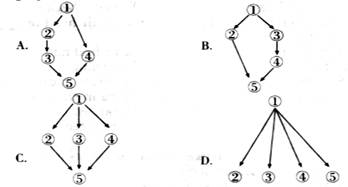
Did you ever wonder who invented products like Liquid Paper, Kevlar or paper bags? Most would think a man invented these items. Guess what? Women invented each of these. What? You don’t believe me? Well, read this:
Liquid Paper was invented by Bette Nesmith Graham in 1951 and originally called Mistake Out. Being a typist, Bette was increasingly irritated with being unable to erase her typing mistakes. The messy business left her hands black and the paper dirty. Bette was good at painting and remembered that an artist paints over mistakes. She applied that same principle to typing mistakes and Liquid Paper was born, making Bette into a self-made millionaire.
Kevlar, yes, the Kevlar of the bullet proof vest(防弹衣)—what police officers and soldiers wear, was invented by Stephanie Kwolek. Stephanie worked for the DuPont Company as a research chemist. She was asked to find a high-performance fiber. Originally, this fiber was intended to be used for car tires (轮胎). However, the fiber she developed in 1964 was amazing and is still used in products such as sailboats, skis, shoes, and yes, bullet proof vests. In 1995 Stephanie was named to the National Inventor’s Hall of Fame.
Margaret Knight invented a machine that revolutionized the making of paper bags. Paper bags had been made like envelopes but Margaret developed a machine that would fold and paste(粘)a flat-bottom paper bag, the very same type we still use today. Margaret’s family was poor and she started working at the age of nine. Her first invention at the age of twelve was a safety tool for a loom(织布机). Later she worked for the Columbia Paper Bag Company. It was there that she worked on improving the making of paper bags. She was issued her patent(专利)in 1870.
So next time you use a new product or an old one, will you wonder who made it? Do some research on the web and answer a few questions like: Who invented it? How was it invented? You may be surprised at some of the stories you uncover.
小题1:The underlined word “irritated” in Paragraph 2 is the closest in meaning to_________.
A.annoyedB.excitedC.delightedD.nervous
小题2:What do we know about Margaret?
A.She was a member of the National Inventor’s Hall of Fame.
B.Her first invention was made when she was twenty.
C.Her invention was designed to produce envelopes.
D.She began working when she was very young.
小题3:which of the following best shows the structure of the passage? (①="paragraph" 1, ②="Paragraph" 2,… ⑤="paragraph" 5)
 
小题4:What would be the best title for the passage?
A.How inventions were made
B.Amazing inventions by women
C.Women and modern technology
D.You can also be an inventor

查看答案和解析>>

科目:高中英语 来源:不详 题型:阅读理解

A year ago August, Dave Fuss lost his job driving a truck for a small company in west Michigan. His wife, Gerrie, was still working in the local school cafeteria (自助食堂), but work for Dave was scarce (不足的,缺乏的), and the price of everything was rising. The Fusses were at risk of joining the millions of Americans who have lost their homes in recent years. Then Dave and Gerrie received a timely gift—$7,000,a legacy (遗产) from their neighbors Ish and Arlene Hatch, who died in an accident . “ It really made a difference when we were going under financially, ” says Dave.  
But the Fusses weren’t the only folks in Alto and the neighboring town of Lowell to receive unexpected legacy from the Hatches. Dozens of (许多) other families were touched by the Hatches’ generosity. In some cases, it was a few thousand dollars ; in others, it was more than $100,000.  
It surprised nearly everyone that the Hatches had so much money, more than $3 million—they were an elderly couple who lived in an old house on what was left of the family farm .  
Children of the Great Depression, Ish and Arlene were known for their habit of saving, They thrived on(喜欢)comparison shopping and would routinely go from store to store, checking prices before making a new purchase (购买) .  
Through the years, the Hatches paid for local children to attend summer camp when their parents couldn’t afford it. “Ish and Arlene never asked if you needed anything,” says their friend Sand Van Weelden, “They could see things they could do to make you happier, and they would do them.  
Even more extraordinary was that the Hatches had their farmland distributed (分发;分配). It was the Hatches’ wish that their legacy—a legacy of kindness as much as one of dollars and cents should enrich the whole community(社区)and last for generations to come.
Neighbors helping neighbors ——that was Ish and Arlene Hatch’s story.  
小题1:According go the text, the Fusses ______.
A.were employed by a truck company
B.worked in a school cafeteria
C.were in financial difficulty
D.lost their home
小题2:Which of the following is true of the Hatches?
A.They had their children during the Great Depression
B.They gave away their possessions ( 财产;所有物) to their neighbors
C.They left the family farm to live in an old house
D.They helped their neighbors to find jobs
小题3:Why would the Hatches routinely go from store?
A.They decided to open a store
B.They couldn’t afford expensive things
C.They wanted to save money
D.They wanted to buy gifts for local kids
小题4: According to Sand Van Weelden, the Hatches were ______.
A.curious B.optimisticC.childlikeD.understanding
小题5:What can we learn from the text?
A.The Hatches would like the neighbors to follow their example
B.The summer camp was attractive to the parents
C.Sandy Van Weelden got a legacy form the Hatches
D.The community of Alto was poor

查看答案和解析>>

科目:高中英语 来源:不详 题型:阅读理解

Catch yourself daydreaming while washing the dishes again? If this happens often you probably have a pretty capable working memory and a sharper brain, new research suggests.
This mind wandering, it seems, actually gives your working memory a workout. Working memory is the mental work space that allows the brain to juggle multiple thoughts at the same time. The more working memory a person has, the more daydreaming they can do without forgetting the task at hand.
Researchers studied groups of people from the University of Wisconsin-Madison community, ranging in age from 18 to 65. The volunteers were asked to perform simple tasks, like pressing a button every time they took a breath or clicking in response to a letter popping up on a computer screen; these tasks were so easy that their minds were likely to wander, the researchers figured.
The researchers checked in periodically, asking the participants if their minds were on task or wandering. When the task was over, they measured each participant's working memory capacity by having them remember letters while doing math questions. Though all participants performed well on the task, the researchers noticed that the individuals who indicated their minds had wandered more than others also scored higher on the working memory test.
“What this study seems to suggest is that, when circumstances for the task aren't very difficult, people who have additional working memory resources allocate them to think about things other than what they're doing,” said Jonathan Smallwood, a study researcher of the Max Planck Institute for Human Cognitve and Brain Science.
When our minds run out of working memory, these off-topic thoughts can take the main stage without us consciously meaning them to; for instance, arriving at home with no memory of the actual trip, or suddenly realizing that they've turned several pages in a book without understanding any of the words.
“It's almost like your attention was so absorbed in the mind wandering that there wasn't any left over to remember your goal to read,” study researcher Daniel Levinson, said in a statement.
People with overall higher working memory were better able to stay focused when the task at hand required it. Those who had low working memory often had their thoughts drift away from the task, and did less well at it.
The findings add to past research suggesting these mind drifts can be positive moments. For instance, daydreaming has often been associated with creativity—researchers think that our most creative and inventive moments come when daydreaming. It's likely that the most intelligent among us also have high levels of working memory, Levinson noted.
小题1:The word “juggle” in the second paragraph can be replaced by “________”.
A.handleB.searchC.understandD.distribute
小题2:What can be concluded from Jonathan Smallwood's words?
A.People who often have daydreams probably own a pretty capable working memory.
B.On the working memory test, people with wandering minds will get high score.
C.Absorbed in the mind wandering, your attention left no space for your goal.
D.Dealing with some easy jobs, people with higher working memory will daydream.
小题3:What is the best title of the passage?
A.Mind drifts are always positive.
B.Daydreaming is good for the mind.
C.Creative moments come with working memory.
D.The more daydreaming, the more effectively one works.

查看答案和解析>>

科目:高中英语 来源:不详 题型:阅读理解

A driver stopped his car on a street side to have a rest. As he lay down in the seat and closed his eyes, a person came up and knocked at the window to ask him the time. The driver opened his eyes and looked at his watch. “It’s 8:05,” he said. Then he went to sleep again. But soon he was waken up again because a second person was knocking at the window. “Sir, do you know the time?” he asked. The driver looked at his watch, and told him it was half past eight.
In this way, the driver thought he could not have a good rest, so he wrote a short note and stuck it on the window for all to see. It said, “I don’t know the time.”
Again, he lay down in the seat for his sleep. A few minutes later, a third person came and began to knock at the window, “Hey, sir,” he said. “It is a quarter to nine.”
小题1:Where did the driver sleep?
A.At the window.B.In the street road.
C.In his carD.In his room.
小题2:How long had the driver been there when the third person called him?
A.40 minutes.B.25 minutes.C.50 minutes.D.70 minutes.
小题3:Why did the driver write a note and stick it on the window?
A.Because he didn’t know the time.
B.Because he didn’t want anybody to trouble him.
C.Because he needed somebody to wake him up.
D.Because he wanted somebody to tell him the time.
小题4:The third person knocked at the window to ______.
A.ask him the time
B.ask him not to sleep
C.see if the driver was sleeping
D.tell him what time it was

查看答案和解析>>

科目:高中英语 来源:不详 题型:阅读理解

Galaxy saw a man and a woman who communicated with the sign language at the train station when she was on the way home one evening. She noticed that the woman asked the mon for the direction. He told her that he did not know. Galaxy decided to help them. She had learned the sign language when she served as a volunteer in the deaf and mute(聋哑)school. Then she showed the woman the direction and left her email address to them in case they needed her help later.
She received an email from that man the next day. Kazrim was his name. Galaxy replied his mail sincerely. They both started chatting online soon after and began seeing each other. Although they only communicated with the sign language, it never bothered her.
Galaxy was fond of him gradually. Obviously, Kazrim was the same too. He presented Galaxy with a bunch of sunflowers and asked her sincerely, “Are you willing to be my girlfriend?” Galaxy was pleasantly surprised. She requested him to give her some time to persuade her parents.
As she had expected, her parents were very angry after they had learned of their love story. Galaxy explained, “Kazrim is an excellent and a very optimistic person. He has a very positive attitude towards life and work. He cares for others always. He is 100% better than the normal. Moreover, the mute is still a human. He should possess a perfect and wonderful love. ”
Her parents asked to see him, then. The very worried Galaxy took Kazrim home a few days later. When they were on the train, Kazrim told her, ‘‘I’m going to tell your parents I’ll be looking after you well with all my life!” Galaxy was deeply moved.
As soon as they had entered the house, Galaxy introduced him to her parents. She said, ‘‘This is Kazrim.” Just right after her speech, an unbelievable thing happened. Kazrim threw the gift away and held her in his arms tightly.
He said, “YOU CAN TALK?” It was the same question that Galaxy wanted to ask, too.
The four people were shocked all of a sudden. As a matter of fact, Kazrim always believed that Galaxy was a mute and he still fell in love with her deeply.
小题1:How did Galaxy and Kazrim get to know each other?
A.They met each other by chance.
B.They were introduced to each other,
C.They once studied at the same university.
D.They both served in a special needs school.
小题2:How did Galaxy probably communicate with Kazrim before she took him home?
A.Writing words on paper.
B.Using the sign language.
C.Judging from his expression.
D.Speaking her native language.
小题3:What did Galaxy expect her parents to do?
A.To have a talk with Kazri.
B.To prepare for her marriage.
C.To treat Kazrim as a normal man.
D.To accept Kazrim as her boyfriend.
小题4:What can we learn about the two young people from the passage?
A.They fell in love at the first sight.
B.They cheated each other to win love.
C.They mistook each other for being mutes.
D.They ignored the anger of Galaxy’s parents.

查看答案和解析>>

科目:高中英语 来源:不详 题型:阅读理解

This is the letter that Mr. White wrote before his death about his three books for children:
Dear Reader:
I receive many letters from children and can't answer them all -- there wouldn't be time enough in a day. That is why I am sending you this printed reply to your letter. I'll try to answer some of the questions that are commonly asked.
Where did I get the idea for Stuart Little and for Charlotte's Web? Well, many years ago I went to bed one night in a railway sleeping car, and during the night I dreamed about a tiny boy who acted rather like a mouse. That's how the story of Stuart Little got started.
As for Charlotte's Web, I like animals and my barn(谷仓) is a very pleasant place to be, at all hours. One day when I was on my way to feed the pig, I began feeling sorry for the pig because, like most pigs, he was doomed to die. This made me sad. So I started thinking of ways to save a pig's life. I had been watching a big grey spider at her work and was impressed by how clever she was at weaving. Gradually I worked the spider into the story that you know, a story of friendship and salvation(拯救) on a farm. Three years after I started writing it, it was published. (I am not a fast worker, as you can see.)
Sometimes I'm asked how old I was when I started to write, and what made me want to write. I started early -- as soon as I could spell. In fact, I can't remember any time in my life when I wasn't busy writing. I don't know what caused me to do it, or why I enjoyed it, but I think children often find pleasure and satisfaction is trying to set their thoughts down on paper, either in words or in pictures. I was no good at drawing, so I used words instead. As I grew older, I found that writing can be a way of earning a living.
Some of my readers want me to visit their school. Some want me to send a picture, or an autograph, or a book. And some ask questions about my family and my animals and my pets. Much as I'd like to, I can't go visiting. I can't send books, either -- you can find them in a bookstore or a library. Many children assume that a writer owns (or even makes) his own books. This is not true -- books are made by the publisher. If a writer wants a copy, he must buy it. That's why I can't send books. And I do not send autographs(亲笔签名,手稿) -- I leave that to the movie stars. I live most of the year in the country, in New England. From our windows we can look out at the sea and the mountains. I live near my married son and three grandchildren.
Are my stories true, you ask? No, they are imaginary tales, containing fantastic characters and events. In real life, a family doesn't have a child who looks like a mouse; in real life, a spider doesn't spin words in her web. In real life, a swan doesn't blow a trumpet(喇叭,小号) . But real life is only one kind of life -- there is also the life of the imagination. And although my stories are imaginary, I like to think that there is some truth in them, too -- truth about the way people and animals feel and think and act.
Yours sincerely,
E.B. White
小题1:What does the author do?
A. a writerB.a reporterC.a doctorD.a teacher
小题2:What caused the author start to write?
A.His parents’ encuoragement
B.His talent in writing
C.Not mentioned in the passage
D.A writer in the early time
小题3:Why does the author think he can’t seng his autographs?
A.Because he thinks it should be dong by movie stars.
B.Because he thinks his writing is not good enough
C.Because he has no much time
D.Because he hates writing
小题4:How long had the author been writing the story of Chariotte’s web?
A.3 minthsB.2 yearsC.3 yearsD.5 years

查看答案和解析>>

科目:高中英语 来源:不详 题型:完形填空

I became a gardener when I was twelve. My early__36___of gardening may not have originated from my love for nature. It was to ___37____my parents.
At that time, we had a big yard in which a beautiful maple tree stood. But my mother often looked with __38___at this work of natural art. Those golden leaves seemed like tons of rubbish to her, “something else to ___39___!” Seeing the neighbors busy with gardening, my father ever thought it a waste of time.
At that age, I always did something___40___to whatever my parents did! If gardening were something they found____41___, I would plant a garden!
I planted some lily(百合花)seeds in the yard. But they failed to ___42___.I continued to plant sunflower seeds and roses. Wild ___43___ joy, I found the first rose bloom(开花).One by one, the flowers bloomed their heads off. __44___, I was touched by this land of wonder.
___45___, my parents showed no interest in my garden. My father even___46___at me because he found it was ___47___to move around my garden to the driveway. To my mother’s ___48__ , I put in her vase my real roses which, in her eyes, were simply weeds____49___flowers.
Regardless of their ___50___,I kept on planting my garden and ___51___to enjoy the pleasure of gardening. Plants make such good companions: they breathe, they bloom, they___52____to care and love.
It has been many years since I made my first garden out of my desire to ___53___my parents. Today I become known as Mrs. Greenthumbs, teaching gardening and hosting a gardening show which makes my parents feel very___54_ . And now I could say it is my affection for___55___that makes me a real gardener.
小题1:
A.memoryB.dreamC.intentionD.design
小题2:
A.pleaseB.changeC.helpD.annoy
小题3:
A.doubtB.appreciationC.surpriseD.excitement
小题4:
A.collect upB.care aboutC.clean upD.come in
小题5:
A.equalB.similarC.superiorD.opposite
小题6:
A.painfulB.valuableC.upsettingD.interesting
小题7:
A.come upB.break outC.hold onD.get through
小题8:
A.toB.withC.inD.by
小题9:
A.LuckilyB.CheerfullyC.RegularlyD.Eventually
小题10:
A.InsteadB.HoweverC.ThereforeD.Besides
小题11:
A.shoutedB.laughedC.glancedD.jumped
小题12:
A.convenientB.troublesomeC.enjoyableD.dangerous
小题13:
A.sadnessB.displeasureC.delightD.relief
小题14:
A.other thanB.more thanC.rather thanD.less than
小题15:
A.dislikeB.encouragementC.threatD.suggestion
小题16:
A.decidedB.stoppedC.continuedD.struggled
小题17:
A.devoteB.turnC.respondD.lead
小题18:
A.defeatB.satisfyC.respectD.challenge
小题19:
A.proudB.comfortableC.strangeD.disappointed
小题20:
A.freedomB.lifeC.growthD.nature

查看答案和解析>>

科目:高中英语 来源:不详 题型:完形填空


This is my third story.When I was seventeen, I   36  a quote (引文) that went something like, " If you live each day  37  it was your last, someday you'll most certainly be right." Since then, for the past thirty-three years, I've looked  38  the mirror every morning and asked myself, "If today were the last day of my life, what would I do ?" And when there was no answer for too many days in a   39 , I know I need to change something.
About a year ago I  40  from cancer.The doctors told me it was incurable, and that I should 41  to live no longer than three to six months.They advised me to get my   42  in order, which is doctors' code (代名词) for "prepare to  43  ".Later when the doctors  44  the cells taken from my pancreas (胰腺) under a microscope, they found it turned out to be a very rare form of cancer that is   45  with surgery.I had the surgery and,   46  , I'm fine now.
This was the closest I've been to facing  47  , and I hope it's the closest I get for a few more decades.Death is the destination we all   48  .No one has ever escaped it.And that is   49  it should be, because death is very likely the single   50  invention of life.It clears out the old to make   51  for the new.Your time is limited, so don't waste it living   52  life.Don't let the noise of others' opinions drown out ( 盖过) your own inner   53  .And most importantly, have the courage to 54 your heart and intuition (直觉).They 55 already know what you truly want to become.Everything else is secondary.
小题1:
A.wroteB.describedC.expressedD.read
小题2:
A.now thatB.even thoughC.as ifD.as long as
小题3:
A.inB.atC.throughD.on
小题4:
A.rowB.minuteC.senseD.word
小题5:
A.recoveredB.keptC.fellD.suffered
小题6:
A.desireB.prepareC.expectD.wait
小题7:
A.officeB.affairsC.moneyD.documents
小题8:
A.workB.dieC.actD.start
小题9:
A.witnessedB.noticedC.confirmedD.viewed
小题10:
A.curableB.possibleC.acceptableD.suitable
小题11:
A.immediatelyB.graduallyC.thankfullyD.hopefully
小题12:
A.cancerB.deathC.lifeD.success
小题13:
A.shareB.desertC.admireD.avoid
小题14:
A.whenB.whileC.asD.since
小题15:
A.oldestB.bestC.newestD.worst
小题16:
A.preparationsB.progressC.plansD.way
小题17:
A.yourB.anyone else'sC.hisD.someone else's
小题18:
A.voiceB.worldC.heartD.trouble
小题19:
A.touchB.followC.openD.accept
小题20:
A.otherwiseB.anywayC.somehowD.therefore

查看答案和解析>>

同步练习册答案