
科目:xxyy 来源: 题型:
() 5 —I live on Apple Street. about you,Susan?
—I live on Orange Street.
A What B Why C Where
科目:gzyy 来源: 题型:阅读理解
从A、B、C、D四个选项中,选出可以填入空白处的最佳选项。
Everyone needs water and a diet 36 healthy foods. These foods should 37 some fat, some fiber, a little salt and so on.
People need energy to live. They eat all kinds of foods 38 change into energy. Our bodies use different 39 of energy. The energy is measured in calories(卡路里). The more 40 we take, the more calories we burn. Even when you are 41 , you are using energy---about 65 calories an hour. While you are at school, or walking home, your body is 42 up 100 calories an hour. When playing football or basketball, you might be using 400 calories an hour. On 43 Day, during the relay race, you will use most of all, perhaps as 44 as 650 calories an hour.
The Chinese diet is considered to be the healthiest in the world. It contains a lot of fruit and green vegetables. It is 45 in fiber and low in sugar and fat. The Chinese eat less sugar than many 46 countries in the world. That is 47 lots of people in China have white teeth.
People in the Western world do not eat 48 healthy foods. They eat too much fat and sugar and don’t take 49 exercise. Because of this, they 50 very easily. In order to 51 with the quick pace(步伐) of their life and work, they eat a lot of fast food. They eat a lot of sweets, soft drinks, potato crisps, chocolate, butter and ice cream and so on, 52 are called 53 food by some epicureans(美食家). The result is that many of them become fat. In order to avoid 54__ fat and 55 it is advisable(明智的) to eat a balanced diet and not eat too many foods that have a high calorie rating.
A. above B. of C. at D. over
A. include B. hold C. contain D. make up
A. which B. what C. where D. it
A. numbers B. amounts C. plenty D. deal
A. exercise B. exercises C. sport D. game
A. sleepy B. running C. working D. asleep
A. running B. adding C. burning D. wasting
A. Children B. Work C. Sports D. Sport
A. much B. many C. few D. little
A. poor B. low C. rich D. plenty
A. more B. other C. rest D. others
A. Why B. because C. because of D. since
A. so B. very C. much D. such
A. a number of B. too much C. masses of D. enough
A. lose weight B. put on weight C. die D. stay healthy
A. keep up B. carry on C. keep on D. go on
A. as B. these C. which D. they
A. bad B. diseased C. healthy D. junk
A. to get B. becoming C. to become D. get
A. keep thin B. keep fit C. stay calm D. fall ill
科目:gzyy 来源:2010年江西省宜春市高一下学期第一次月考英语卷 题型:完型填空
从A、B、C、D四个选项中,选出可以填入空白处的最佳选项。
Everyone needs water and a diet 36 healthy foods. These foods should 37 some fat, some fiber, a little salt and so on.
People need energy to live. They eat all kinds of foods 38 change into energy. Our bodies use different 39 of energy. The energy is measured in calories(卡路里). The more 40 we take, the more calories we burn. Even when you are 41 , you are using energy---about 65 calories an hour. While you are at school, or walking home, your body is 42 up 100 calories an hour. When playing football or basketball, you might be using 400 calories an hour. On 43 Day, during the relay race, you will use most of all, perhaps as 44 as 650 calories an hour.
The Chinese diet is considered to be the healthiest in the world. It contains a lot of fruit and green vegetables. It is 45 in fiber and low in sugar and fat. The Chinese eat less sugar than many 46 countries in the world. That is 47 lots of people in China have white teeth.
People in the Western world do not eat 48 healthy foods. They eat too much fat and sugar and don’t take 49 exercise. Because of this, they 50 very easily. In order to 51 with the quick pace(步伐) of their life and work, they eat a lot of fast food. They eat a lot of sweets, soft drinks, potato crisps, chocolate, butter and ice cream and so on, 52 are called 53 food by some epicureans(美食家). The result is that many of them become fat. In order to avoid 54__ fat and 55 it is advisable(明智的) to eat a balanced diet and not eat too many foods that have a high calorie rating.
1.A. above B. of C. at D. over
2.A. include B. hold C. contain D. make up
3.A. which B. what C. where D. it
4.A. numbers B. amounts C. plenty D. deal
5.A. exercise B. exercises C. sport D. game
6.A. sleepy B. running C. working D. asleep
7.A. running B. adding C. burning D. wasting
8.A. Children B. Work C. Sports D. Sport
9.A. much B. many C. few D. little
10.A. poor B. low C. rich D. plenty
11.A. more B. other C. rest D. others
12.A. Why B. because C. because of D. since
13.A. so B. very C. much D. such
14.A. a number of B. too much C. masses of D. enough
15.A. lose weight B. put on weight C. die D. stay healthy
16.A. keep up B. carry on C. keep on D. go on
17.A. as B. these C. which D. they
18.A. bad B. diseased C. healthy D. junk
19.A. to get B. becoming C. to become D. get
20.A. keep thin B. keep fit C. stay calm D. fall ill
科目:gzyy 来源: 题型:阅读理解
A. Live in denial
B. Sell your iPhone
C. Stop making phone calls
D. Purchase a car rather than an iPhone
E. Move to a location with strong carrier signal
F. Return the phone and get one from a different manufacturer(制造商)
Apple’s so-called iPhone 4 “Death Grip” - where holding the phone in the left hand weakens the signal - may rank among the top marketing failures of the 2010s.
Frustrated iPhone 4 owners don’t need to wait around for Apple to handle the problem. They can solve the calling problems on their own. I’ve got five guaranteed solutions, but you probably won’t like them.
58. ________________. In most US states, purchasers can return phones within 14 days - 30 days in states like California. It’s the “buyer’s regret” period, and for some people who can’t make clear calls there surely is some kind of regret. Apple’s newest handset may be the most fashionable phone on the planet, but it is by no means the only choice. Yes, you can use another smart phone and find happiness.
59. ________________. OK, so this might seem like an extreme choice, but, hey, aren’t all those phone calls annoying? I’ve dramatically reduced the number of phone calls and must say it feels good to be free of them. You text, tweet(推特) and Facebook anyway. The iPhone has a touchscreen for a reason. Use it.
But, please, don’t text and drive.
60. ________________. If you must make phone calls, change your location. Repeatedly test for the Death Grip, but don’t let the sellers know the real reason for moving. Surely they’ll think that anyone willing to wait all night in a line to buy a cell phone is some one who is easily tricked or taken in. Don’t let your iPhone 4 enthusiasm drive up the seller’s counter offer.
61. ________________. Hey, why should Apple be the only one who makes money? The iPhone 4 eBay auctions(拍卖)are crazy. There are “buy it now” prices of $1,000 and auctions with bids(出价)starting above $800. While writing this post, I watched one auction count down 7 minutes to zero, where in the final seconds the winning bid was $1,300 for the 32GB black model, unopened.
62. ________________. It’s surprising how effectively some people can just ignore problems like they don’t exist. No matter what the situation, they ignore it. “Hey, Johnny, don’t you know Toyota recalled(召回) a bazillion cars for accelerator pedal defects?” You know his answer: “Toyota is the best company on the planet. There is no problem with my car.” I’ve seen this kind of denial behavior among some Mac enthusiasts, too. About Death Grip, Apple CEO Steve Jobs is on record firmly stating: “Just avoid holding it in that way.” Apple claims the problem really isn’t iPhone 4 but you. Hey, you can choose to believe that. Denial will fix your problem, because you’ll never admit to having one.
科目:gzyy 来源:2010年扬州中学高一下学期期末考试英语 题型:阅读理解
In a surprising discovery about where higher life can survive, scientists have found a shrimp —— like creature and a jellyfish swimming beneath an Antarctic ice sheet.
About 180 meters below the ice where no light can get through, scientists had thought nothing much more than a few microbes (微生物) could exist.
That’s why a NASA team was surprised when they lowered a video camera to get the first long look at the underbelly of an ice sheet in Antarctica. A curious shrimp – like creature came swimming by and then parked itself on the camera’s cable. Scientists also pulled up a tentacle (触须) they believe came from a jellyfish.
“We were operating on the presumption that nothing’s there.” Said NASA ice scientist Robert Bindschadler. “It was a shrimp you’d enjoy having on your plate.”
“We were just gaga (狂热的) over it,” he said of the 7.5cm long, orange creature starring in their two – minute video. Technically, it’s not a shrimp. It’s a Lyssianasid amphipod, which is distantly related to the shrimp.
The video is likely to inspire experts to rethink what they know about life in harsh environments. And it has scientists thinking that if shrimp – like creatures can live below 180 meters of Antarctic ice in freezing dark water, what about other cold places? What about Europa, a frozen moon of Jupiter?
Cynan Ellis – Evans, a scientist of the British Antarctic Survey called the finding fascinating. He said it was possible the creatures swam in from far away and don’t live there permanently.
But Kim, who is a co-author of the study, doubts it. “The site in West Antarctica is at least 19 km from open seas. Bindschadler drilled a 20 cm – wide hole and was looking at a tiny amount of water. That means it’s unlikely that two creatures swam from great distances and were captured randomly in that small of an area,” she said.
Yet scientist were puzzled at what the food source would be for these creatures. While some microbes can make their own food out of chemicals in the ocean, complex life like the shrimp can’t, Kim said.
“So how do they survive? That’s the key question.” Kim Sai.
“It’s pretty amazing when you find a huge puzzle like that on a planet where we thought we know everything.” Kim said.
【小题1】 What does the underlined word “harsh” probably mean?
| A.cold | B.loud | C.cruel | D.ugly |
| A.swam great distances to Antarctic | B.has always lived in the region |
| C.gradually evolved from shrimps | D.has nothing in common with shrimps |
| A.it marks NASA’S first Antarctic biological study |
| B.it proves there is marine life in the Antarctic |
| C.it could inspire further study of life in harsh environments |
| D.it shows that Lyssianasid amphipod is closely related to shrimps |
| A.Complex life usually lives on other forms of life. |
| B.Scientists saw two creatures in the two – minute video. |
| C.It is possible for creatures to live 180 meters below the ice though there is no light. |
| D.Scientists captured the shrimp – like creature in a camera by drilling a hole through the ice. |
科目:gzyy 来源:2011浙江金华一中高三模拟考试英语试卷 题型:阅读理解
In a surprising discovery about where higher life can survive, scientists have found a shrimp -like creature and a jellyfish swimming beneath an Antarctic ice sheet.
About 180 meters below the ice where no light can get through, scientists had figured nothing much more than a few microbes (微生物) could exist.
That’s why a NASA team was surprised when they lowered a video camera to get the first long look at the underbelly of an ice sheet in Antarctica. A curious shrimp-like creature came swimming by and then parked itself on the camera’s cable. Scientists also pulled up a tentacle (触须) they believe came from a jellyfish.
“We were operating on the presumption that nothing’s there.” said NASA ice scientist Robert Bindschadler. “It was a shrimp you’d enjoy havin g on your plate.”
“We were just gaga (狂热的) over it,” he said when talking about the 7.5cm long, orange creature starring in their two-minute video. Technically, it’s not a shrimp. It’s a Lyssianasid amphipod, which is distantly related to the shrimp.
The video is likely to inspire experts to rethink what they know about life in harsh environments. And it has scientists thinking that if shrimp-like creatures can live below 180 meters of Antarctic ice in freezing dark water, what about other cold places? What about Europa, a frozen moon of Jupiter?
Cynan Ellis – Evans, a scientist of the British Antarctic Survey called the finding fascinating. He said it was possible the creatures swam in from far away and don’t live there permanently.
But Kim, who is a co-author of the study, doubts it. “The site in West Antarctica is at least 19 km from open seas. Bindschadler drilled a 20 cm-wide hole and was looking at a tiny amount of water. That means it’s unlikely that two creatures swam from great distances and were captured randomly in that small area,” she said.
“Yet scientists were puzzled at what the food source would be for these creatures. While some microbes can make their own food out of chemicals in the ocean, complex life like the shrimp can’t,” Kim said.
“So how do they survive? That’s the key question.” Kim said.
“It’s pretty amazing when you find a huge puzzle like that on a planet where we thought we know everything.” Kim said.
【小题1】. Scientists had believed that harsh environments could only have been populated by ______ .
| A.jellyfish | B.mammals | C.microbes | D.shrimp-like creatures |
| A.swam great distances to Antarctic | B.has always lived in the area |
| C.gradually evolved from shrimps | D.has nothing in common with shrimps |
| A.it marks NASA’S first Antarctic biological study |
| B.it proves there is marine life in the Antarctic |
| C.it could inspire further study of life in harsh environments |
| D.it shows that Lyssianasid amphipod is closely related to shrimps |
| A.researchers will look at the places the creatures came from |
| B.ice scientists will drill deeper to find more creatures |
C.scientists know very little about the planet they live o n n |
| D.further research will be done about what the creatures live on |
科目:gzyy 来源:2011浙江金华一中高三模拟考试英语试题 题型:阅读理解
In a surprising discovery about where higher life can survive, scientists have found a shrimp -like creature and a jellyfish swimming beneath an Antarctic ice sheet.
About 180 meters below the ice where no light can get through, scientists had figured nothing much more than a few microbes (微生物) could exist.
That’s why a NASA team was surprised when they lowered a video camera to get the first long look at the underbelly of an ice sheet in Antarctica. A curious shrimp-like creature came swimming by and then parked itself on the camera’s cable. Scientists also pulled up a tentacle (触须) they believe came from a jellyfish.
“We were operating on the presumption that nothing’s there.” said NASA ice scientist Robert Bindschadler. “It was a shrimp you’d enjoy having on your plate.”
“We were just gaga (狂热的) over it,” he said when talking about the 7.5cm long, orange creature starring in their two-minute video. Technically, it’s not a shrimp. It’s a Lyssianasid amphipod, which is distantly related to the shrimp.
The video is likely to inspire experts to rethink what they know about life in harsh environments. And it has scientists thinking that if shrimp-like creatures can live below 180 meters of Antarctic ice in freezing dark water, what about other cold places? What about Europa, a frozen moon of Jupiter?
Cynan Ellis – Evans, a scientist of the British Antarctic Survey called the finding fascinating. He said it was possible the creatures swam in from far away and don’t live there permanently.
But Kim, who is a co-author of the study, doubts it. “The site in West Antarctica is at least 19 km from open seas. Bindschadler drilled a 20 cm-wide hole and was looking at a tiny amount of water. That means it’s unlikely that two creatures swam from great distances and were captured randomly in that small area,” she said.
“Yet scientists were puzzled at what the food source would be for these creatures. While some microbes can make their own food out of chemicals in the ocean, complex life like the shrimp can’t,” Kim said.
“So how do they survive? That’s the key question.” Kim said.
“It’s pretty amazing when you find a huge puzzle like that on a planet where we thought we know everything.” Kim said.
1.. Scientists had believed that harsh environments could only have been populated by ______ .
A. jellyfish B. mammals C. microbes D. shrimp-like creatures
2. According to Kim, the shrimp-like creature _________ .
A. swam great distances to Antarctic B. has always lived in the area
C. gradually evolved from shrimps D. has nothing in common with shrimps
3. The finding is significant in that __________.
A. it marks NASA’S first Antarctic biological study
B. it proves there is marine life in the Antarctic
C. it could inspire further study of life in harsh environments
D. it shows that Lyssianasid amphipod is closely related to shrimps
4.. The last three paragraphs suggest that __________.
A. researchers will look at the places the creatures came from
B. ice scientists will drill deeper to find more creatures
C. scientists know very little about the planet they live on
D. further research will be done about what the creatures live on
科目:gzyy 来源:2010年扬州中学高一下学期期末考试英语 题型:阅读理解
In a surprising discovery about where higher life can survive, scientists have found a shrimp —— like creature and a jellyfish swimming beneath an Antarctic ice sheet.
About 180 meters below the ice where no light can get through, scientists had thought nothing much more than a few microbes (微生物) could exist.
That’s why a NASA team was surprised when they lowered a video camera to get the first long look at the underbelly of an ice sheet in Antarctica. A curious shrimp – like creature came swimming by and then parked itself on the camera’s cable. Scientists also pulled up a tentacle (触须) they believe came from a jellyfish.
“We were operating on the presumption that nothing’s there.” Said NASA ice scientist Robert Bindschadler. “It was a shrimp you’d enjoy having on your plate.”
“We were just gaga (狂热的) over it,” he said of the 7.5cm long, orange creature starring in their two – minute video. Technically, it’s not a shrimp. It’s a Lyssianasid amphipod, which is distantly related to the shrimp.
The video is likely to inspire experts to rethink what they know about life in harsh environments. And it has scientists thinking that if shrimp – like creatures can live below 180 meters of Antarctic ice in freezing dark water, what about other cold places? What about Europa, a frozen moon of Jupiter?
Cynan Ellis – Evans, a scientist of the British Antarctic Survey called the finding fascinating. He said it was possible the creatures swam in from far away and don’t live there permanently.
But Kim, who is a co-author of the study, doubts it. “The site in West Antarctica is at least 19 km from open seas. Bindschadler drilled a 20 cm – wide hole and was looking at a tiny amount of water. That means it’s unlikely that two creatures swam from great distances and were captured randomly in that small of an area,” she said.
Yet scientist were puzzled at what the food source would be for these creatures. While some microbes can make their own food out of chemicals in the ocean, complex life like the shrimp can’t, Kim said.
“So how do they survive? That’s the key question.” Kim Sai.
“It’s pretty amazing when you find a huge puzzle like that on a planet where we thought we know everything.” Kim said.
1. What does the underlined word “harsh” probably mean?
A. cold B. loud C. cruel D. ugly
2. According to Kim, the shrimp – like creature .
A. swam great distances to Antarctic B. has always lived in the region
C. gradually evolved from shrimps D. has nothing in common with shrimps
3. The finding is significant in that .
A. it marks NASA’S first Antarctic biological study
B. it proves there is marine life in the Antarctic
C. it could inspire further study of life in harsh environments
D. it shows that Lyssianasid amphipod is closely related to shrimps
4. Which of the following statements about the discovery is FALSE?
A. Complex life usually lives on other forms of life.
B. Scientists saw two creatures in the two – minute video.
C. It is possible for creatures to live 180 meters below the ice though there is no light.
D. Scientists captured the shrimp – like creature in a camera by drilling a hole through the ice.
科目:gzyy 来源:不详 题型:阅读理解
 g on your plate.”
| A.jellyfish | B.mammals | C.microbes | D.shrimp-like creatures |
| A.swam great distances to Antarctic | B.has always lived in the area |
| C.gradually evolved from shrimps | D.has nothing in common with shrimps |
| A.it marks NASA’S first Antarctic biological study |
| B.it proves there is marine life in the Antarctic |
| C.it could inspire further study of life in harsh environments |
| D.it shows that Lyssianasid amphipod is closely related to shrimps |
| A.researchers will look at the places the creatures came from |
| B.ice scientists will drill deeper to find more creatures |
C.scientists know very little about the planet they live o n n |
| D.further research will be done about what the creatures live on |
科目:gzyy 来源: 题型:阅读理解
In a surprising discovery about where higher life can survive, scientists have found a shrimp —— like creature and a jellyfish swimming beneath an Antarctic ice sheet.
About 180 meters below the ice where no light can get through, scientists had thought nothing much more than a few microbes (微生物) could exist.
That’s why a NASA team was surprised when they lowered a video camera to get the first long look at the underbelly of an ice sheet in Antarctica. A curious shrimp – like creature came swimming by and then parked itself on the camera’s cable. Scientists also pulled up a tentacle (触须) they believe came from a jellyfish.
“We were operating on the presumption that nothing’s there.” Said NASA ice scientist Robert Bindschadler. “It was a shrimp you’d enjoy having on your plate.”
“We were just gaga (狂热的) over it,” he said of the 7.5cm long, orange creature starring in their two – minute video. Technically, it’s not a shrimp. It’s a Lyssianasid amphipod, which is distantly related to the shrimp.
The video is likely to inspire experts to rethink what they know about life in harsh environments. And it has scientists thinking that if shrimp – like creatures can live below 180 meters of Antarctic ice in freezing dark water, what about other cold places? What about Europa, a frozen moon of Jupiter?
Cynan Ellis – Evans, a scientist of the British Antarctic Survey called the finding fascinating. He said it was possible the creatures swam in from far away and don’t live there permanently.
But Kim, who is a co-author of the study, doubts it. “The site in West Antarctica is at least 19 km from open seas. Bindschadler drilled a 20 cm – wide hole and was looking at a tiny amount of water. That means it’s unlikely that two creatures swam from great distances and were captured randomly in that small of an area,” she said.
Yet scientist were puzzled at what the food source would be for these creatures. While some microbes can make their own food out of chemicals in the ocean, complex life like the shrimp can’t, Kim said.
“So how do they survive? That’s the key question.” Kim Sai.
“It’s pretty amazing when you find a huge puzzle like that on a planet where we thought we know everything.” Kim said.
What does the underlined word “harsh” probably mean?
A. cold B. loud C. cruel D. ugly
According to Kim, the shrimp – like creature .
A. swam great distances to Antarctic B. has always lived in the region
C. gradually evolved from shrimps D. has nothing in common with shrimps
The finding is significant in that .
A. it marks NASA’S first Antarctic biological study
B. it proves there is marine life in the Antarctic
C. it could inspire further study of life in harsh environments
D. it shows that Lyssianasid amphipod is closely related to shrimps
Which of the following statements about the discovery is FALSE?
A. Complex life usually lives on other forms of life.
B. Scientists saw two creatures in the two – minute video.
C. It is possible for creatures to live 180 meters below the ice though there is no light.
D. Scientists captured the shrimp – like creature in a camera by drilling a hole through the ice.
科目:gzyy 来源:江苏省扬州中学09-10学年高一下学期期末考试 题型:阅读理解
In a surprising discovery about where higher life can survive, scientists have found a shrimp —— like creature and a jellyfish swimming beneath an Antarctic ice sheet.
About 180 meters below the ice where no light can get through, scientists had thought nothing much more than a few microbes (微生物) could exist.
That’s why a NASA team was surprised when they lowered a video camera to get the first long look at the underbelly of an ice sheet in Antarctica. A curious shrimp – like creature came swimming by and then parked itself on the camera’s cable. Scientists also pulled up a tentacle (触须) they believe came from a jellyfish.
“We were operating on the presumption that nothing’s there.” Said NASA ice scientist Robert Bindschadler. “It was a shrimp you’d enjoy having on your plate.”
“We were just gaga (狂热的) over it,” he said of the 7.5cm long, orange creature starring in their two – minute video. Technically, it’s not a shrimp. It’s a Lyssianasid amphipod, which is distantly related to the shrimp.
The video is likely to inspire experts to rethink what they know about life in harsh environments. And it has scientists thinking that if shrimp – like creatures can live below 180 meters of Antarctic ice in freezing dark water, what about other cold places? What about Europa, a frozen moon of Jupiter?
Cynan Ellis – Evans, a scientist of the British Antarctic Survey called the finding fascinating. He said it was possible the creatures swam in from far away and don’t live there permanently.
But Kim, who is a co-author of the study, doubts it. “The site in West Antarctica is at least 19 km from open seas. Bindschadler drilled a 20 cm – wide hole and was looking at a tiny amount of water. That means it’s unlikely that two creatures swam from great distances and were captured randomly in that small of an area,” she said.
Yet scientist were puzzled at what the food source would be for these creatures. While some microbes can make their own food out of chemicals in the ocean, complex life like the shrimp can’t, Kim said.
“So how do they survive? That’s the key question.” Kim Sai.
“It’s pretty amazing when you find a huge puzzle like that on a planet where we thought we know everything.” Kim said.
1.What does the underlined word “harsh” probably mean?
A. cold B. loud C. cruel D. ugly
2.According to Kim, the shrimp – like creature .
A. swam great distances to Antarctic B. has always lived in the region
C. gradually evolved from shrimps D. has nothing in common with shrimps
3.The finding is significant in that .
A. it marks NASA’S first Antarctic biological study
B. it proves there is marine life in the Antarctic
C. it could inspire further study of life in harsh environments
D. it shows that Lyssianasid amphipod is closely related to shrimps
4.Which of the following statements about the discovery is FALSE?
A. Complex life usually lives on other forms of life.
B. Scientists saw two creatures in the two – minute video.
C. It is possible for creatures to live 180 meters below the ice though there is no light.
D. Scientists captured the shrimp – like creature in a camera by drilling a hole through the ice.
科目:gzyy 来源:江苏省扬州中学09-10学年高一下学期期末考试 题型:阅读理解
In a surprising discovery about where higher life can survive, scientists have found a shrimp —— like creature and a jellyfish swimming beneath an Antarctic ice sheet.
About 180 meters below the ice where no light can get through, scientists had thought nothing much more than a few microbes (微生物) could exist.
That’s why a NASA team was surprised when they lowered a video camera to get the first long look at the underbelly of an ice sheet in Antarctica. A curious shrimp – like creature came swimming by and then parked itself on the camera’s cable. Scientists also pulled up a tentacle (触须) they believe came from a jellyfish.
“We were operating on the presumption that nothing’s there.” Said NASA ice scientist Robert Bindschadler. “It was a shrimp you’d enjoy having on your plate.”
“We were just gaga (狂热的) over it,” he said of the 7.5cm long, orange creature starring in their two – minute video. Technically, it’s not a shrimp. It’s a Lyssianasid amphipod, which is distantly related to the shrimp.
The video is likely to inspire experts to rethink what they know about life in harsh environments. And it has scientists thinking that if shrimp – like creatures can live below 180 meters of Antarctic ice in freezing dark water, what about other cold places? What about Europa, a frozen moon of Jupiter?
Cynan Ellis – Evans, a scientist of the British Antarctic Survey called the finding fascinating. He said it was possible the creatures swam in from far away and don’t live there permanently.
But Kim, who is a co-author of the study, doubts it. “The site in West Antarctica is at least 19 km from open seas. Bindschadler drilled a 20 cm – wide hole and was looking at a tiny amount of water. That means it’s unlikely that two creatures swam from great distances and were captured randomly in that small of an area,” she said.
Yet scientist were puzzled at what the food source would be for these creatures. While some microbes can make their own food out of chemicals in the ocean, complex life like the shrimp can’t, Kim said.
“So how do they survive? That’s the key question.” Kim Sai.
“It’s pretty amazing when you find a huge puzzle like that on a planet where we thought we know everything.” Kim said.
1.What does the underlined word “harsh” probably mean?
A. cold B. loud C. cruel D. ugly
2.According to Kim, the shrimp – like creature .
A. swam great distances to Antarctic B. has always lived in the region
C. gradually evolved from shrimps D. has nothing in common with shrimps
3.The finding is significant in that .
A. it marks NASA’S first Antarctic biological study
B. it proves there is marine life in the Antarctic
C. it could inspire further study of life in harsh environments
D. it shows that Lyssianasid amphipod is closely related to shrimps
4.Which of the following statements about the discovery is FALSE?
A. Complex life usually lives on other forms of life.
B. Scientists saw two creatures in the two – minute video.
C. It is possible for creatures to live 180 meters below the ice though there is no light.
D. Scientists captured the shrimp – like creature in a camera by drilling a hole through the ice.
科目:gzyy 来源:不详 题型:阅读理解
| A.cold | B.loud | C.cruel | D.ugly |
| A.swam great distances to Antarctic | B.has always lived in the region |
| C.gradually evolved from shrimps | D.has nothing in common with shrimps |
| A.it marks NASA’S first Antarctic biological study |
| B.it proves there is marine life in the Antarctic |
| C.it could inspire further study of life in harsh environments |
| D.it shows that Lyssianasid amphipod is closely related to shrimps |
| A.Complex life usually lives on other forms of life. |
| B.Scientists saw two creatures in the two – minute video. |
| C.It is possible for creatures to live 180 meters below the ice though there is no light. |
| D.Scientists captured the shrimp – like creature in a camera by drilling a hole through the ice. |
科目:gzyy 来源: 题型:阅读理解
科目:gzyy 来源: 题型:阅读理解
In a surprising discovery about where higher life can survive, scientists have found a shrimp -like creature and a jellyfish swimming beneath an Antarctic ice sheet.
About 180 meters below the ice where no light can get through, scientists had figured nothing much more than a few microbes (微生物) could exist.
That’s why a NASA team was surprised when they lowered a video camera to get the first long look at the underbelly of an ice sheet in Antarctica. A curious shrimp – like creature came swimming by and then parked itself on the camera’s cable. Scientists also pulled up a tentacle (触须) they believe came from a jellyfish.
“We were operating on the presumption that nothing’s there.” Said NASA ice scientist Robert Bindschadler. “It was a shrimp you’d enjoy having on your plate.”
“We were just gaga (狂热的) over it,” he said of the 7.5cm long, orange creature starring in their two – minute video. Technically, it’s not a shrimp. It’s a Lyssianasid amphipod, which is distantly related to the shrimp.
The video is likely to inspire experts to rethink what they know about life in harsh environments. And it has scientists thinking that if shrimp – like creatures can live below 180 meters of Antarctic ice in freezing dark water, what about other cold places? What about Europa, a frozen moon of Jupiter?
Cynan Ellis – Evans, a scientist of the British Antarctic Survey called the finding fascinating. He said it was possible the creatures swam in from far away and don’t live there permanently.
But Kim, who is a co-author of the study, doubts it. “The site in West Antarctica is at least 19 km from open seas. Bindschadler drilled a 20 cm – wide hole and was looking at a tiny amount of water. That means it’s unlikely that two creatures swam from great distances and were captured randomly in that small of an area,” she said.
Yet scientist were puzzled at what the food source would be for these creatures. While some microbes can make their own food out of chemicals in the ocean, complex life like the shrimp can’t, Kim said.
“So how do they survive? That’s the key question.” Kim Sai.
“It’s pretty amazing when you find a huge puzzle like that on a planet where we thought we know everything.” Kim said.
61.Scientists had believed that harsh environments could only have been populated by .
A.jellyfish B.mammals C.microbes D.shrimp – like creatures
62.According to Kim, the shrimp – like creature .
A.swam great distances to Antarctic B.has always lived in the region
C.gradually evolved from shrimps D.has nothing in common with shrimps
63.The finding is significant in that .
A.it marks NASA’S first Antarctic biological study
B.it proves there is marine life in the Antarctic
C.it could inspire further study of life in harsh environments
D.it shows that Lyssianasid amphipod is closely related to shrimps
64.The last three paragraphs suggest that .
A.researchers will look at the places the creatures came from
B.ice scientists will drill deeper to find more creatures
C.scientists know very little about the planet they live on
D. further research will be done about what the creatures live on
65.Which of the following statements about the discovery is FALSE?
A.Complex life usually lives on other forms of life.
B.Scientists saw two creatures in the two – minute video.
C.It is possible for creatures to live 180 meters below the ice though there is no light.
D.Scientists captured the shrimp – like creature in a camera by drilling a hole through the ice.
科目:gzyy 来源: 题型:阅读理解
In a surprising discovery about where higher life can survive, scientists have found a shrimp —— like creature and a jellyfish swimming beneath an Antarctic ice sheet.
About 180 meters below the ice where no light can get through, scientists had thought nothing much more than a few microbes (微生物) could exist.
That’s why a NASA team was surprised when they lowered a video camera to get the first long look at the underbelly of an ice sheet in Antarctica.A curious shrimp – like creature came swimming by and then parked itself on the camera’s cable.Scientists also pulled up a tentacle (触须) they believe came from a jellyfish.
“We were operating on the presumption that nothing’s there.” Said NASA ice scientist Robert Bind schadler.“It was a shrimp you’d enjoy having on your plate.”
“We were just gaga (狂热的) over it,” he said of the 7.5cm long, orange creature starring in their two – minute video.Technically, it’s not a shrimp.It’s a Lyssianasid amphipod, which is distantly related to the shrimp.
The video is likely to inspire experts to rethink what they know about life in harsh environments.And it has scientists thinking that if shrimp – like creatures can live below 180 meters of Antarctic ice in freezing dark water, what about other cold places? What about Europa, a frozen moon of Jupiter?
Cynan Ellis – Evans, a scientist of the British Antarctic Survey called the finding fascinating.He said it was possible the creatures swam in from far away and don’t live there permanently.
But Kim, who is a co-author of the study, doubts it.“The site in West Antarctica is at least 19 km from open seas.Bindschadler drilled a 20 cm – wide hole and was looking at a tiny amount of water.That means it’s unlikely that two creatures swam from great distances and were captured randomly in that small of an area,” she said.
Yet scientist were puzzled at what the food source would be for these creatures.While some microbes can make their own food out of chemicals in the ocean, complex life like the shrimp can’t, Kim said.
“So how do they survive? That’s the key question.” Kim Sai.
“It’s pretty amazing when you find a huge puzzle like that on a planet where we thought we know everything.” Kim said.
1.What does the underlined word “harsh” probably mean?
A.cold B.loud C.cruel D.ugly
2.According to Kim, the shrimp – like creature .
A.swam great distances to Antarctic B.has always lived in the region
C.gradually evolved from shrimps D.has nothing in common with shrimps
3.The finding is significant in that .
A.it marks NASA’S first Antarctic biological study
B.it proves there is marine life in the Antarctic
C.it could inspire further study of life in harsh environments
D.it shows that Lyssianasid amphipod is closely related to shrimps
4.Which of the following statements about the discovery is FALSE?
A.Complex life usually lives on other forms of life.
B.Scientists saw two creatures in the two – minute video.
C.It is possible for creatures to live 180 meters below the ice though there is no light.
D.Scientists captured the shrimp – like creature in a camera by drilling a hole through the ice.
科目:gzyy 来源: 题型:阅读理解
In a surprising discovery about where higher life can survive, scientists have found a shrimp —— like creature and a jellyfish swimming beneath an Antarctic ice sheet.
About 180 meters below the ice where no light can get through, scientists had thought nothing much more than a few microbes (微生物) could exist.
That’s why a NASA team was surprised when they lowered a video camera to get the first long look at the underbelly of an ice sheet in Antarctica. A curious shrimp – like creature came swimming by and then parked itself on the camera’s cable. Scientists also pulled up a tentacle (触须) they believe came from a jellyfish.
“We were operating on the presumption that nothing’s there.” Said NASA ice scientist Robert Bindschadler. “It was a shrimp you’d enjoy having on your plate.”
“We were just gaga (狂热的) over it,” he said of the 7.5cm long, orange creature starring in their two – minute video. Technically, it’s not a shrimp. It’s a Lyssianasid amphipod, which is distantly related to the shrimp.
The video is likely to inspire experts to rethink what they know about life in harsh environments. And it has scientists thinking that if shrimp – like creatures can live below 180 meters of Antarctic ice in freezing dark water, what about other cold places? What about Europa, a frozen moon of Jupiter?
Cynan Ellis – Evans, a scientist of the British Antarctic Survey called the finding fascinating. He said it was possible the creatures swam in from far away and don’t live there permanently.
But Kim, who is a co-author of the study, doubts it. “The site in West Antarctica is at least 19 km from open seas. Bindschadler drilled a 20 cm – wide hole and was looking at a tiny amount of water. That means it’s unlikely that two creatures swam from great distances and were captured randomly in that small of an area,” she said.
Yet scientist were puzzled at what the food source would be for these creatures. While some microbes can make their own food out of chemicals in the ocean, complex life like the shrimp can’t, Kim said.
“So how do they survive? That’s the key question.” Kim Sai.
“It’s pretty amazing when you find a huge puzzle like that on a planet where we thought we know everything.” Kim said.
59. What does the underlined word “harsh” probably mean?
A. cold B. loud C. cruel D. ugly
60. According to Kim, the shrimp – like creature .
A. swam great distances to Antarctic B. has always lived in the region
C. gradually evolved from shrimps D. has nothing in common with shrimps
61. The finding is significant in that .
A. it marks NASA’S first Antarctic biological study
B. it proves there is marine life in the Antarctic
C. it could inspire further study of life in harsh environments
D. it shows that Lyssianasid amphipod is closely related to shrimps
62. Which of the following statements about the discovery is FALSE?
A. Complex life usually lives on other forms of life.
B. Scientists saw two creatures in the two – minute video.
C. It is possible for creatures to live 180 meters below the ice though there is no light.
D. Scientists captured the shrimp – like creature in a camera by drilling a hole through the ice.
科目:czyy 来源:2014河南省中考模拟(二)英语试卷(解析版) 题型:完型填空
I live in an apartment building where there are several elderly people. There is an old neighbour of mine who is always willing to and go out of his way to help anyone in need.
A few weeks ago, I was taking a large amount of out. This neighbour saw me and stopped to help me as he was taking out his own rubbish. However, after he dumped his rubbish out of the bag, he his rubbish bag.
“Why don’t you throw it away?” I asked him.
He replied that he had been using the rubbish bag for a few months because he really didn’t have extra money to buy new ones. This immediately made me tear up. I thought that having rubbish bags was really .
So I started working out a(n) . I went to every apartment in the building and told them what was going on. I asked each household if they could at least one rubbish bag. I got almost 100 bags. I then put them into a gift basket and left an anonymous (匿名的) saying that they were from his grateful neighbours.
A few days later, he told me about the rubbish bags that he . I, of course, did not tell him they came from. Then, later that afternoon, I came home and found this very neighbour using all those rubbish bags to help another neighbour move out!
1.A. come outB. help outC. give out D. work out
2.A. rubbishB. money C. food D. medicine
3.A. threw B. openedC. kept D. sold
4.A. magic B. beautiful C. new D. same
5.A. difficultB. different C. expensiveD. simple
6.A. problemB. answer C. planD. lesson
7.A. donateB. collectC. buyD. make
8.A. phoneB. noteC. bookD. ticket
9.A. receivedB. missedC. gave D. picked
10.A. when B. what C. why D. where
科目:czyy 来源:2014-2015学年江西南康六中片区九年级上期中英语试卷(解析版) 题型:单项填空
Please ask our aunt ________.
A. what is wrong with her B. where shall we live
C. why she did that for D. what is her father
科目:czyy 来源: 题型:阅读理解
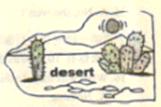




| A.it is sandy | B.there is so little rain |
| C.the wind is strong | D.there is no water deep under the ground |
| A.围堵 | B.讨好 | C.释放 | D.吸收 |
| A.the sunlight is too strong in the day | B.they need to see and hear well at night |
| C.it is very cold at nigh | D.they store water in them. |
| A.storing water in side their bodies | B.drinking water as much as they can |
| C.staying underground | D.growing lots of plants |
| A.Desert people like to live in the desert though life is hard. |
| B.People in the desert usually fry eggs on the ground. |
| C.Camels have special fur to store water. |
| D.All the deserts are covered in sand. |