精英家教网 > 高中英语 > 题目详情
Learning to Accept
I learned how to accept life as it is from my father. 21_,he did not teach me acceptance when he was strong and healthy,but rather when he was 22  and ill.
My father was 23 a strong man who loved being active, but a terrible illness 24 all that away.Now he can no longer walk and he must sit quietly in a chair all day. Even talking is  25 . One night, I went to visit him with my sisters. We started 26  about life,and I told them about one of my  27 . I said that we must very often give things up 28 we grow—our youth, our beauty, our friends---but it always 29  that after we give something up,we gain something new in its place. Then suddenly my father  30 up. He said, “But, Peter,I gave up 31 ! What did I gain?” I thought and thought, but I could not think of anything to say.  32 , he answered his own question: “I 33 the love of my family.” I looked at my sisters and saw tears in their eyes,along with hope and thankfulness.
I was also  34 by his words. After that, when I began to feel irritated(恼怒的)at someone, I  35 remember his words and become 36 . If he could replace his great pain with a feeling of love for others, then I should be  37 to give up my small irritations. In this  38  ,I learned the power of acceptance from my father.
Sometimes I 39 what other things I could have learned from him if I had listened more carefully when I was a boy. For now, though, I am grateful for this one 40 .
小题1:
A.AfterwardsB.ThereforeC.HoweverD.Meanwhile
小题2:
A.tiredB.weakC.poorD.slowly
小题3:
A.alreadyB.stillC.onlyD.once
小题4:
A.tookB.threwC.sentD.put
小题5:
A.impossibleB.difficultC.stressfulD.hopeless
小题6:
A.worryingB.caringC.talkingD.asking
小题7:
A.decisionsB.experiencesC.ambitionsD.beliefs
小题8:
A.asB.sinceC.beforeD.till
小题9:
A.suggestsB.promisesC.seemsD.requires
小题10:
A.spokeB.turnedC.summedD.opened
小题11:
A.somethingB.anythingC.nothingD.everything
小题12:
A.SurprisinglyB.ImmediatelyC.NaturallyD.Certainly
小题13:
A.hadB.acceptedC.gainedD.enjoyed
小题14:
A.touchedB.astonishedC.attractedD.warned
小题15:
A.shouldB.couldC.wouldD.might
小题16:
A.quietB.calmC.relaxedD.happy
小题17:
A.readyB.likelyC.freeD.able
小题18:
A.caseB.formC.methodD.way
小题19:
A.doubtB.wonderC.knowD.guess
小题20:
A.awardB.giftC.lessonD.word

小题1:C
小题2:B
小题3:D
小题4:A
小题5:B
小题6:C
小题7:D
小题8:A
小题9:C
小题10:A
小题11:D
小题12:A
小题13:C
小题14:A
小题15:C
小题16:B
小题17:D
小题18:D
小题19:B
小题20:B
这篇文章又是一篇感人至深,具有较好教育意义的精品小文。作者以倒叙的形式讲述了发生在他身上的故事。而作者年老多病的父亲却交给了他这样一个道理:他放弃了一切却一无所获,得到的只是家人的爱—不要斤斤计较,要以爱心来对待一切,面对生活,使自己的内心平和。
小题1:本题考查副词。爸爸教给我这个道理不是在他健康强壮的时候,而是在体弱多病的事后。语气转换。根据however的语法特征也能选中。
小题2:本题考查形容词。根据全句的逻辑意思和下文的提示(he can no longer walk),选择一个与ill并列意义的词。
小题3:本题考查副词。爸爸以前是一个健康积极的人。
小题4:本题考查动词。take away使(感情,感觉等)消失,带走;throw away丢弃某物(因不用或不需要);send away把…送往另一地方;put away收好。
小题5:本题考查形容词。由上文爸爸体弱多病和下文他说的话,得知爸爸甚至讲话都困难。Impossible过于绝对,只失去说话能力;hopeful没有指望的,绝望的;stressful产生压力的。
小题6:本题考查动词。开始交谈,谈论生活,不是笼统地讲担心谁的生活(worry about),关心谁的生活(care about),询问谁的生活(ask about).
小题7:本题考查名词。我跟他们讲了我的一个信条(我个人相信的事)(belief).由下文可知不是我的一个什么经验(experience);抱负(ambition)或某个决定(decision)
小题8:本题考查连词。.随着(as)我们长大,我们常常放弃一些东西。
小题9:本题考查动词。总的看起来是这样的,因为是一个人的看法及一般情况,语气不是特肯定,又不是某个人的建议或要求,故其他三个选项不可取。
小题10:本题考查动词。speak up(爸爸)突然大声说,说到;turn up拧大,开大;出现;sun up归纳,总结;判断,估量(此前,爸爸并没说话,故不能选);open up开拓,开辟;开始畅谈,倾吐心事(不是一两句话,更不能突然开始)。
小题11:本题考查代词。根据上下文及作者爸爸当时的状况,所谓“美好的事”一无所有了;从外表看只是一个体弱多病,非常难过的老年。故give up everything.
小题12:本题考查副词。爸爸提出一个问题,我以为让我来回答,我正在冥思苦想的时候,他却自己给出了答案,这出乎我的意料。
小题13:本题考查动词。回答针对上面爸爸提出的那个问题:What did I gain?
小题14:本题考查动词。我深受启发,所以改变了我以后的为人处事的方法。
小题15:本题考查情态动词。would 表示习惯性的行为。
小题16:本题考查形容词。一想到爸爸的话,我的内心就平静下来,控制情绪;而不是保持安静(quiet),放松(relaxed)或高兴(happy).
小题17:本题考查形容词。一想到爸爸既然能够用对别人的爱来代替他巨大的疼痛或痛苦这件事,我就必然能够(be able to do)放弃自己的不值一提的易怒情绪。
小题18:本题考查动词。这样(in this way),我就从爸爸身上学会了宽容的力量(power of acceptable)。Method指解决某个具体问题的科学的,符合逻辑的方法,通常搭配是with this/that …method.
小题19:本题考查动词。现在我想知道,如果我从小的时候起,就认真地听我爸爸的,我还会学到其他什么东西呢?要注意该句用的是虚拟语气。
小题20:本题考查动词。即便如此,我也不是特别的遗憾,我很感谢我爸爸送给我的这个礼物(gift)。
练习册系列答案
相关习题

科目:高中英语 来源:不详 题型:完形填空

A farmer had some puppies(小狗)to   36  . He painted a sign advertising the puppies and   37__  nailing (钉)it to a post on the edge of his yard. As he was driving the last nail into the post, a little boy came to him.
“Mister,” he said, “I want to buy one of your puppies.”
“Well,” said the farmer, as he   38  the sweat off his face, “these puppies come from fine parents and cost   39  money. Do you have enough money?”
The boy    40   his head for a moment. Then reaching into his pocket, he pulled out a handful of   41  and held it up to the farmer. “I’ve got thirty-nine cents. Is that enough to take a look?” “Sure,” said the farmer. And with that he  42  a whistle (口哨声), “Here, Dolly!” he called.   43  from the doghouse and down the ramp ran Dolly    44  by four little balls of fur. The little boy’ eyes danced with delight. As the dogs made their   45  to the fence, the little boy noticed something else stirring inside the doghouse.   46    another little ball appeared; this one noticeably smaller.  Then in a somewhat    47   manner the little pup began hobbling(蹒跚) toward the others, doing its best to    48  .
“I want that one,” the little boy said,   49   to the smallest one. The farmer said, “Son, you don’t want that puppy. He will never be able to run and play with you   50  these other dogs would.”
With that the little boy   51  back from the fence, and began    52    up one leg of his trousers. In doing so he exposed a steel support running down both sides of his leg   53  itself to a specially made   54   . Looking back up at the farmer, he said, “You see sir, I don't   55   too well myself, and he will need someone who understands.”
小题1:
A.sellB.buy C.raiseD.drive
小题2:
A.set offB.set outC.set aboutD.set up
小题3:
A.wipedB.removed C.settledD.drove
小题4:
A.a number ofB.quite a fewC.a great deal ofD.only a little
小题5:
A.raised B.buried C.droppedD.shook
小题6:
A.changeB.priceC.treasureD.wallet
小题7:
A.made outB.put awayC.gave awayD.let out
小题8:
A.In B.AwayC.OutD.Up
小题9:
A.equippedB.protectedC.attackedD.followed
小题10:
A.wayB.directionC.pathD.struggle
小题11:
A.RapidlyB.SlowlyC.SuddenlyD.Simply
小题12:
A.curiousB.foolish C.ordinaryD.active
小题13:
A.catch upB.keep upC.put upD.make up
小题14:
A.staring B.pointingC.greeting D.devoting
小题15:
A.whileB.asC.that D.what
小题16:
A.steppedB.escapedC.wentD.kept
小题17:
A.pushingB.forcingC.rollingD.tearing
小题18:
A.attachingB.attachedC.being attachedD.to attach
小题19:
A.legB.stick C.shoeD.foot
小题20:
A.walkB.runC.liveD.go

查看答案和解析>>

科目:高中英语 来源:不详 题型:阅读理解

We were flying to a meeting. I was in the middle    36 .I found that the young woman sitting next to me was very   37  and deep in thought. Then I asked her where she was from, where she was going and   38  she did.
She was a student and had been attending   39 in Poland-----the homeland of her father. Then she told me sadly that her father had    40    . She had chosen to attend college in Poland   41 her father’s wishes and their relationship had been  42  .They hadn’t forgiven each other  43  he died.
She seemed so sad. I looked at her, trying to  44  some words to say. I asked her if she had forgiven  45  for not realizing her father’s dream. She answered that she couldn’t forgive herself  and felt so  46 .Slowly, I began to tell her about forgiveness. I encouraged her to  47  that because I believed her father wanted that too. She should forgive herself  48  how awful she thought she had been.
I told her about  49  I had done as a teenager for which I had felt guilty for many years. How I was  50  with the choice of forgiving myself or to  51  feeling guilty for the rest of my life. I had  52  to forgive myself . The light in her eyes went on. She began to understand that she was  53   forgiven and could forgive herself. She could be  54  and happy.
How about you? Is there anything in your  55  for which you feel guilty?
小题1:
A.chairB.room C.seatD.class
小题2:
A.madB.sadC.angryD.happy
小题3:
A.whenB.whichC.howD.what
小题4:
A.meetingB.school C.universityD.party
小题5:
A.died B.comeC.returnedD.left
小题6:
A.for B.againstC.withD.on
小题7:
A.badB.goodC.worseD.better
小题8:
A.sinceB.afterC.whenD.while
小题9:
A.find out B.look up C.go overD.think of
小题10:
A.myselfB.yourselfC.himselfD.herself
小题11:
A.unhappyB.guiltyC.lonelyD.helpless
小题12:
A.trustB.understandC.realizeD.find
小题13:
A.as thoughB.even thoughC.if onlyD.no matter
小题14:
A.anythingB.nothingC.something D.everything
小题15:
A.facedB.forcedC.satisfiedD.challenged
小题16:
A.tryB.continueC.startD.consider
小题17:
A.pickedB.electedC.selectedD.chosen
小题18:
A.totally B.simplyC.alreadyD.hardly
小题19:
A.calmB.quietC.freeD.safe
小题20:
A.houseB.lifeC.familyD.work

查看答案和解析>>

科目:高中英语 来源:不详 题型:阅读理解

Mayor Boris Johnson Monday outlined plans to make London “the cleanest” by the 2012 Olympics and called for commitments from other world cities at a climate change conference. Leaders of the world's 40 largest cities are meeting in Seoul this week for a summit on combating global warming ---- the third to be held since 2005.
"What we should do in Seoul is agree that we will stop the endless addiction of mankind to the internal combustion engine (内燃机)," said Johnson. He told a press conference the world's cities consume 75 percent of its energy and produce 80 percent of the emissions which cause climate change. "The problem of our planet is an urban problem," Johnson said.
He said the British capital wants to use the Olympics "to drive the greening and the improvement of our city" and noted that London is committed to reduce carbon emissions by 60 percent by 2025.
Johnson said the key measure was addressing the problems relating to domestic and commercial buildings, which accounted for 70 percent of carbon dioxide emissions in London. This involved retrofitting (翻新) ---- installing lagging (绝缘层材料) ---- in large numbers of public buildings.
Johnson proclaimed himself a "passionate cyclist" and said he would push ahead with cycle super-highways around London.
London's air quality problem, he said, was caused by vehicle emissions from 8,300 antiquated (陈旧的) diesel (柴油) buses, which could be replaced by low-carbon vehicles. There were also 32,000 taxis running on diesel fuel, which could be replaced by electric vehicles.
Johnson said there would be a substantial (实质上的) program in the next few years to produce a "cleaner, greener" bus for his city. "The age of the diesel-emitting bus has got to be over in London."
小题1:Which of the following statements is NOT TRUE according to this passage?
A.The used buses running on diesel will be replaced by electric vehicles.
B.London’s air quality will be improved in the near future.
C.London promises to reduce carbon dioxide emissions by 60 percent by 2025.
D.Plans have been made to solve the problem of carbon dioxide emissions.
小题2:What does the underlined word mean in the first paragraph?
A.discussing B.resistingC.agreeingD.supporting
小题3:The topic of the meeting in Seoul might be __________.
A.climate changeB.London Olympics in 2012
C.global warmingD.green environment
小题4:If the passage was continually written, the following might be __________.
A.measures to replace the old and used vehicles
B.measures to reduce carbon dioxide emissions in London
C.measures to solve housing and commercial items
D.measures to end the age of the diesel bus

查看答案和解析>>

科目:高中英语 来源:不详 题型:阅读理解

Ginny Ruffner is one of the best-known glass artists in the United States. Her one-of-a-kind pieces are colorful, detailed and often humorous. Over the years, she became famous for a method called lamp working, also known as flame working. It involves using a torch to melt and shape the glass instead of blowing on it.
Ginny Ruffner almost died in a three-car accident in 1991. No one thought the Seattle-based artist would ever walk or talk again. An award-winning(优等的) film documentary explores that period of her life. "It's scary when you can't talk, you can't do... all your life." said Ruffner.
Ms. Ruffner was in a coma(昏迷) for five weeks and a wheelchair for five years. But she overcame her injuries. And although she still has difficulty walking and talking, she has willed herself back to work. Now, she has a team that helps bring her dream to life.
Her team recently finished an eight point five meter-high flowerpot made of steel and aluminum. It is now in downtown Seattle. Ms. Ruffner was recently honored in Washington, DC.  The Renwick Gallery presented a special showing of the film, "A Not So Still Life, the Ginny Ruffner Story."
Ms. Ruffner says “it has been a long battle, but the hardest part has not been the physical problems. I hate being taken for granted, being ignored. The way I talk, people assume that I'm either really old, or kind of retarded(智力迟钝的), and that is so frustrating."
But she is firm. She says "Fortunately I've done a lot of stuff in my life, so I know that the best thing is to be open to the mystery, who knows what great things will happen. I'm sure they're many more to come."
Ginny Ruffner's art can be seen in more than forty museums around the world. Her work and her life continue to motivate people of all ages.
小题1:Within five years after a car accident, Ginny Ruffner _____.
A.was unconscious of everything
B.had trouble walking and talking
C.got over injuries completely
D.went back to her work
小题2:From this passage we can learn _____.
A.Ginny Ruffner finished an eight point five meter-high flowerpot made of steel and aluminum himself
B.The Renwick Gallery made him a the film documentary , "A Not So Still Life, the Ginny Ruffner Story."
C.Ginny Ruffner's art is shown in more than forty museums in the United States
D.Ginny Ruffner’s story has encouraged people to do what they want to
小题3:What was the most difficult to accept for Ginny Ruffner?
A.The physical disabilities
B.Being considered old andstupidity
C.Being looked down upon
D.Being mistaken as a useless man
小题4:The best title of this passage is _____.
A. A New Exhibit of Bright Life
B.The Life of a Glass Artist
C. A New product of a glass artist
D.The Introduction of a Great Glass Artist
小题5:From this passage we can know Ginny Ruffner is _____.
A.determined and optimistic
B.ambitious and stubborn
C.hopeful and energetic
D.devoted and active

查看答案和解析>>

科目:高中英语 来源:不详 题型:阅读理解

Vincent Willem van Gogh (30 March, 1853---29 July, 1890) was a Dutch Post-Impressionist artist. He is considered one of the greatest artists with great influence on the greatest artists with great influence on the 20th-century art.
Van Gogh spent his early adult life working for a firm of art dealers. After a brief period as a teacher, he became a missionary (传教士) in a very poor mining region. He did not begin his career as an artist until 1880; however, during the last ten years of his life, he produced more than 2,000 pieces, including around 900 paintings and 1,100 drawing and sketches (素描). He worked only with somber colours until he met Impressionism and Neo-Impressionism in Paris. Van Gogh used their bright colours and style of painting in a uniquely recognizable style. Most of his best-known works were produced during his final two years, when he was suffering from serious mental illness.
In 1890, at the age of 37, van Gogh shot himself in the chest. He died two days later, with Theo, his brother and his best friend, at his side, who reported his last words as “The sadness will last forever”. It would not take long before his fame grew higher and higher.
Van Gogh’s mother threw away quite a number of his paintings. The only painting he sold during his lifetime, The Red Vineyard, was created in 1888. It is now on display in the Pushkin Museum in Moscow, Russia. Several paintings by van Gogh rank among the most expensive paintings in the world. On March 30, 1987 van Gogh’s painting Irises was sold for a record of $53.9 million at Southby’s, New York. On May 15, 1990 his Portrait of Doctor Gachet was sold for $83.5 million at Christie’s, thus setting a new price record.
小题1:When did van Gogh begin his career as an artist?
A.At the age of 17.
B.At the age of 27.
C.In his early adult adult life.
D.In his early childhood.
小题2:The underlined word “somber” in Para. 2 means         .
A.colourfulB.differentC.darkD.bright
小题3:What’s the right order of van Gogh’s life experience?
a. worked as a teacher
b. took up drawing
c. worked in an art firm
d. worked as a missionary
A.c, a, b, dB.c, a, d, bC.b, c, a, dD.b, a, c, d
小题4:Which of the following can best describe van Gogh’s final two years?
A.Sand and boring.B.Normal and peaceful.
C.Happy but fruitless.D.Painful but productive.
小题5:What can we learn from the passage?
A.Van Gogh didn’t become famous until he dies.
B.Van Gogh sold many paintings in his life.
C.Van Gogh had become famous as an artist when he was alive.
D.Irises was the most expensive among van Gogh’s paintings.

查看答案和解析>>

科目:高中英语 来源:不详 题型:阅读理解

Half a century after the March of Dimes (a US charity organization that collects money for children) put the 20th century’s most feared childhood disease on the road to eradication (根除), Bill Gates declared polio (小儿麻痹症) his important job and challenged world leaders to finish the job.
India, Nigeria, Pakistan and Afghanistan now have active transmission (传播) of the disease. Gates says the biggest problem with the success of the Global Polio Eradication program in those countries and elsewhere is lack of money.
The Bill and Melinda Gates Foundation plans to increase its $200 million annual contribution (每年的捐款) by $102 million this year, Gates says. Gates recently met privately with Pakistan’s President in Washington, D.C., to try to persuade him to provide full support for Pakistan’s eradication plan.
Children in the USA also are at risk, experts say. Parents who don’t vaccinate (给某人接种疫苗) their children because they are fearful of vaccine side-effects create a large number of children who are likely to be harmed by the virus.
“If you increase the number of unvaccinated children, you increase the chance that this virus will find new subjects,” says David Oshinsky, Pulitzer Prized-winning author of Polio: An American Story.
“We’ve got to get this vaccine into the mouths of children,” says Bruce Aylward, head of the World Health Organization’s eradication program.
In 1988, when the World Health Organization launched the Global Polio Eradication program, the disease killed 350,000 children a year worldwide. By last year, the total dropped to fewer than 1,500 worldwide, Aylward says.
If Gates provides the final push for polio eradication, he may be remembered as much for helping prevent polio as for founding Microsoft, Oshinsky says.
“As long as there’s polio anywhere, people everywhere are at risk,” Aylawrd says. “We’re still not out of the woods.”
小题1:According to the text, the success of the Global Polio Eradication program mainly depends on          .
A.the World Health Organization’s policy
B.the development of a new vaccine
C.the local governments’ support
D.the collection of funds.
小题2:What do we know about polio according to the text?
A.People in Nigeria don’t take it seriously.
B.It’s now the most serious childhood disease.
C.Great progress has been made in preventing it.
D.There are few organizations helping to prevent it.
小题3:According to Oshinsky,           .
A.Gates should devote more time to Microsoft
B.polio eradication is a very important cause
C.vaccine side-effects should not be ignored
D.polio has been brought under control
小题4:According to the passage, which of the following about Bill Gates is TRUE?
A.He is the founder of the Global polio Eradication program.
B.He persuades some of the world leaders to support the eradication plan.
C.His foundation contributes $302, 000 to eradicate polio every year.
D.He works harder on preventing polio than founding Microsoft.
小题5:The underlined part “We’re still not out of the woods” means “       ”.
A.We get lost in the woodsB.We’re not free from trouble
C.we have no idea where to goD.We’re unable to eradicate polio

查看答案和解析>>

科目:高中英语 来源:不详 题型:阅读理解

Did you ever wonder who invented products like Liquid Paper, Kevlar or paper bags? Most would think a man invented these items. Guess what? Women invented each of these. What? You don’t believe me? Well, read this:
Liquid Paper was invented by Bette Nesmith Graham in 1951 and originally called Mistake Out. Being a typist, Bette was increasingly irritated with being unable to erase her typing mistakes. The messy business left her hands black and the paper dirty. Bette was good at painting and remembered that an artist paints over mistakes. She applied that same principle to typing mistakes and Liquid Paper was born, making Bette into a self-made millionaire.
Kevlar, yes, the Kevlar of the bullet proof vest(防弹衣)—what police officers and soldiers wear, was invented by Stephanie Kwolek. Stephanie worked for the DuPont Company as a research chemist. She was asked to find a high-performance fiber. Originally, this fiber was intended to be used for car tires (轮胎). However, the fiber she developed in 1964 was amazing and is still used in products such as sailboats, skis, shoes, and yes, bullet proof vests. In 1995 Stephanie was named to the National Inventor’s Hall of Fame.
Margaret Knight invented a machine that revolutionized the making of paper bags. Paper bags had been made like envelopes but Margaret developed a machine that would fold and paste(粘)a flat-bottom paper bag, the very same type we still use today. Margaret’s family was poor and she started working at the age of nine. Her first invention at the age of twelve was a safety tool for a loom(织布机). Later she worked for the Columbia Paper Bag Company. It was there that she worked on improving the making of paper bags. She was issued her patent(专利)in 1870.
So next time you use a new product or an old one, will you wonder who made it? Do some research on the web and answer a few questions like: Who invented it? How was it invented? You may be surprised at some of the stories you uncover.
小题1:The underlined word “irritated” in Paragraph 2 is the closest in meaning to_________.
A.annoyedB.excitedC.delightedD.nervous
小题2:What do we know about Margaret?
A.She was a member of the National Inventor’s Hall of Fame.
B.Her first invention was made when she was twenty.
C.Her invention was designed to produce envelopes.
D.She began working when she was very young.
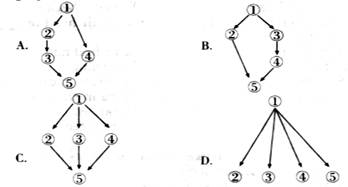
小题3:which of the following best shows the structure of the passage? (①="paragraph" 1, ②="Paragraph" 2,… ⑤="paragraph" 5)
 
小题4:What would be the best title for the passage?
A.How inventions were made
B.Amazing inventions by women
C.Women and modern technology
D.You can also be an inventor

查看答案和解析>>

科目:高中英语 来源:不详 题型:阅读理解

A year ago August, Dave Fuss lost his job driving a truck for a small company in west Michigan. His wife, Gerrie, was still working in the local school cafeteria (自助食堂), but work for Dave was scarce (不足的,缺乏的), and the price of everything was rising. The Fusses were at risk of joining the millions of Americans who have lost their homes in recent years. Then Dave and Gerrie received a timely gift—$7,000,a legacy (遗产) from their neighbors Ish and Arlene Hatch, who died in an accident . “ It really made a difference when we were going under financially, ” says Dave.  
But the Fusses weren’t the only folks in Alto and the neighboring town of Lowell to receive unexpected legacy from the Hatches. Dozens of (许多) other families were touched by the Hatches’ generosity. In some cases, it was a few thousand dollars ; in others, it was more than $100,000.  
It surprised nearly everyone that the Hatches had so much money, more than $3 million—they were an elderly couple who lived in an old house on what was left of the family farm .  
Children of the Great Depression, Ish and Arlene were known for their habit of saving, They thrived on(喜欢)comparison shopping and would routinely go from store to store, checking prices before making a new purchase (购买) .  
Through the years, the Hatches paid for local children to attend summer camp when their parents couldn’t afford it. “Ish and Arlene never asked if you needed anything,” says their friend Sand Van Weelden, “They could see things they could do to make you happier, and they would do them.  
Even more extraordinary was that the Hatches had their farmland distributed (分发;分配). It was the Hatches’ wish that their legacy—a legacy of kindness as much as one of dollars and cents should enrich the whole community(社区)and last for generations to come.
Neighbors helping neighbors ——that was Ish and Arlene Hatch’s story.  
小题1:According go the text, the Fusses ______.
A.were employed by a truck company
B.worked in a school cafeteria
C.were in financial difficulty
D.lost their home
小题2:Which of the following is true of the Hatches?
A.They had their children during the Great Depression
B.They gave away their possessions ( 财产;所有物) to their neighbors
C.They left the family farm to live in an old house
D.They helped their neighbors to find jobs
小题3:Why would the Hatches routinely go from store?
A.They decided to open a store
B.They couldn’t afford expensive things
C.They wanted to save money
D.They wanted to buy gifts for local kids
小题4: According to Sand Van Weelden, the Hatches were ______.
A.curious B.optimisticC.childlikeD.understanding
小题5:What can we learn from the text?
A.The Hatches would like the neighbors to follow their example
B.The summer camp was attractive to the parents
C.Sandy Van Weelden got a legacy form the Hatches
D.The community of Alto was poor

查看答案和解析>>

同步练习册答案